A doctor looking up a drug interaction is a peculiarly valuable reader. The question is specific, the time is short, and the answer may affect what happens next. Medscape built its business around that reader. The intriguing part is the price: the doctor can use the reference without buying a subscription. Somewhere else in the transaction, somebody is paying for the opportunity to reach a professional who has work to do.
- The resource: medical news, clinical references, tools and continuing education.
- The exchange: free core access for clinicians; commercial programmes for healthcare brands.
- The twist: the original company failed, while its professional website endured.
This is a company profile with an unusually revealing receipt. In 2016, Medscape’s websites and apps contributed approximately 60% of WebMD’s advertising and sponsorship revenue. Its audience was smaller than the wider WebMD network’s audience. Yet advertisers valued access to physicians and other healthcare professionals enough to make that smaller readership commercially weighty. In publishing, a crowd is useful. A crowd with a particular job can be more useful still.
01 / The publisher before the platform
Medscape began on May 22, 1995, inside SCP Communications, Peter Frishauf’s medical publishing company. Its inheritance was practical. In a later interview, Frishauf recalled an electronic newsroom where everyone, from editors to the receptionist, had a terminal and worked from a shared dataset. The team already knew how to assemble medical information together. The Web supplied a new way to distribute it.
“Medscape is patient-care oriented.”
Peter Frishauf · founder · 2021 Osmosis interview
That background helps explain the product’s shape. A medical publisher asks which information a practitioner needs, how to organise it, and who should check it. Those questions travel well from a printed page to a screen. Frishauf also defended access for consumers willing to read what clinicians were reading. The professional focus did not require a velvet rope around the information.
02 / When the company lost the plot
The dot-com market wanted a different story. In his retrospective, Frishauf describes investors becoming interested in consumer health and electronic commerce rather than the professional media business. Medscape pursued a separate consumer site, CBSHealthWatch. Its September 1999 IPO raised about $45 million. In 2000, it merged with MedicaLogic. The consumer venture closed, and the original Medscape company dissolved. Frishauf’s account locates the failure in that strategic expansion; it is a founder’s interpretation, rather than an independent verdict.
The useful website found another owner. WebMD bought the Medscape brand and portal assets for $10 million in December 2001. Contemporary reporting also recorded expected integration costs of $1 million to $2 million in each of the next two quarters. These were acquisition costs, not the price of inventing Medscape. The transaction preserved a distinction that remains helpful today: WebMD’s consumer information and Medscape’s professional information served different readers.

03 / Three reasons to come back
Today’s offering follows three rhythms. News tells a clinician what has changed. Reference helps answer a question that has arisen during work. Education creates a reason to study more deliberately. Combining those rhythms matters: the same person may need a headline in the morning, a drug monograph at lunchtime and a continuing-education activity later. Each visit begins with a different task.
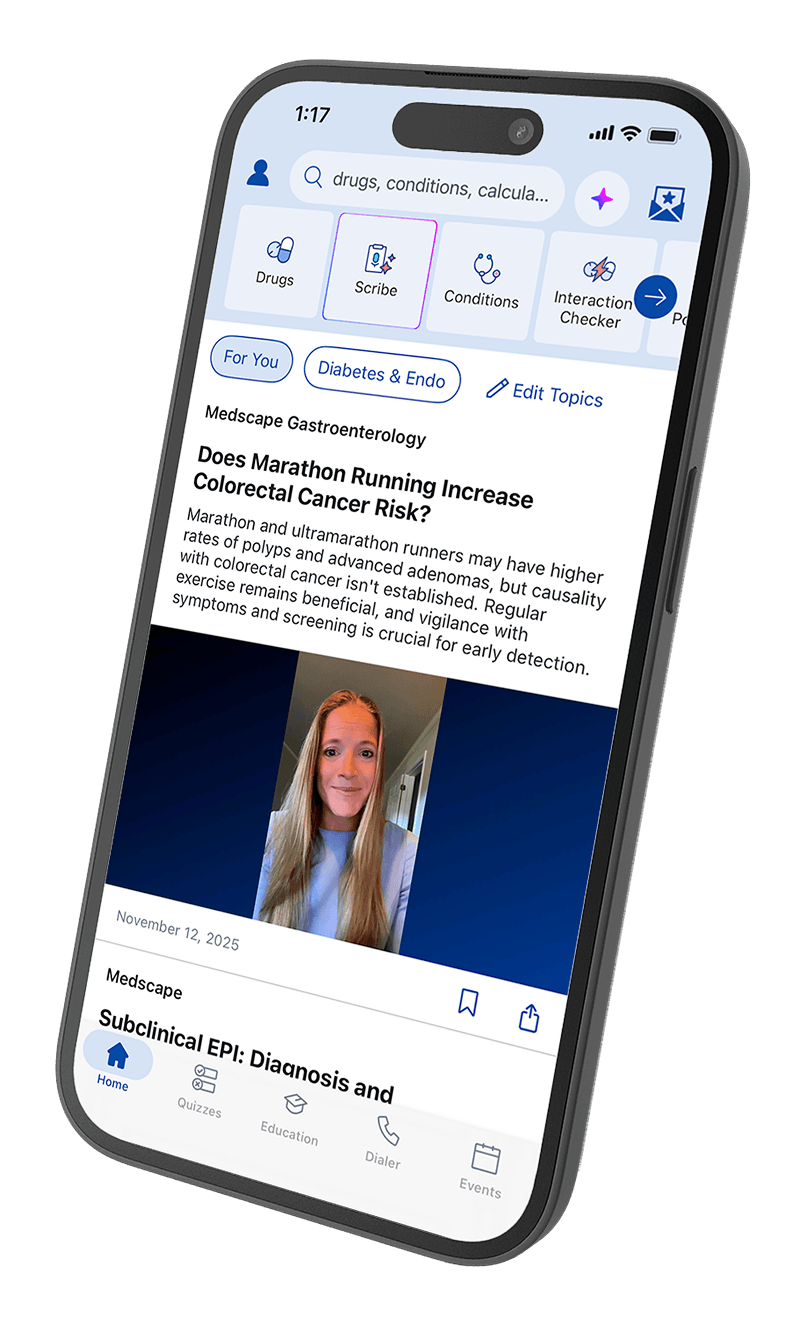
The Android listing describes more than 450 medical calculators and prescribing and safety information covering over 9,200 prescription and over-the-counter drugs, herbals and supplements. It also includes an interaction checker, procedural videos and podcasts. Those are concrete uses: check a calculation, inspect a medication combination, refresh a procedure, or listen to a specialist’s discussion. The appeal is having several reference tasks within reach of the same thumb.
The stakes may be large.
News, clinical tools and professional learning share a mobile home.
Medscape Education offers thousands of free activities across more than 30 specialty sites. Its formats include clinical cases, patient simulations and expert videos. The organisation holds physician, nursing and pharmacy education accreditations, and says dedicated scientific directors develop accredited activities with academic faculty. This is a more substantial undertaking than putting a quiz beneath an article. The professional credit gives the learning an additional purpose.
04 / Free has a paying customer
Healthcare companies buy advertising, sponsorship and educational programmes. Medscape Global currently reports an ecosystem of more than 13 million active healthcare professionals, including over 6.5 million physicians, and work with more than 500 brands. Those are company-reported network figures. They should not be mistaken for independently audited monthly readership. They do, however, describe the scale of the audience Medscape sells access to.
That arrangement makes editorial independence part of the product. Medscape’s policies emphasise accuracy, transparency and independence; its reference articles draw on a distributed clinical faculty network. The reader needs to distinguish reporting, reference material, accredited education and promotional messages. Sharing a website does not make those forms interchangeable. A free service earns repeat use when readers understand what they are looking at.
Medscape occupies the intersection of professional media, clinical reference and education. For clinical reference, UpToDate and DynaMed offer alternatives. A specialist can also go directly to a journal or a society’s guideline. Medscape’s case is convenience across several tasks. Its breadth is especially useful when the question is bounded and the clinician can evaluate the material. A source requiring exhaustive detail or a particular local protocol may demand another stop.
05 / A new interface for an old promise
In November 2025, Medscape announced the global launch of Medscape AI, combining its content with peer-reviewed literature and medical news. The change is in how the question reaches the material: a conversational request joins conventional browsing and searching. “A model like this saves me time,” physician Perry Willson said in the launch announcement. That is a user’s testimonial, not a measured productivity result.
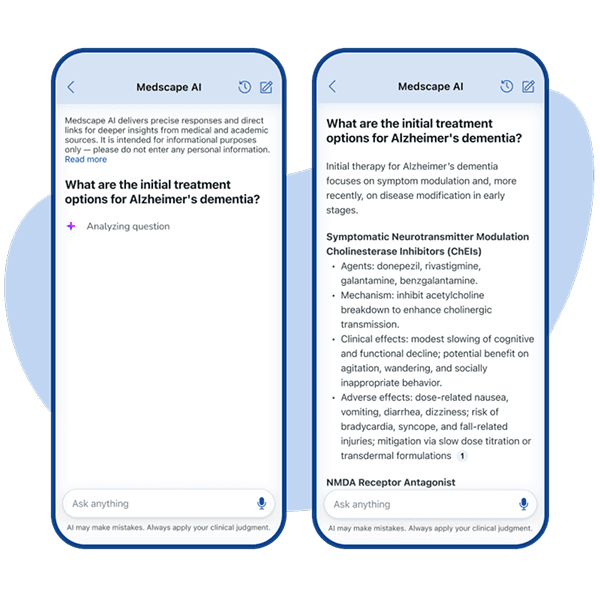
Medscape says final decisions remain the clinician’s responsibility. The lesson for other businesses is equally practical: find a recurring professional question, make the answer easier to reach, and identify who will fund that service. It depends on useful information, credible expertise and a paying market. Medscape’s own history shows how easily the economics can be obscured when a company starts shopping for a more fashionable story.