The first problem at an airport after a terror attack is deceptively simple: where is everybody? People are scattered. Plans have expired. A corporate itinerary, useful an hour earlier, has become an incomplete description of reality. In its account of the response at Istanbul’s Atatürk Airport, MAX Security starts with that problem: locating employees and travelers from several client companies, contacting them, then arranging their movement to safety.
- The job: connect threat intelligence to protection and travel decisions.
- The buyers: corporate security teams, risk managers, and family offices.
- The useful lesson: give every warning someone who can act on it.
MAX says it issued an alert, assembled local teams, and established a coordination room combining intelligence, management, and logistics. It reports that the affected people were relocated unharmed. The interesting part is the sequence. Information had to become a shared picture; that picture had to become a plan; somebody nearby had to carry it out.
This is the territory MAX occupies: the awkward stretch between understanding a threat and doing something about it.
A company named after a person
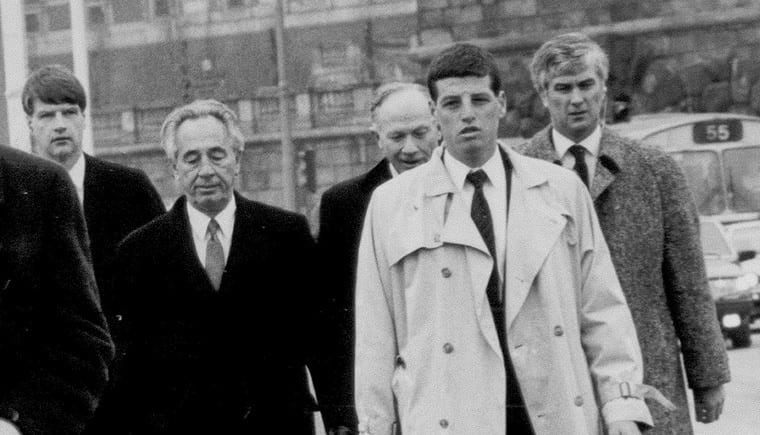
MAX’s name commemorates Yitzchak Schiller, an Israeli security operative whose code name was Max and who died in a plane crash near Paris in 1992. Founder and president Noam J. Schiller built the business around protection and intelligence. Its leadership now includes CEO Dror Becker, alongside executives with military, intelligence, law-enforcement, and corporate experience.
The business gradually added tools around the protective assignment. Its published timeline puts an intelligence service in 2010, a portal in 2016, and an online academy in 2019. That progression matters: a company moving people through difficult environments has reasons to learn what is happening before the car leaves.
A warning needs an owner
The MAX Intelligence Portal gives corporate teams alerts, assessments, geographic monitoring, dashboards, historical trends, and access to analysts. A security manager can follow developments around an office, examine a route, and ask what an incident means for a particular operation. The product is designed around recurring decisions, rather than a reader’s appetite for another alarming headline.
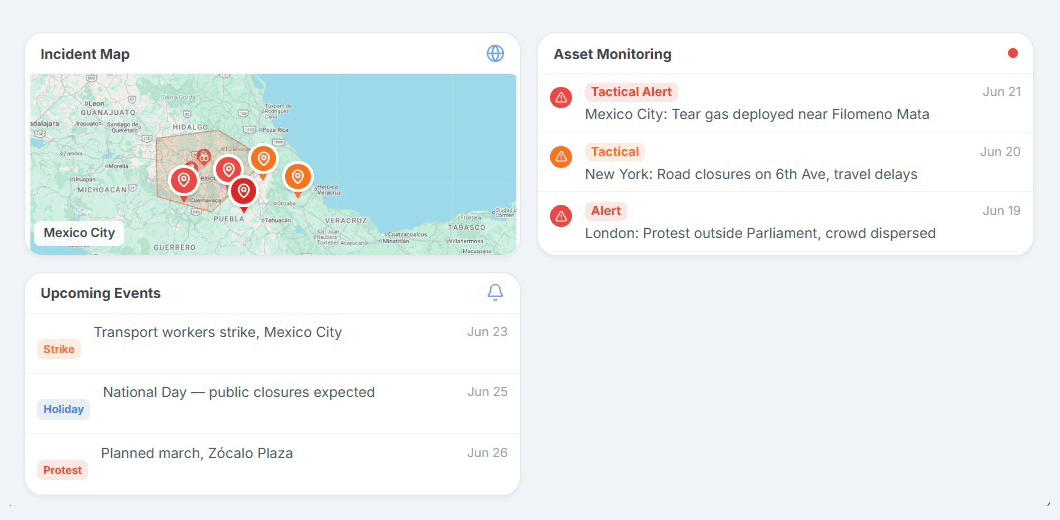
A Bloomberg security manager’s testimonial on MAX’s website describes using the portal to brief staff traveling in African countries without local bases. That gap explains the purchase. A multinational can have a global business without having its own security expertise in every place its employees visit.
“where we lack operational bases”
Desmond van Rooyen, Bloomberg security manager
From a testimonial published by MAX
- 01DetectWhat changed?
- 02AssessWho is exposed?
- 03DecideWho owns the call?
- 04MobilizeWho can act locally?
MAX Protection supplies the adjacent services: secure transport, traveler management, contingency planning, physical assessments, and crisis support. Its advertised resource network spans more than 160 countries. That is a claim about operational reach, distinct from the broader geographic coverage of an intelligence feed.
The breach was a setting
One of MAX’s more instructive investigations concerns an executive who already cared about privacy. Analysts examining the person’s online exposure found that a mobile payment app revealed recent transactions and, through them, connections to family members and colleagues. The app’s privacy settings had not been activated.
The remedy was refreshingly ordinary. MAX walked the executive through the settings and closed that route of exposure. There was no need for a cinematic countermeasure. The case describes an overlooked control in an everyday service.
Anyone can borrow the underlying habit: examine what a stranger can infer about your relationships, rather than checking only the information you deliberately publish. A protected profile means little if another application supplies the missing connections. The relevant unit of privacy is often the network around a person.
Teach the handoff
MAX Academy addresses another quiet vulnerability: people interpreting the same information differently. In a pharmaceutical-company case, MAX describes helping establish a global security operations center through role definition, recruitment, screening, and training. It began by asking which intelligence products decision-makers needed.
Only then came candidate profiles and a programme combining online practice with in-person exercises. This is a useful order to copy. Define the decisions and outputs first; hire and train for them afterward. A room full of screens cannot settle what an analyst owes an operator.
Buy the feed. Keep the choice.
MAX sells a mixture of licensed intelligence access and scoped professional work. Its software agreement places users, services, and fees in statements of work. For a buyer, the meaningful comparison therefore includes analyst access, operational responsibilities, training, and response scope alongside the software.
The alternatives depend on the assignment. International SOS sells travel risk management and assistance; Control Risks combines risk advice with protective services; Crisis24 spans intelligence and protection. MAX’s appeal rests on the fit between its analysis and the work a client needs done. A buyer should test that fit with a real itinerary or site, then ask how an alert changes the plan. Coverage on a map is an opening question.
The same discipline belongs in the contract. Agree which travelers and locations are covered, how questions reach an analyst, and where a protective assignment begins. A software seat and an evacuation operation involve different commitments. Treating them as separate buying questions makes the combined offering easier to evaluate.
In April 2025, MAX announced an integration with Restrata’s resilienceOS. The arrangement puts MAX intelligence inside another company’s operational platform. It gives the intelligence business a route into customers’ existing workflows and gives buyers a way to separate their choice of information from their choice of software.
Scout AI adds another interface to the report library. MAX describes it as drawing on its own vetted intelligence to produce source-linked briefings and summaries. Its FAQ also recommends human review for complex or high-stakes questions. The appeal is quicker retrieval; the judgment still needs an accountable owner.
The question after the alert
For a family office, the assignment may combine discreet travel, exposure checks, and staff training. For a multinational, it may involve a recurring intelligence service and occasional protective operations. MAX sits across these needs, joining consulting, software, and field support in one offering.
The practical limit follows from the model. A warning cannot move a traveler if nobody can reach them, authorize a change, or execute a local plan. Buyers should establish those responsibilities before urgency arrives. The airport story makes the point neatly: knowing what happened is the beginning. The work is getting people from where they are to where they can be safe.