At 5:30 on a December morning in 2015, Mauricio Curts set out from El Desemboque without a running watch. The destination was Bahía de Kino, roughly 90 kilometers away along the Sonoran coast. There were friends, a desert, and the Sea of Cortez. A company would eventually come out of this arrangement, though a company was an ambitious thing to expect from a morning run.
The watch is a useful detail. Running has a talent for turning leisure into bookkeeping: splits, totals, rankings, the tiny courtroom on your wrist. Curts had become interested in what else a run could contain. On that journey, the answer included people whose relationship with the land preceded the runners’ arrival by generations.
Known in public as Mauricio Díaz, and to friends and interviewers as Mau, he is now based in Vancouver. He co-founded Aire Libre with Manuel Morato and Daniel Almazán Klinckwort. The business organizes running and hiking experiences across countries. Its origin, however, remains pleasingly particular: a group of friends wanted to see what lay along a stretch of coast, and asked permission to go.
A first morning, on foot
Curts was born in Mexico City. His public education record places him at Tecnológico de Monterrey from 2008 to 2013. During university, an international program took him to Germany, the United States, and Southeast Asia. Travel gave his running a second purpose. He could arrive somewhere unfamiliar and begin finding his bearings with his feet.
His father was a marathon runner, a figure he remembered admiring. In Monterrey, Curts had a hill he liked to run. Abroad, streets became another kind of classroom. A route could reveal how neighborhoods joined up, where a city opened out, and where he might want to return. You can learn a great deal before breakfast, provided you are willing to arrive back rather rumpled.
On returning to Mexico City, he applied that curiosity to home. His connection with Juanson Running put him among runners from creative circles. Their outings included Chapultepec, the Zócalo, and trails outside the city. Running could be social, exploratory, and connected to a shared visual culture. It offered both a way around town and a way into a group.
Those relationships had consequences. Curts followed New York’s Black Roses running crew and Knox Robinson on Instagram. When Robinson visited Mexico, Curts made contact and took him, Fred Goris, and Sean Henry Lee running through Mexico City. An online acquaintance became a friendship with a route attached.
The desert needed an introduction
Morato’s early account of the Sonora project contains a small accident of timing. Curts initially had a trip to Colombia planned. When it was canceled, he called to join the adventure. A change of plans gave the project another companion. Founder stories can sound inevitable when told backward; this one leaves room for a canceled ticket.
The eventual route crossed Seri territory. Morato sought the elders’ permission. Their response helped the runners understand the undertaking as something that could have meaning for the land and its people, beyond an individual endurance challenge. Curts has returned to that encounter when explaining Aire Libre’s philosophy.
Permission is the hinge of the story. A map can make a landscape look available. The conversation acknowledged that people already belonged there, with knowledge and authority of their own. For a travel project built around cultural encounters, that was a consequential place to begin.
Robinson and his fellow New Yorkers joined the Mexican crew. The crossing took place on December 20, 2015. It followed the coast from El Desemboque toward Bahía de Kino, with the landscape around Tiburón Island part of the journey. The distance was substantial; the company of other runners made it a shared undertaking.
20 DEC 2015 · SONORA, MEXICO
Seri territory · route schematic
The resulting film, AL-01: Crossing the Land of the Seri, was directed by Almazán Klinckwort. It became an official selection at the Freeman Film Festival in 2016. A day on foot had acquired another life, one that could reach people who had never been near that coast.
The camera changed the question
The production had its less cinematic moments. Curts recalled hiring local drone operators who arrived but could never get their equipment working. The drone spent the outing in a pickup. It is a fine reminder that an aerial vision and an aerial photograph are different accomplishments.
Almazán Klinckwort filmed with a Canon 5D from the back of the following vehicle. The journey could not be neatly reset for better angles. The friends were moving through an actual day, with the practical difficulty of capturing it as it happened. The finished work gave that day a shape other people could recognize.
Curts said the early adventure was financed by himself and Daniel. At that stage, making Aire Libre their full-time work was still an aspiration. They were looking for partners and contributors, trying to give an outdoor project enough structure to continue. The romance required arrangements.
Viewers began asking about joining future experiences. That changed the project’s possibilities. A documentary lets someone watch an expedition; a retreat has to make room for that person on the trail. The audience’s interest brought a new responsibility: create an experience that other people could actually take part in.
In January 2017, Aire Libre partnered with the Canadian group Running Off The Grid on its first international retreat in Oaxaca’s Sierra Norte. The Pueblos Mancomunados offered a network of villages and connecting trails. People could run or walk. Their luggage traveled ahead, and meals and accommodation formed part of the plan.
The camera had helped create the invitation. The retreat needed to deliver on it. That is an interesting passage in any creative business: the moment when an image of a life becomes an experience someone else entrusts to you.
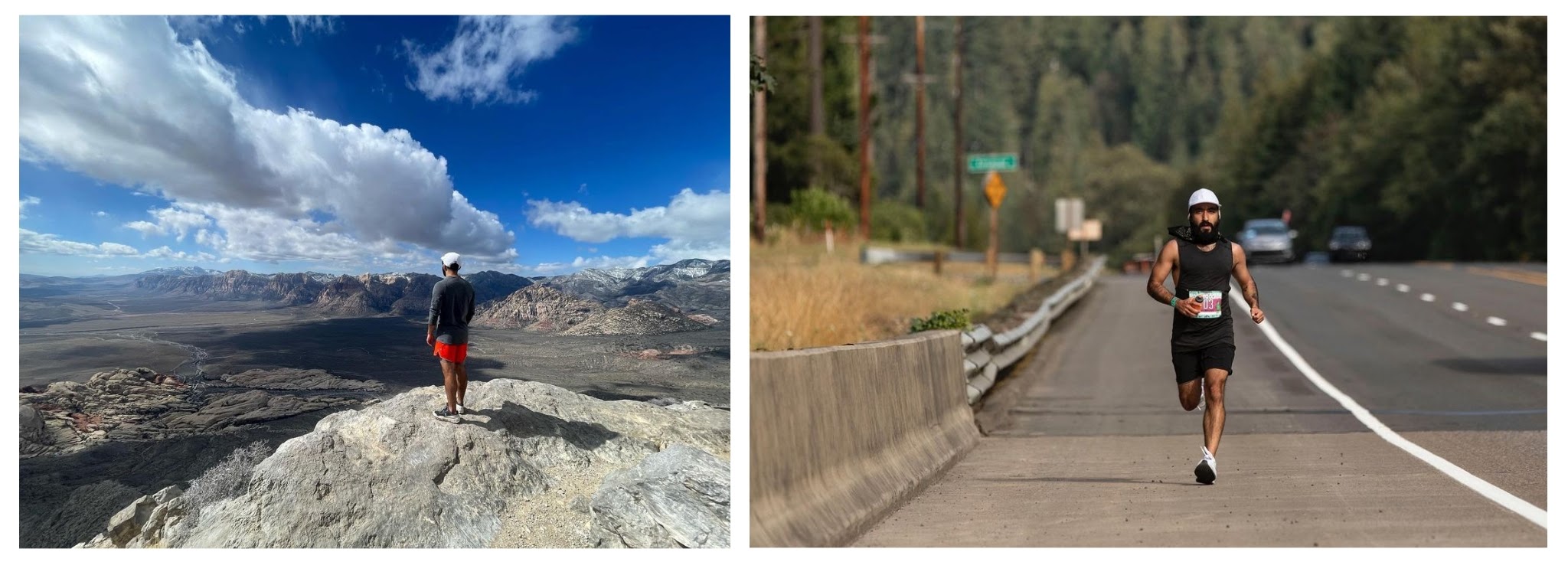
A seat at the table in Oaxaca
One later invitation reached Alex Dickinson, a writer and runner living in New York. Curts had received his name through a mutual friend. Months after their first conversation, Dickinson traveled to Mexico for an Aire Libre retreat. Again, the connection started with someone making contact.
Dickinson’s account gives the trips a human scale. In Oaxaca, the group moved between mountain villages, met a mezcal-making family, and ate food prepared by local cooks. A rancher named Carlos accompanied them. Along the way, they stopped to hear his grandparents’ stories about Zapotec runners.
Curts also explained the history of a path the group followed from Latuvi. The route carried a past as well as a group of visiting runners. Those encounters gave the itinerary more texture than a list of distances could supply. The people along the way had names, work, families, and stories.
There is an ordinary pleasure in that kind of travel. You have somewhere to go, something to do, and people to talk with afterward. The conversation has material already: the climb, the meal, the person who showed you the path. Introductions come with a shared day behind them.
“Forget the distance, forget the speed. Just be there, be present, be playful, and move.”
Mauricio Díaz · December 2023
A business with mud on its shoes
By 2019, Aire Libre had operated eight tours, including trips in Mexico, Bolivia, and Argentina. Its revenue for that year was reported as 3.6 million Mexican pesos. In February 2020, it appeared among Forbes México’s 30 business promises. The project had become a business with figures attached.
The founders were also looking toward corporate customers and further international destinations. Curts’s work therefore involved two kinds of invitation: people traveling for themselves, and teams traveling together. Both depended on arranging a setting where participants could spend meaningful time with one another.
during 2019
by June 2025
in June 2025
Aire Libre Ventures describes a wider family of work: running experiences, startup retreats, and a creative studio. The studio develops projects, campaigns, communities, and brand strategies. The retreats bring teams into shared experiences. Travel and storytelling sit beside one another in the organization Curts helped build.
That combination fits the project’s beginnings. The founders went somewhere, made something about it, and drew other people into the idea. The later business gives those activities different forms. The outdoor trip and the creative project both require attention to how an experience will be understood and remembered.
By June 2025, a public interview introduction described more than 130 Aire Libre experiences across 18 countries. Those figures belong to that moment in the company’s history. They show how far the invitation traveled after the early films and Oaxaca retreat.
Vancouver, and the next invitation
Curts’s public life now connects Mexico City and Vancouver. He is a lululemon run ambassador, and his conversations about running have continued in podcasts and public appearances. In July 2025, he joined Rob Watson on Rob talks Running. The discussion centered on adventure, his company, and the different reasons people run.
He also appeared in the Love Trails Festival’s 2026 talks programme in Wales. His LinkedIn posts describe Vancouver as his new home and mention sharing ideas with running communities in Mexico and Miami. The geographical circle has widened, while the habit of talking with fellow runners remains recognizable.
His preference for exploratory running has never meant he cannot race. He finished Boston in 2017 about 30 seconds under three hours. The result adds a useful wrinkle: a person can understand the clock perfectly well and still choose to leave it behind on another morning.
Curts’s story keeps returning to who joins him. Friends from Mexico City. Visitors from New York. People who know the terrain. Guests who first encountered the project on a screen. A running route gives them a reason to meet, then something to talk about.
The first desert expedition had a destination. The work that followed has required a continuing supply of invitations. Curts helped turn one shared journey into opportunities for others to go outside, encounter a place, and spend time with its people. There is still a route to plan. There is still someone to ask along.
Keep following the trail
- Aire Libre Ventures
- Aire Libre travel experiences
- Mauricio on LinkedIn
- Mauricio on Instagram
- Personal YouTube channel
- Watch the Sonora adventure
- The 2023 conversation with Vivobarefoot
- Early interview: part one
- Early interview: part two
- Oaxaca by Foot
- Aire Libre’s 2020 business profile
- Running Sucks conversation
- Cuentos Corporativos · June 2025
- Rob talks Running · July 2025
- Love Trails · 2026 talks