Matt Wilsey
He cold-emailed Disney to scale a startup. Years later he cold-called a Nobel laureate to start a biotech. Same playbook. Higher stakes.
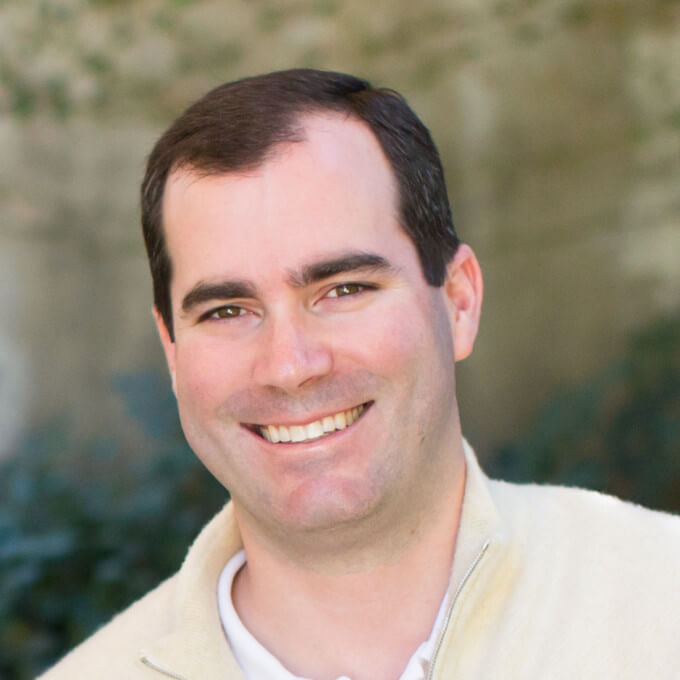
A founder who treats the patient as the customer
Most biotech companies begin with a molecule looking for a market. Matt Wilsey built one the other way around. Today he is co-founder and CEO of Grace Science, a company developing gene-therapy and small-molecule programs for NGLY1 deficiency, a genetic condition so rare that when his work began it counted its known cases on two hands. He runs it the way he ran software companies: gather everything, move fast, and keep a customer in the room. His customer happens to be his daughter, Grace.
The company is the second act. The first was the Grace Science Foundation, which Wilsey launched in 2014 and used to wire together a global research network from scratch. He funded roughly 75 scientists at 20 medical centers across five countries, built a biobank, and convened a research symposium - all before there was a corporation to commercialize any of it. When that network started producing results faster than a nonprofit could carry them, he did the founder thing again and incorporated. Grace Science, LLC was the vehicle to turn discoveries into actual programs.
I want all the data now. We might not be able to interpret it today, but we'll be able to interpret it a month from now or a year from now. Matt Wilsey
That sentence is the whole operating philosophy in one breath. It is a startup instinct - ship, measure, iterate - pointed at biology, where the orthodoxy is usually to wait, hypothesize, then collect a narrow slice of data. Wilsey wanted the looking glass and the whole library behind it. The instinct came from a career spent inside fast-moving companies where the cost of waiting was someone else getting there first.
From the West Wing to Webflow forms
Wilsey did not start in either tech or science. He started in government, with early roles at the White House and the Department of Defense and a stint as a regional political coordinator on a presidential campaign in 2000. It was a crash course in logistics, persuasion and operating inside large institutions - skills that translate better to rare-disease bureaucracy than any pipette ever could.
Then came Silicon Valley. He co-founded Zazzle, the on-demand custom-print marketplace, as VP of business development. The defining move there was almost comically on-brand: he cold-emailed Disney to license its entire visual library, a deal that helped flip the company from one-off sales to scale. He later joined the capital markets team at KKR, ran West Coast sales for Howcast, and then co-founded CardSpring, a payments-infrastructure startup that Twitter acquired in 2014. By any normal accounting, the CardSpring exit was the finish line.
It was the starting gun. In 2013, his daughter Grace was diagnosed with NGLY1 deficiency. Wilsey, who has both a B.A. and an M.B.A. from Stanford, did what operators do when handed a problem with no playbook - he started writing one. He pulled the trigger on whole genome sequencing at a time when that was an unusual call, raised about $3 million in the foundation's first year, and went hunting for the best scientists in the world.
It's like we were stepping through the looking glass. We just didn't even know this world existed. On discovering Carolyn Bertozzi's chemistry
The most consequential cold outreach of his life came in 2015, when he contacted Carolyn Bertozzi, the Stanford chemist whose work he later said "blew my mind." Bertozzi would go on to win the 2022 Nobel Prize in Chemistry. She became his co-founder. A payments entrepreneur and a Nobel chemist is not a pairing any incubator would have scripted, which is precisely why it worked - Wilsey brought the urgency and the operating cadence, Bertozzi brought a chemistry that opened doors no one in the field had thought to knock on.
Speed and safety are not opposites
There is a lazy assumption that advocates pushing for treatments are reckless, willing to trade safety for speed. Wilsey turns that inside out. His argument is structural, not sentimental: the person with the most to lose if a therapy is unsafe is the one who lives with the patient. He is not optimizing for a quarterly milestone or a portfolio return. He is optimizing for one specific person he sees at the breakfast table.
A lot of rare disease advocates such as myself might get mistaken for moving too fast - and the fact is, we have the greatest incentive to make sure that the drug is max safety. Matt Wilsey, Raising Health podcast, 2024
It is also a thesis about science, not just one disease. Wilsey is fond of the idea that rare conditions are a back door into common ones - that the clean genetic signal in an ultra-rare disorder can illuminate mechanisms in oncology, neurodegeneration and beyond. The company's keyword cloud reads like a map of where a single rare pathway might lead: gene therapy, small-molecule inhibitors, biomarker development, the connection between one obscure enzyme and the diseases that affect millions. Build the key for one lock, and you may find it opens others.
What makes Wilsey genuinely unusual is not that he funds research - plenty of wealthy parents have. It is that he refused to stay a check-writer. He learned the vocabulary, sat in the symposiums, recruited the talent, and then took on the operational risk of running a company in an industry where his prior experience technically counted for nothing. He treated the field as a market with terrible product-market fit and went to work on it with the only tools he trusted: relentless data collection, sharp partnerships, and a deadline that never moves.
He keeps a wider set of duties too, sitting on the boards of the Charles and Helen Schwab Foundation, the Lucile Packard Foundation for Children's Health, Global Genes, and the EveryLife Foundation for Rare Diseases - the connective tissue of the rare-disease world. The through-line across all of it is the same instinct that made him email Disney: find the asset everyone else assumes is out of reach, and ask anyway.
Six lines that explain him
We're going to find the answer. And then we're going to find the cure. We just need to keep chipping away.
Pick a fight that's worth fighting.
I see the patient every day.
I want all the data now. We'll be able to interpret it a month from now or a year from now.
How an operator became a founder twice over
// The Cold-Email Pattern
- Zazzle, mid-2000sEmailed Disney for its entire image library. It said yes.
- Grace Science, 2015Emailed a future Nobel laureate. She became his co-founder.
- The lessonFind the asset everyone assumes is unreachable - then ask.
// Network, By The Numbers
What one founder assembled before there was a company to do it.
Things that don't fit the resume
He went government → tech → biotech, a career path with no obvious connecting line except the willingness to start over.
Both his bachelor's and his MBA are from Stanford - the same campus that later housed his most important collaborator.
He named both the foundation and the company after his daughter. The brand and the mission are the same word.
His scientific creed is pure operator: collect all the data now, figure out what it means later.