The Patient Listener
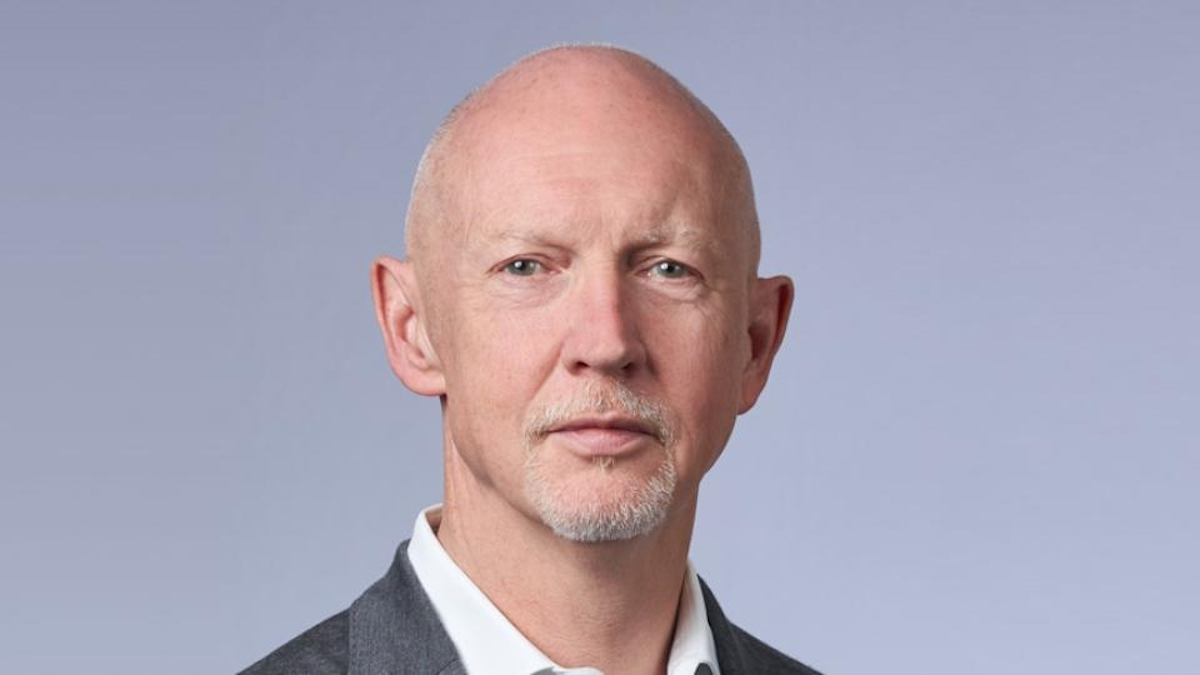
// 01 / ProfileOn any given Tuesday Sandy Macrae is somewhere in Brisbane, California, asking the wrong question. Not "can we edit this gene?" - the answer to that one is increasingly yes. The question he keeps coming back to is older and far less fashionable: did anyone ask the patient?
That is the through-line. He runs Sangamo Therapeutics, the clinical-stage genomic medicine company that pioneered zinc-finger DNA binding before CRISPR was a kitchen-table acronym, and he runs it from a 7000 Marina Boulevard office on the southern lip of San Francisco Bay. He has been CEO since June 2016, when founder Edward Lanphier handed him the keys and the unfinished puzzle.
He speaks slowly. He uses the word "we" when describing wins and the word "I" when describing setbacks. He is, to put it mildly, not built for biotech theatre.
The Glasgow Apprenticeship
He grew up Scottish and trained Scottish. A BSc in pharmacology at the University of Glasgow, then the MB ChB - the Scottish medical degree - with honours, from the same institution. He is a member of the Royal College of Physicians. The clinical instincts came first; the molecular ones came after.
That second act happened at King's College, Cambridge, where he took a PhD in molecular genomics. His supervisor was Sydney Brenner, the South African biologist who helped crack the genetic code with Crick and won a Nobel Prize for showing that a tiny worm called C. elegans could teach us how cells live and die. Brenner did not suffer fools and trained scientists who could think in code. Macrae carries that fingerprint.
The London-Tokyo Detour
Before he became a gene-editing CEO he was an enterprise R&D operator. From 2001 to 2012 he climbed the ladder at GlaxoSmithKline, eventually as Senior Vice President of Emerging Markets R&D from 2009. The job was, in plain English, to figure out how a London-headquartered pharma giant could actually run clinical trials and register drugs in places like India and China. He built a first-of-its-kind group inside GSK to do exactly that.
Then Takeda called. From 2012 until early 2016 he sat in Tokyo and Boston as the Japanese pharma group's Global Medical Officer, where he stood up Takeda's first Global Medical Office: medical affairs, regulatory, pharmacovigilance, outcomes research, the lot. It was an unsexy, foundational job. It is the kind of work that prepares you to run a smaller, riskier company.
Sangamo, June 2016
He took over a company whose zinc-finger story was solid science and selling badly. The field had moved on to CRISPR. Reporters wrote about Sangamo in past tense.
Macrae's line on the comparison is now famous in the gene-editing world: "We look at CRISPR like the boy band and we are the Rolling Stones. The boy bands have the froth and excitement about them... We need to tell a story based on data." It is the kind of sentence that gives away the speaker. He believes in slow facts.
The Pfizer Earthquake
December 2024 was not kind. Pfizer announced it would stop developing giroctocogene fitelparvovec, Sangamo's hemophilia A gene therapy - a programme that had hit its Phase III endpoint and was sliding toward a Biologics License Application. The stock collapsed by roughly half in a session. Sangamo regained full rights on 21 April 2025.
Macrae's public response was measured to the point of stoicism. He said the company was "surprised and extremely disappointed" - phrasing that sounded almost polite for a CEO whose near-approval asset had just been handed back. Then he told investors he would find the right partner and would, in the meantime, pour the company's focus into the wholly-owned neurology pipeline and the Fabry programme aiming at a 2025 BLA. He kept walking.
What He Actually Believes
Strip the deck slides away and Macrae's worldview is unusually specific. He thinks medicine over the next century will rest on three pillars: vaccines that prevent disease, short-term drugs that calm symptoms, and one-time edits to the genome that either reduce risk or remove disease entirely. He thinks the gene-editing business model breaks the chronic-prescription habit pharma is built on - and that the value of a one-and-done cure to society is, in his word, "enormous."
He also thinks the field talks too much and listens too little. In an interview he framed it as gently as a Scotsman can: it is easy to have an opinion on whether gene editing is the right thing to do, he said, but the people who actually have the disease are rarely the people in the room. It is not a heroic statement. It is just a true one.
The Brisbane Office
Sangamo today employs roughly 190 people. The address is 7000 Marina Boulevard, Brisbane, a strip of bay-front technology parks south of San Francisco. Annual revenue runs around the high tens of millions; the company is, in biotech taxonomy, clinical-stage. The pipeline reaches into Fabry disease, neurology, hemophilia, and the next-generation tooling the field is now calling epigenetic regulation and AAV capsid engineering for the blood-brain barrier.
What Macrae is selling, in a sense, is patience. Zinc fingers have been refined for a quarter of a century. The Rolling Stones, in his metaphor, are still touring. They are also, occasionally, recording their best work.
We look at CRISPR like the boy band and we are the Rolling Stones. The boy bands have the froth. We need to tell a story based on data.- Sandy Macrae
The Long Walk
// 02 / CareerIn His Own Voice
// 03 / QuotesIt's so easy to stand here and have an opinion on whether or not gene editing is the right thing to do. But we so seldom ask the patient: what do you want?// on patient-centred R&D
The gene-editing model is different. If it succeeds, once a patient is treated, they're treated. The value of that to society is enormous.// on the business of cures
Eventually I envisage a world with three treatment pillars: vaccines to prevent disease, short-term treatments for things like pain and hypertension, and changes to fundamental DNA.// on the future of medicine
Gene therapy can ultimately only take you into the liver. There are 7,000 liver diseases, and only 10 to 20 of them big enough to run large clinical trials.// on the limits of the field
Macrae's Map of Medicine
// 04 / WorldviewNumbers, Roughly
// 05 / By the figuresFootnotes
// 06 / QuirksHis MB ChB is the Scottish equivalent of the American MD. The "Ch.B." sounds quaint until you remember it is the older spelling - Chirurgiae Baccalaureus, bachelor of surgery, Latin straight off the medieval-university shelf.
He inherited Sangamo from its founder rather than starting it himself. Founders rarely make great handovers. Macrae's tenure now outlasts Lanphier's by a comfortable margin.
Brisbane, California, is not Brisbane, Australia. The biotech corridor along the bay is more strip-mall than skyline. The work happening inside the buildings is not.