Long before distribution became a dashboard, it was a desk, a modem, and a stubborn editor waiting for news from Japan. Matt Casamassina remembers the early IGN office as part newsroom, part clubhouse, part sleepover with worse furniture. The team stayed late enough that leaving before midnight could seem odd. Sometimes they slept under their desks so a Nintendo announcement could reach readers before breakfast. The labor was unreasonable. The enthusiasm was perfectly sincere.
Casamassina’s career begins there, in the peculiar internet moment when a domain name could become an institution. He joined the operation around N64.com in 1996 and 1997, then helped build what became IGN. He edited, reviewed, reported, managed, and became especially associated with Nintendo coverage. Titles changed from editor-in-chief to editor-at-large, but the essential job was stable: play closely, decide what mattered, and explain it quickly enough that a community would return tomorrow.
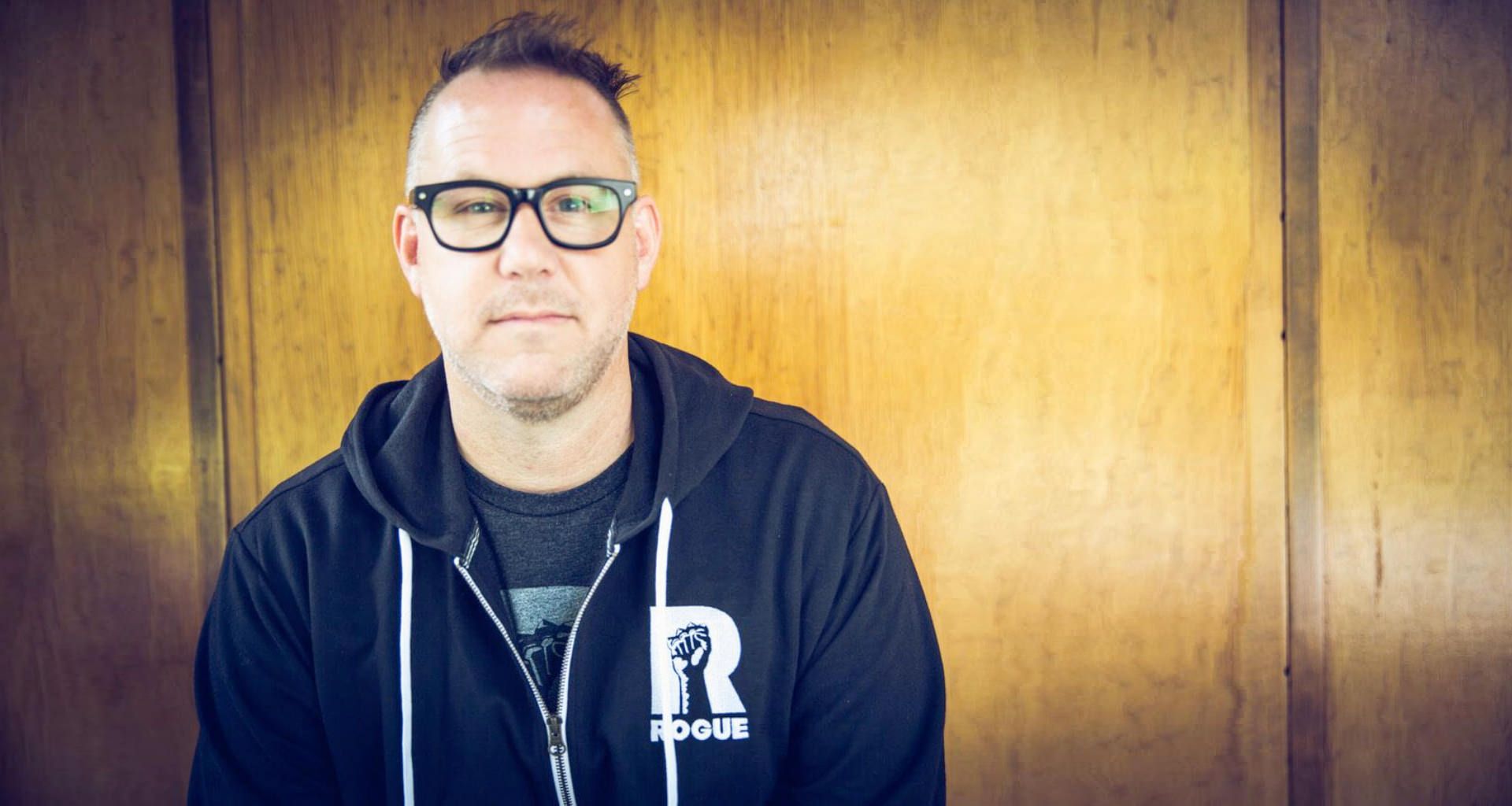
Three decades later, that same mechanism sits beneath his work as co-founder and chief executive of Rogue Games. The nouns have changed. Reviews became contracts. Readers became players across mobile, PC, console, and subscription services. Deadlines gained budgets. But a publisher still begins with an editorial question wearing a business suit: is this worth someone’s attention?
The career has a hidden verb
On paper, Casamassina has made three sharp turns. First came journalism. In 2010 he left IGN for Apple, where he built and led the App Store games editorial team for nearly a decade. Then came publishing. He co-founded Rogue Games in 2017, initially served as chief strategy officer, and took over as CEO in 2020. Running beside all of it is fiction: Dead Weight in 2016, Sophistication in 2018, and Degenerate in 2025.
Look at the roles as a list and the moves seem dramatic. Look at the verb and they line up. Casamassina curates. At IGN, he curated information and opinion for readers. At Apple, he helped curate discovery for customers staring into an expanding App Store. At Rogue, he curates bets - which teams, concepts, platforms, and partnerships deserve scarce time and money. In his novels, he curates obsessions that do not fit inside a quarterly plan: science fiction, horror, technology, collapse, and people behaving poorly under pressure.
Taste can sound decorative until money is attached to it. A critic risks credibility. A platform editor risks a customer’s finite attention. A publisher risks capital, release timing, and a developer’s years of work. Each move brought Casamassina closer to consequence. It also made his old newsroom skill more valuable: he knew how to form a judgment, defend it in plain language, and recognize the audience on the other side.
Critic: explain the game.
Curator: place the game.
Publisher: commit to the game.
The surface task changes. The judgment travels.
A platform education
Apple was the quiet middle act, mostly because former Apple employees tend to keep their stories close. Casamassina has joked about “Apple Snipers” while saying he loved the work and remained a believer in the App Store. The important public fact is scale. His team helped present games inside a storefront browsed by hundreds of millions of customers. A recommendation was no longer a paragraph beside an ad. It could become a distribution event.
That experience explains Rogue’s breadth. The publisher began with mobile titles and later expanded across PC and consoles, working with storefronts and services including Apple Arcade, Google Play Pass, Steam, Xbox, PlayStation, and Netflix Games. Casamassina resisted defining Rogue by a single device or business model. He wanted the company to follow players, because players had already escaped the tidy boxes the industry built for them.
One judgment, four settings
Relationships accumulated across those chapters. A contact first met in journalism could become a studio leader years later. Platform fluency could become a pitch. When Rogue announced work with Netflix and Bloober Team, Casamassina described business development as central to the company’s identity. The advantage was not mysterious. A long career had produced a dense map of creators, executives, storefronts, and audiences. Rogue’s task was to turn that map into routes for games.
The novelist after closing time
Casamassina calls himself a writer, nerd, and gamer. He grew up reading Stephen King and Chuck Palahniuk, wrote what he now describes as bad teenage fiction, and never quite abandoned the desire to make up his own worlds. Journalism gave him a daily writing practice, but fiction remained the place where nobody else assigned the subject.
The practice is less romantic than the book jacket suggests. He has a full-time job, a family, pets, and an alert sensitivity to every attractive form of procrastination. A season of The Expanse, a movie, the gym, or another run through No Man’s Sky could all defeat a planned session. His solution is not monk-like consistency. He writes in powerful bursts, often late, and uses external deadlines to turn intention into pages. A weekly science-fiction writing group adds the useful pressure of other people expecting a chapter.
Dead Weight arrived first, a post-apocalyptic novel focused on survivors and their relationships. Sophistication moved into a cynical near future shaped by technology, power, media, and Silicon Valley. Degenerate, finished after a long and openly documented stretch of procrastination, blends horror and science fiction. Its audio production runs more than 15 hours, narrated by Philip Nathaniel Freeman and supplemented with music and selective sound effects.
He is unusually candid about the ungainly middle of making things. On his personal site, progress reports include agent queries, rejections, edits, cover work, format decisions, and jokes about his own delay. He has written that the machinery around publication is secondary to the act itself: “I ultimately write books because I fucking love writing books. Everything else is gravy.” The sentence is useful because it separates ambition from permission. A gate can improve the route, but it need not determine whether the work exists.
Editing the hustle myth
The early IGN stories make heroic anecdotes. They also make terrible employee handbooks. In 2022, Rogue Games shifted to a four-day workweek, giving employees Fridays off without lengthening the other days. Casamassina did not disown the midnight years. He credited them with producing much of what the young team built. He simply questioned whether endurance theater should remain the default once a company knows how to operate.
His case rested on process, efficiency, and trust. Remote work had already shown that the office was not a magical container for productivity. Clear responsibility could matter more than visible exhaustion. The evolution is striking: someone formed by obsessive work choosing not to make obsession compulsory for everybody else.
There is a quiet consistency here, too. Good editing removes what no longer serves the piece. Casamassina edited his own management folklore. The late nights remain part of the origin story, but they are no longer the operating system. A company can preserve urgency without asking every employee to reenact its founder’s youth.
The bet behind the bets
Casamassina’s public voice is informal, profane, self-mocking, and allergic to the varnish of corporate speech. That tone can disguise a fairly disciplined thesis. Discovery is the scarce resource. Developers need more than money: they need positioning, platform access, marketing, and someone who can make the case for a strange project before its audience exists. Rogue’s portfolio has ranged across genres and devices because the company’s proposed specialty is not a format. It is helping particular games travel.
The next chapter remains split between those travels and the private work of fiction. On his desk is Dust & Fury, a planned first-person novel following a character named Anouk. In August 2026, he announced a Northern California author event with his longtime friend and writing peer Mark Bozon. The games executive keeps turning up in bookstores. The novelist keeps borrowing an operator’s tools: goals, milestones, assets, launch dates.
His career offers no clean division between art and commerce. It offers a revolving door. Reporting taught him to notice. Apple taught him the power of placement. Publishing made judgment expensive. Fiction kept judgment personal. Across all four, the work is to find something that might matter, make a case for it, and send it toward people who might care.
Even the odd footnotes fit the pattern. His face became a character model in the Nintendo 64 game Perfect Dark, and an illustrated version of him appeared in IGN’s Cubetoons webcomic. The critic wandered into the artifact. It is a suitably strange reward for years spent telling other people where to look: every so often, the medium looked back.
The boyish enthusiasm in the old IGN stories survived. It simply learned contracts, calendars, and when to take Friday off.