The old code is never merely old. Somewhere inside it is a freight rule that still gets a truck out on time, a pricing exception won in a negotiation nobody remembers, or a month-end ritual that finance would prefer not to rediscover through failure. By the time a large company decides to move its SAP estate forward, those lines of custom ABAP have become an unofficial record of how the place actually works. The modernization plan may arrive in a handsome deck. The inheritance arrives without one.
Matt Aucella has made a commercial career in that awkward interval between the promised future and the installed past. He is the Chief Sales Officer at smartShift, the Boston-based software company that analyzes and transforms SAP custom code. His title covers global sales and marketing, but his public vocabulary is unusually operational for a sales leader: business continuity, dual maintenance, code freezes, scope, effort, risk. There is not much glamour in any of those phrases. There is a great deal of budget hiding in them.
This is Aucella’s chosen ground. His job is to make a technical problem visible before it becomes a calendar problem, then turn that visibility into a decision. The salesmanship is not in pretending the machinery is simple. It is in showing why the machinery matters to people who do not spend their afternoons reading code.
A number big enough to cross the room
In a short film about JBS USA’s SAP transformation, Aucella sits against a brick wall and explains the problem plainly. A long migration creates two realities. The current system must keep serving the business, while the future system is being prepared. A useful change made on one side may need to be repeated on the other. Delay the change and the business waits. Copy it manually and the developers do the same work twice. Freeze the code for too long and the transformation begins asking the company to stand still while it changes.
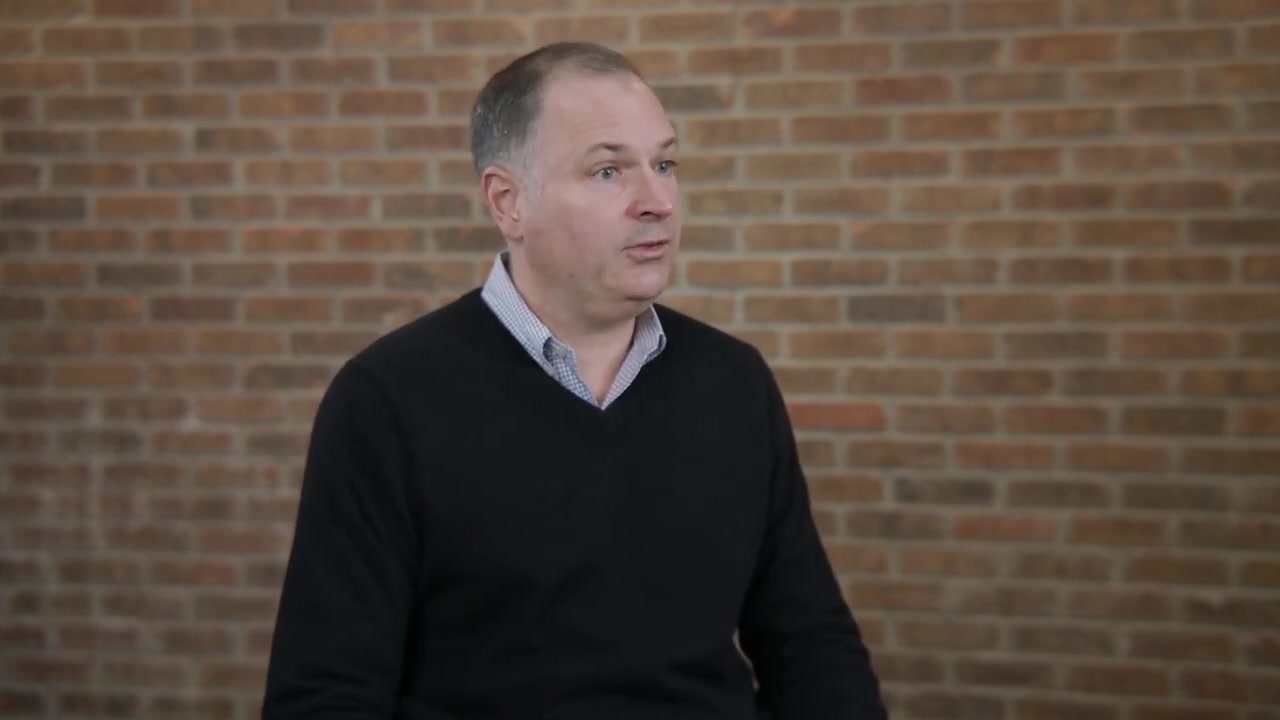
smartShift and its project partners built an automated dual-maintenance approach using the company’s platform with open-source Git technology. Aucella’s line in the film is both restrained and devastating: “JBS estimated that this saved them 30,000 man hours of manual developer effort.” It is the sort of number that travels well. Engineers can imagine the queue of tickets. Finance can price the labor. Executives can see time returning to the program.
“This is really impactful because it allows the customer to continue to have business continuity throughout the S/4 journey.”Matt Aucella, discussing the JBS program
The important word is continuity. Aucella is not selling change as a theatrical break with the past. He is selling the ability to change without suspending the present. Enterprise software has produced enough transformation metaphors to exhaust a shipyard - journeys, waves, horizons, blueprints. Continuity is less picturesque. It is also what a chief operating officer needs at 8:30 on Monday morning.
Before the corporate core, the classroom
Aucella’s route to SAP modernization did not begin with SAP. In 2012, his name appeared on the program of the NERCOMP Annual Conference beside a session called “Lecture Capture Market Trends: A Tegrity Perspective.” The pitch then concerned the technology used to record and distribute lectures. He had served as Tegrity’s Vice President of Sales. The classroom and the corporate core look like distant markets, yet they share the commercial difficulty Aucella has kept returning to: a technology succeeds only when a complicated institution can adopt it.
Universities do not become nimble merely because the software brochure uses the word. Neither do global companies. Both contain departments with different incentives, veteran systems, anxious users and budgets whose owners expect a coherent answer. Selling into either one rewards a person who can build consensus without confusing agreement for progress.
After Tegrity, Aucella moved deeper into enterprise software. His documented roles include SAP sales leadership at Oracle and Senior Vice President of Sales and Field Marketing for North America at SNP, a specialist in data transformation. He joined smartShift in 2020, first in enterprise transformation, then as Senior Vice President of Sales and Partnerships, before taking the chief sales post. The corporate logos changed. The recurring work became more precise: connect a technical intervention to a consequence the whole buying group can understand.
It is tempting to tell a career story as a steady climb in title. Aucella’s is more interesting as a widening circle of translation. He started with products that had to make sense to academic technology buyers. He moved through companies where the sale sat inside larger ERP programs. At smartShift, the thing being sold is partly relief from work that organizations have learned to dread. Automation is the mechanism. Predictability is the product.
The consensus builder with a whistle
Aucella describes himself publicly as an experienced, consensus-building executive. Former colleagues fill in the picture. Their recommendations emphasize solution-sales process, strategic planning, practical execution, customer engagement and his habit of defending the value of the company he represents. One observes that he could manage people with different expertise and career ambitions while keeping the organization’s goals in view. That is an enterprise deal in miniature: many specialists, one scoreboard, limited time.
There is a literal coaching chapter, too. From 2015 to 2018, Aucella volunteered as a girls basketball coach at Blessed Sacrament School. It would be too tidy to claim that every sales meeting is a locker room or every transformation needs a point guard. Still, coaching reveals a preference for work in which individual talent has to become coordinated motion. Consensus is useful only if somebody eventually passes the ball.
His public exchanges with former colleagues carry less corporate varnish. When one longtime SNP colleague announced his retirement, Aucella remembered a team that designed, deployed and implemented a working integrated system in under four months. He called it one of the highlights of his career, thanked the people who made it fun, and offered the retiree a proper Italian meal in Boston’s North End, preferably with a discussion of The Godfather. The detail is small and revealing. Programs are remembered by their deadlines; careers are remembered by their dinner invitations.
The transformation plan points forward. Aucella’s work begins with everything the plan must carry along.
Clean core, dirty hands
The current industry phrase is “clean core,” a way of keeping an SAP environment closer to standard, easier to update and less burdened by unmanaged customization. The phrase sounds hygienic, almost effortless. The work beneath it is neither. Companies have to decide what custom code remains valuable, what can be retired, what must be transformed and what should be moved outside the core. Those decisions require technical evidence and organizational nerve. Nobody receives applause for discovering a dependency early. Everybody notices when it appears late.
Aucella’s recent public appearances stay close to those decisions. At smartShift programs with ASUG, he has discussed custom-code carryover, S/4HANA migration challenges, AI and automation, and the path toward a cleaner core. At SAP Sapphire, his public messages have stressed modernization at scale, security, continuous management of technical debt and outcomes that can be specified before the program begins. His language treats AI as an instrument inside an architecture, not a substitute for one.
That distinction matters. Generative software can make code quickly. An enterprise buyer has a different question: which code should exist, what does it touch, and who will answer when it behaves unexpectedly? Aucella’s pitch rests on accumulated rules, analysis and deterministic automation. The promise is not that a machine will improvise brilliantly. It is that a repeatable process will make an unruly estate measurable.
This is where his operator’s instincts and sales role meet. A chief sales officer is usually measured by revenue, pipeline and forecast. Yet complex software is not bought by a spreadsheet alone. Someone must give a customer language for the risk already present. Someone must persuade technical and commercial people that they are looking at the same obstruction. Someone must make 30,000 invisible hours cross the room.
The sale after the sale
Aucella’s career also traces a larger change in enterprise selling. The old caricature places the salesperson at the beginning, polishing the promise, and delivery people at the end, managing reality. His public work sits closer to the project center. He appears alongside customer executives, consultants, product leaders and researchers. He talks about how the code moves while the business keeps moving. The credibility of the next sale is carried by the details of the last implementation.
That may explain why he returns to teams. In the public record, his proudest recollections concern a group shipping an integrated system in four months, partners operating as an extension of a customer, and colleagues gathering around a problem. Even his self-description begins with consensus. The word can sound soft until one considers what enterprise transformation asks: agreement across departments that do not share a boss, a budget or a tolerance for risk.
The cleanest version of Aucella’s story is therefore not about climbing from vice president to chief sales officer. It is about learning to sell the middle. Between legacy and launch sits a long corridor of dependencies, duplicated changes, testing cycles and worried owners. Most transformation rhetoric hurries through it. Aucella slows down there, points to the hours, and makes the obstruction discussable.
Old code rarely volunteers to become a good story. It has no sleek interface and no appetite for the stage. But it contains the habits of a business, which means it also contains the terms on which that business can change. Matt Aucella sells a way through that inheritance. The future may get the headline. His career has been built in the fine print.