A car sitting in a parking space looks like a pause. To Matheus Riolfi, it is also a question: who is protecting it while its owner waits for the next booking? The co-founder and CEO of Tint has spent years working on the machinery that lets strangers share valuable things. Eventually, he and his wife bought a few cars and became Turo hosts themselves.
There is a pleasing detour in that story. Riolfi grew up in Brazil watching Ayrton Senna race on Sundays with his father. He loved cars long before he had reason to think about their insurance. Design, engineering, racing, the open road: the attractions were straightforward. An insurance program was unlikely to trouble the imagination of a child watching Formula One.
But the career that followed those interests brought him to Turo in 2014, then into the complications of taking a car-sharing business across borders. By 2018, those complications had become the basis of Tint. The route from a racing broadcast to insurance infrastructure is less glamorous than a starting grid. It does, however, explain why Riolfi pays attention to what happens when the engine is off.
The border was an insurance problem
At Turo, Riolfi led international expansion, launching the company in Canada, the United Kingdom and Germany. Taking the service abroad meant doing more than finding people who wanted to rent cars. Owners needed confidence that their vehicles could be shared. Insurers needed to understand an activity that did not fit comfortably into familiar categories.
In his account of the Canadian launch, Riolfi recalls moving to Toronto and spending more than 18 months helping put insurance in place for peer-to-peer car sharing in Ontario, Quebec and Alberta. The process involved underwriters, regulators and workflows assembled around the immediate need. “We duct-taped workflows,” he wrote. Four words convey quite a lot of early infrastructure.
The lesson was practical. A platform could have customers, software and a persuasive idea, yet still depend on people solving insurance problems before the service could work. Riolfi was learning how much of an apparently simple exchange happened out of view. An owner hands over the keys. Behind that gesture sits a considerable amount of work.
- 2014Joins Turo
- 2018Co-founds Tint
- 2021YC Winter batch
- 2025Canada, again
A degree opens a door. Work earns the invitation back.
Riolfi had already learned that an attractive proposition needed support beyond the proposition itself. He moved to the United States in 2011 to attend Harvard Business School. His earlier career included financial analysis at V2 Finance and consulting at Monitor Group. He also studied business at the University of São Paulo and KEDGE Business School.
Around the end of his MBA, he co-founded Tripeese, a travel startup. Its idea was to make group trips easier, including access to flight and hotel pricing. The business did not work out. Later, he described a particular difficulty: arriving from Brazil without the professional relationships that could help persuade partners and investors to commit.
Turo gave him operating experience and time to build those relationships. That mattered when Tint needed its first believers. He has described an early customer coming through a former colleague, and Turo’s CEO writing the first investor check. The general lesson is familiar enough. The personal cost of learning it makes his version worth hearing: trust accumulates while other people watch you work.
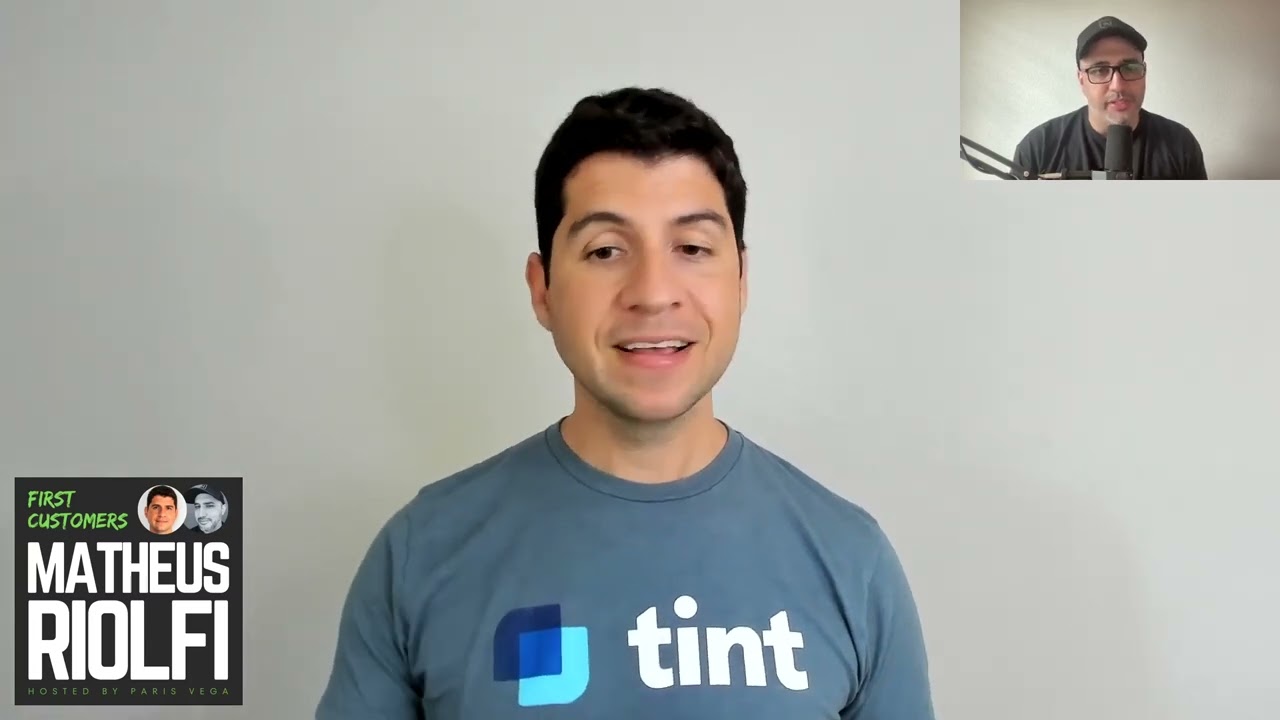 Watch the conversation ↗
Building the thing behind the booking
Riolfi’s co-founder, Jérôme Selles, had been Turo’s head of data. The two met there in 2014. Each had encountered the effort required to make protection part of a platform’s product. Their new company would provide software, connections to insurers and help with compliance, so another platform would not have to assemble all of it alone.
Consider the example the founders used when introducing Tint in 2021: someone booking a motorcycle through Riders Share. The rider chooses a bike and encounters protection options at checkout. Behind the screen, Tint’s technology helps assess the transaction and calculate the price. The customer gets on with planning a weekend. A separate set of systems gets on with the risk.
Tint joined Y Combinator’s Winter 2021 batch. In February 2022, it announced a $25 million Series A led by QED Investors. QED’s explanation of the investment centered on a problem Riolfi knew well: an unfamiliar business model can struggle to secure coverage, even when the underlying activity is something people clearly want to do.
The point of this work is easier to see through a customer’s ordinary intentions. Someone wants to ship a couch, share a motorcycle or book an RV. Protection belongs near that decision. Riolfi’s recurring ambition is to make insurance a feature within the experience, with the operational complexity handled behind it.
or rental
in the same flow
actual plan
The family has a runway, too
There is another form of risk in Riolfi’s story, closer to home. In a 2023 conversation about parenthood and founding a company, he described preparing for his daughter’s arrival while Tint had four months of runway. His co-founder was also expecting a child. Both wanted paternity leave. Both wanted the company to survive.
Riolfi took the leave. He described recognizing that the business, however much it meant to him, could not take precedence over his wife and child. The episode gives his public emphasis on persistence a useful dimension. Keeping a company alive is one responsibility among several that a founder carries. The calendar does not politely separate them.
His move to Las Vegas followed a related calculation. In November 2024, he explained that he had relocated a little over a year earlier after spending much of the previous decade in the Bay Area. He and his wife, Jess, both ran remote companies. They compared cities according to what their family and their work required.
He made the case for lower living costs and useful flight connections as ways to preserve personal runway. Remote work let them reconsider the location without treating the company as a fixed address. Friends apparently needed persuading that Vegas could be an ordinary place to live. A city can have schools, houses and an airport even when its reputation arrives wearing sequins.
Back to Canada, with a different set of keys
On September 8, 2025, BFL CANADA announced a program with Turo and Tint for eligible Canadian Turo hosts. Underwritten by Aviva Canada, the Off-Trip Insurance offering addressed vehicles when they were between trips or deliveries. The partnership brought together a broker, an insurer, a marketplace and Tint’s embedded technology.
For Riolfi, the Canadian connection reached back to his earlier assignment in Toronto. The work now concerned a different part of the host’s experience, but the setting was familiar. He described the launch as Tint’s first embedded insurance program in Canada and a significant opportunity to learn from working closely with a broker.
Meanwhile, he had acquired another view of the customer. Working on Turo’s off-trip program helped revive the interest in cars that founding Tint had crowded out. He and his wife started their own small hosting business. The experience gave him firsthand observations about the owners his company served, along with an excuse to enjoy the machines themselves.
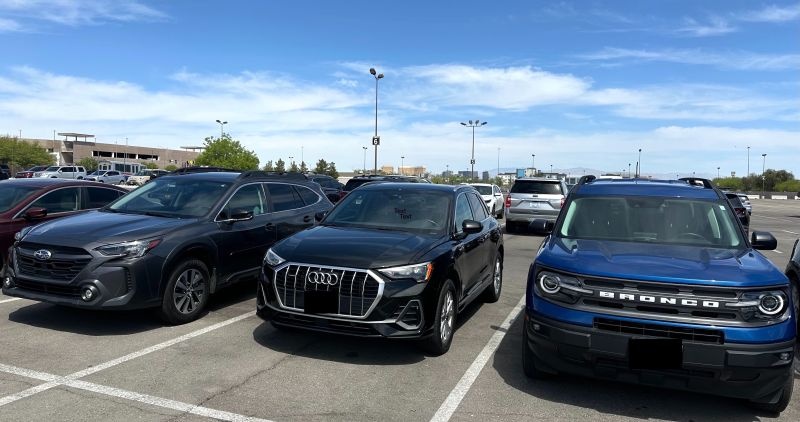
That is a useful arrangement for someone in his position. A founder can discuss a market at length and still benefit from joining it as a participant. Being a host introduces its own practical questions. Riolfi’s enthusiasm for cars now has a second job: keeping him close to the people whose working day his infrastructure is supposed to support.
Learning the work before automating it
By October 2025, Tint had announced Tint Studio, bringing underwriters, insurers and brand partners together to develop insurance programs. Its premise put demand and distribution near the beginning of the process. An idea needed customers, operational support and someone prepared to back the risk before it could become a useful product.
Riolfi’s January 2026 writing described a similarly ordered approach to AI. A person first performs the task. Then AI proposes work for a person to approve. Later, automation handles the task while a person reviews it. The sequence reserves a place for learning what the job actually involves before deciding how much of it to hand over.
“Humans first. AI later.”
Matheus Riolfi, January 2026
The company’s August 2026 announcement supplied a financial marker: Tint reported profitability, more than $100 million in gross written sales for partners, and a No. 242 ranking on that year’s Inc. 5000 list. Those are company-reported milestones. They belong to a business whose work extends across mobility, property and travel, and transportation and logistics.
Riolfi still has interests beyond that business. In 2022, he described taking brief Clash Royale breaks and recalled wanting to play soccer or tennis professionally. His fascination with marketplaces began as an eBay customer in 2005. These are small details, but they restore some proportion to a biography full of insurance infrastructure.
The cars supply the through line. First came the Sunday races with his father. Later came Turo’s expansion, then a company built from the difficulties he and Selles had encountered. Now there are actual cars to share. Somewhere between bookings, a vehicle waits in a parking space. Riolfi has spent a good part of his working life making that ordinary pause easier to live with.
Follow the conversation
- Tint ↗
- LinkedIn ↗
- Twitter / X ↗
- Personal writing on Medium ↗
- First Customers · video ↗
- The Louis and Kyle Show ↗
- Marketplace Risk · conversation ↗
- The Canadian return ↗
- Series A reflections ↗
- QED’s investment essay ↗
- Family and founding · Peer Effect ↗
- Why Las Vegas ↗
- Efficiency at Tint ↗
- The founders’ launch post ↗
- August 2026 company update ↗