Marwan Berrada-Sounni has an unusual answer to a question that consumes founders: when should you arrive? His answer leaves room for somebody else to go first. At T45 Labs, the company-building firm he founded in Santa Clara, he calls the approach the “best follower.” The choice has a certain confidence to it. In a business culture fond of starting pistols, he is willing to watch the opening moves.
That willingness sits beside a career with plenty of movement. At 18, Berrada-Sounni moved from Morocco to Minnesota, learned English, and studied mechanical engineering. He went on to work in product development, lead teams, and become the co-founder and CEO of Advanced NanoTherapies. His responsibilities now extend across a group of companies. There is a considerable distance between arriving in a new country and deciding when a new company ought to arrive in a market.
The connection is an education in how things work. First the mechanism, then the organization around it. A product requires engineering. A company requires enough people, money, and agreement to keep the engineering going. Berrada-Sounni’s career has gradually brought both sets of questions onto the same desk.
Eighteen, and a new vocabulary
The Minnesota chapter gives this story its first change of scale. A move at 18 includes the ordinary business of becoming an adult, with another language added to the workload. Mechanical engineering supplied a formal course of study. Learning English was another practical requirement. Neither undertaking needs an invented airport scene to make the point: this was a substantial change in the conditions of his life.
He earned both a bachelor’s and a master’s degree in mechanical engineering at the University of Minnesota. He also earned an MBA in finance at McGill University. Taken together, those qualifications introduce two distinct ways of looking at a project. There is the question of whether it can be made, and there is the question of what it will take to support the making.
The degrees do not explain every later decision. They do establish that the engineering and business sides of his career have academic roots. A founder working across those disciplines has to become comfortable with several forms of precision: a technical specification, a budget, a case for investment. Each can look persuasive on its own. Getting them to agree is where company building becomes interesting.
Learning to build the company, too
At Cleveland Clinic Foundation, Berrada-Sounni served as senior director of product development. He also sat on the commercialization funding committee of the Global Cardiovascular Innovation Center. Those responsibilities placed development and financing within the same professional frame. He later held leadership roles at Shifamed, and his work has included several first-generation product launches.
A launch is a useful word because it has an ending built into it. Development must eventually produce something that can leave the development process. The people managing that transition have to translate between specialists, decide what is ready, and live with the cost of what remains unresolved. His subsequent move into executive and founding roles widened that responsibility.
His writing offers a glimpse of how he thinks about the change. In a 2015 essay on commercialization, he put considerable weight on the leader’s ability to explain and defend a company’s value. He treated relationships, criticism, and persuasive conversation as part of the job. The engineer in this account has to become a credible messenger, too. A spreadsheet has many virtues; taking a skeptical meeting on your behalf is rarely one of them.
That argument is revealing without requiring a personality label. Berrada-Sounni pays attention to the human work of building a business. Someone must take responsibility for explaining why the undertaking deserves support. The technical team cannot indefinitely delegate that question to the next presentation.
“The only thing I micromanage is a risk”
Marwan Berrada-Sounni, 2021
His 2021 leadership essay makes a further distinction about attention. He favors giving people responsibility, making the reasoning behind decisions clear, and watching risk closely. Read together, these positions describe a leader choosing where to intervene. The advice assumes that specialists need room to work and that the person in charge still owes them decisions.
The case for the second entrance
At T45 Labs, Berrada-Sounni has given timing an explicit place in the business model. The firm builds and funds companies. It contributes capital, strategy, and operational support. Its best-follower approach begins by looking at needs and concepts that others have already helped establish, then considering where a different offering can earn a place.
In a podcast discussion, he described an advantage for the second or third entrant. The specificity matters. “Second” is a position relative to competitors, rather than a permanent instruction to wait. A company still needs a reason to enter, and time alone provides a poor one. Observation has to lead to a decision about what deserves improvement.
- 01Study the openingUnderstand the established need.
- 02Choose the differenceImprove on early concepts.
- 03Build the businessConnect design, cost, and execution.
There is a useful limit to the idea. Arriving later does not automatically confer insight. It gives a team something to study. The value comes from what that team recognizes and changes. In Berrada-Sounni’s account, ease of use, manufacturing, and margins belong in the early design conversation. The business has to be considered while the product is still taking shape.
His career makes this an interesting preference. An inventor can appreciate originality while recognizing the obligations that follow it. A new design brings a company questions about production, staffing, and financing. The best-follower label gives those obligations a place alongside the excitement of making something different.
The money has dates
Advanced NanoTherapies provides a concrete view of Berrada-Sounni’s operating career. In October 2020, with him as CEO, it announced a $5.3 million seed round. Its investors included angel sources across the United States, Canada, Europe, Asia, and the Middle East, alongside Cleveland Clinic and Taiwan’s ForMed Ventures.
That geography adds another dimension to the founder’s story. A person based in California was helping build a company with support reaching well beyond it. The network around a business can become international long before the business is widely familiar. Money comes with conversations, expectations, and people who need to understand what happens next.
Separate financing rounds. Figures are not valuations or personal wealth.
In June 2022, the company announced a $7.2 million Series A. It said its financing came from sources in the United States, Canada, Europe, and Asia. The announcement identified him as co-founder and CEO. Later that year, he marked the company’s first public product presentation at ICI Meeting 2022 in a short celebratory post. After the financing came the occasion of standing up and showing the work.
By June 2026, the financing had reached another stage: an oversubscribed Series B totaling more than $31 million. An undisclosed strategic investor and S3 Ventures co-led the round, with participation from T45 Fund and other investors. The progression puts dates around years of company development. It also keeps the numbers in their proper place. They describe rounds raised by a company, with further work ahead of it.
A financing milestone gives a profile an easily legible moment. It is harder to convey all the decisions between those moments. Berrada-Sounni’s work spans that interval: the period when an organization needs enough continuity to move from one commitment to the next.
A wider desk in 2026
In September 2026, Mitria Medical announced a partnership with T45 Labs and named Berrada-Sounni CEO. He retained his role as T45’s founder and managing partner. The arrangement extends the same operating idea: the firm helps with financing, development, and organizational work, while its founder takes direct executive responsibility.
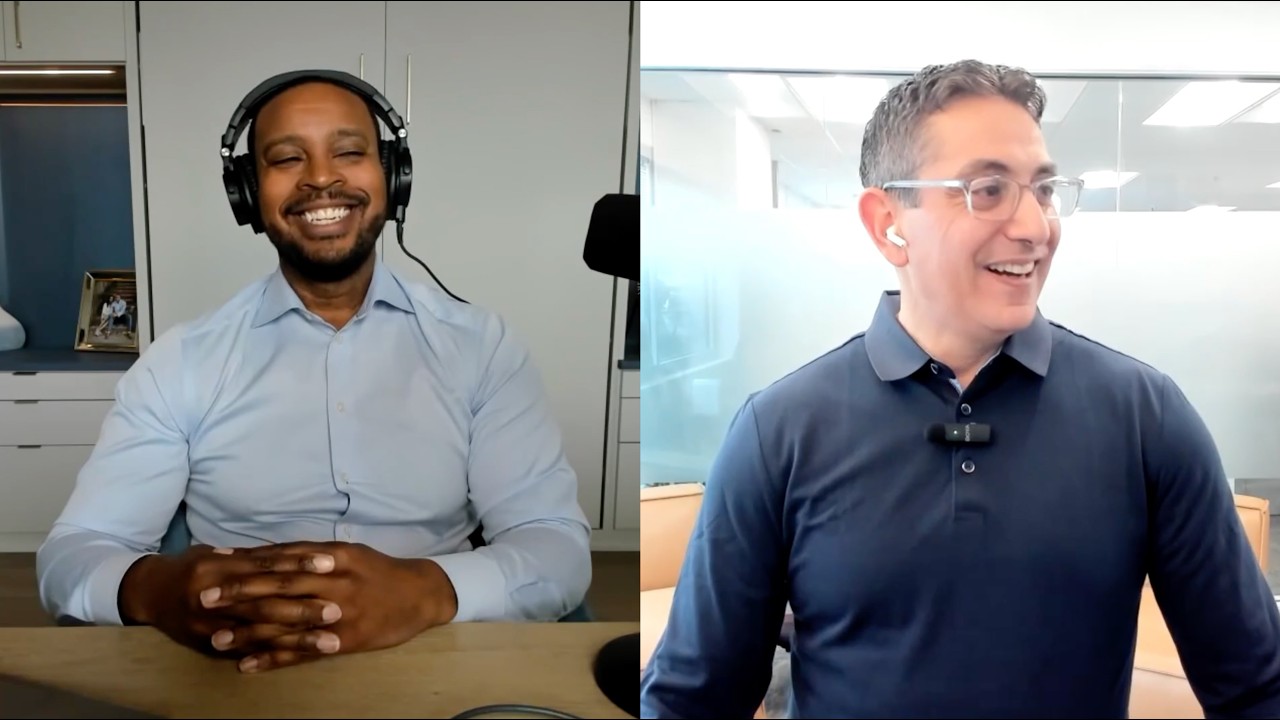
His public conversations have followed these themes across several years. In November 2024, he joined Tom Salemi on DeviceTalks Weekly to discuss starting companies when early-stage funding is scarce. In a NAMSA video that year, he discussed the practical benefit of having one primary point of contact across a development program. Both appearances concern the machinery around an idea: the relationships and arrangements that help work proceed.
The latest role adds another company to a career already spread across invention, management, and investment. It makes the question of organization more concrete. A company builder must decide how responsibility travels, who can make which decisions, and where his own involvement is needed. A growing list of titles is easy to print. Making the organizations function is the continuing assignment.
The journey that began with a change of country now contains repeated changes of perspective. Student, engineer, development leader, founder, executive. At each step the frame gets wider. The mechanism still matters. So do the people who make it, the funds that sustain them, and the judgment about when to enter. Berrada-Sounni’s preferred place may be second in the market. The responsibility for choosing it sits squarely on his desk.
Continue the conversation
INTERVIEWS, WRITING & PUBLIC PROFILES