Mark Sattin remembers the room. Three people, a space he compares to a closet, and a graduate’s introduction to recruitment. It is an appealingly unceremonious beginning for someone now running Finatal’s North American business. Before the board seat and the CEO title came the experience of being close enough to a young company to see how much needed doing. There was room for responsibility, even if there was rather less room for furniture.
He joined Finatal in 2010, as its third employee. The firm was young; so was his career there. Over the years he moved from consultant to leading the interim team, then to managing director. Today he is CEO, North America, based in New York. The sequence gives his story its shape: a recruiter taking on more of the business, then carrying that experience into another market.
A title can make that journey sound tidier than it feels. Sattin’s career has involved finance leadership, interim management, data and M&A. Each adds a different set of questions to the work of matching a person with a role. His public thinking also returns to development: how colleagues progress, how finance professionals become ready for leadership, and how a business gives people enough responsibility to make the next step possible.
Eleven years before the next title
His promotion to managing director was announced in 2021. By then, he had spent eleven years at Finatal. Founder David Rooney credited his contribution to the company’s growth and his support for colleagues. Paul Blant highlighted his work developing recruits and opening new revenue streams. The praise describes two strands of the job: making the business larger and helping other people become capable of carrying more of it.
Sattin thanked friends, colleagues and his network when announcing the promotion. That choice of company is revealing in a modest way. Recruitment happens through relationships; his own career announcement acknowledged a collection of them. It also leaves the story with more than a solitary protagonist. The consultant who stays long enough to lead a business accumulates colleagues as well as experience.
In 2022, discussing a round of promotions, he called Finatal “fundamentally a people business.” His emphasis was on finding and developing staff to support organic growth. Among those promoted were Clara Tate and James Harris, names that would also appear in the firm’s North American story. Progression was taking place around him, giving the company more people to whom larger responsibilities could travel.
“Finatal is fundamentally a people business.”
Mark Sattin, discussing colleague promotions
A New York address, and a new set of questions
Finatal opened its first New York office at the end of 2023. Sattin led the expansion, joined by principal consultants Jack Haire and James Harris. Monika Dowal arrived as senior vice president with two decades of executive search experience. The company had already worked on transatlantic assignments. A physical presence gave that work a base and brought the business closer to the market it wanted to serve.
At the time, Sattin emphasized the scale of the American private capital market and the opportunity to expand the firm’s services. He also drew attention to Dowal’s network and team-building experience. The announcement paired market ambition with the practical matter of choosing colleagues. An office can be described by its location. A business has to be described by the people doing the work inside it.
By the time he discussed the first nine months of New York operations, Finatal said it had more than doubled the team. His interview with Amy Davies on Scale Up Stateside covered understanding individual states, listening to clients and selecting the right staff. Those subjects give the expansion a more useful scale than a map with an arrow across the Atlantic. They describe the decisions waiting at the other end.
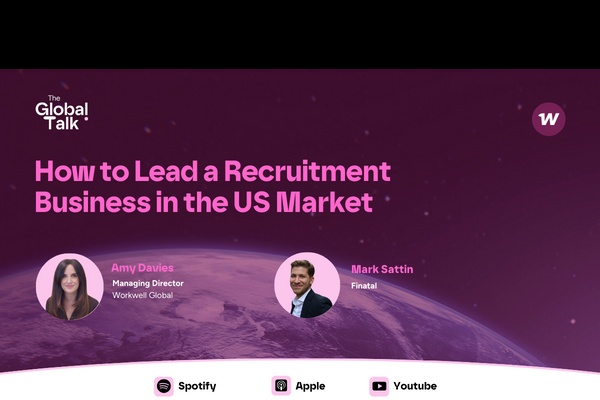
In that conversation, Sattin described preparatory work undertaken before the team was physically in the US. He discussed profitability, adaptation and the relationships that could make introductions lead to further work. He also spoke about differences across states. The account is practical: arrive with a plan, learn from the response, and keep adjusting the proposition. Familiarity with one market does not settle the questions in another.
“The relocation to the US was a life-changing event,” he said. The phrase carries the personal size of the move without turning it into a travelogue. His discussion stays close to the work: finding people who can operate independently, making decisions quickly, and building relationships with clients. An international expansion is also a change in the leader’s working day. Experience has to earn its usefulness again.
The colleague behind the shortlist
Building the North American operation meant adding capabilities around the search itself. Natalie Brendsel joined as Head of Delivery with experience in CFO recruitment and within a private equity talent function. Sattin emphasized that combination. Understanding a search from the recruitment side and from inside an investor’s talent operation offered a perspective he wanted as the business expanded.
His explanation of the appointment focused on the delivery function: identifying appropriate finance executives and knowing how an effective search operation should work. This is a less glamorous subject than opening an office, and a useful one. A leadership brief has to become research, assessment and communication. Someone has to keep those parts connected while the client continues running a business.
The interim offering expanded too. Alex Jillions joined as Partner and Head of Interim in North America. Sattin linked the appointment to portfolio companies’ need for leadership that supports the investment plan. He described interim executives as playing an increasingly significant role in that work. His own earlier experience leading an interim team now had a place in the developing American business.
Permanent search and interim hiring answer different questions about time. One asks who should own the role over the longer term. The other can address a defined transition or an immediate leadership gap. Finatal’s North American interim finance practice lists both funds and portfolio companies among its clients, with assignments tied to transactions, reporting, refinancing and preparation for exit. Sattin is part of the team serving that work.
Eight weeks to find the right CFO
A SouthernCarlson assignment makes the job concrete. Truelink Capital was acquiring the industrial distributor through a carve-out from Kyocera. The business needed a CFO for its transition into a standalone company under private equity ownership. Sattin and Brendsel co-led the search. The brief called for distribution experience, credibility with a sponsor and board, and the ability to improve reporting and financial planning.
The team began before closing, working with the CEO and Truelink’s deal and value creation teams. The search ran for eight weeks and produced eight shortlisted candidates. Trae Fletcher was appointed before the deal closed; his first day was February 2, 2026. The timing placed finance leadership within the transition itself. Truelink principal Aytaç Yaraneri described the team as thoughtful, proactive and commercially minded.
Search co-led by Mark Sattin and Natalie Brendsel. Appointment completed before deal close.
The assignment illustrates why a shortlist needs a situation attached to it. Distribution experience mattered because of the business. Sponsor and board exposure mattered because of the ownership. Reporting and planning mattered because of the transition ahead. The requirements had a practical relationship to one another. The task was to find an executive whose experience could meet them together, at the point the business needed that person.
The next CFO is already somewhere on the team
Sattin’s commentary on finance leadership looks one level below the top job. He argues that professionals reporting to the CFO need mentorship and exposure to strategic decisions, investors and exits. Their development affects the future supply of finance chiefs. It is an argument with a longer horizon than the immediate vacancy: the work someone is allowed to experience now helps determine what they can take on later.
He has also urged the industry to think about upskilling the whole Office of the CFO. That includes the people whose expertise in control, planning and commercial finance helps the senior executive operate. In his view, developing leaders earlier creates more CFO-ready talent. For employers competing to hire experienced people, the proposal directs attention toward the experience being offered inside their own finance teams.
His career makes that argument interesting to read alongside the biography. At Finatal, he gained responsibility as the business grew; in his finance commentary, he asks businesses to consider the responsibilities that prepare others. The parallel does not make every career identical. It does put a concrete question before a manager: what will the person beside you need to have done before you can ask them to lead?
Making space for the next person
Sattin has publicly celebrated Jolie Grayson’s development after joining as Finatal’s first graduate hire in New York. He described watching her move from an associate in the CFO practice to work within the Office of the CFO team as a highlight of building the local presence. It is a small piece of the expansion story, with a recognizable echo of his own beginning.
He now sits on Finatal’s board alongside leaders including Paul Blant, Katie Beck and founder David Rooney. His current title marks a long distance from the first consultant role. Yet the question connecting those points remains close to the work: who is ready for the next responsibility, and what will help them become ready? Employee number three has spent a career watching the room grow. He is still making space for people to join it.