Before there was Paysign on a Nasdaq screen, there was a proposition for the home computer: give it a card reader. Mark Newcomer and Daniel Spence opened 3PEA Technologies in Torrance, California, in February 2001. Their PayPad brought a familiar shop-counter action to the PC. A customer could use a debit card and PIN to make an internet payment. The checkout counter, having spent years persuading people to leave the house, was being invited into it.
Newcomer brought financial management experience; Spence brought an IT background. Their starting point was a particular obstacle in online commerce, rather than an ambition to sell every imaginable financial service. People needed a way to authenticate a payment. The device supplied a physical connection to the networks already handling money. Even the name had practical origins: 3PEA was short, available as a dot-com and suitable for a trademark. Romance, in this instance, could wait for the domain registration.
Two founders, two kinds of work
That partnership helps explain the enterprise that followed. Spence was responsible for the design and architecture of the Paysign payments platform. Newcomer led the business. The distinction matters in a company whose product depends on both a working technical system and commercial relationships willing to trust it. A clever interface still requires someone to make the agreements, manage the program and answer for the operation.
Newcomer attended California Polytechnic State University in San Luis Obispo, where he majored in bioscience. His subsequent career took him into payments, and the company he co-founded became his enduring professional commitment. In March 2006, he became a director and chief executive of the public parent. The operating business, 3PEA Technologies, became its wholly owned subsidiary that same month. The founding date and the public-company appointment belong to different chapters of one career. Together they show a founder moving from establishing an operation to carrying responsibility for a listed corporate structure.
- 20013PEA Technologies
Co-founded in Torrance - 2006Public parent
CEO and director - 2018Nasdaq
Trading begins as TPNL - 2019Paysign
A new name and PAYS
The useful art of staying involved
By February 2019, Newcomer’s responsibilities extended across financial, operational, technological and strategic decisions. His remit included technology investments, potential acquisitions, product development and relationships with other businesses. It is an unusually broad collection of subjects to fit behind a three-letter job title. CEO is economical stationery for a rather less economical working agenda.
He had also served on the X-9 committee developing standards for electronic payments, alongside representatives of established financial and technology organizations. Standards work offers a different view of a founder from the customary product launch. It concerns the agreements that allow separate systems to work together. That detail fits a career spent dealing with payment infrastructure: the customer’s brief transaction sits on top of many institutions having agreed how to behave. Newcomer’s connections to that world included both the technical standards process and the commercial partnerships required to turn a payment product into an operating business.
August 10, 2018: a larger audience
Seventeen years after the founding, 3PEA began trading on the Nasdaq Capital Market on August 10, 2018. It arrived under the symbol TPNL. This was an uplisting from the OTCQB market, a distinction that preserves the actual sequence of events. Newcomer had already been running a public company; Nasdaq gave it a different market and a wider potential audience.
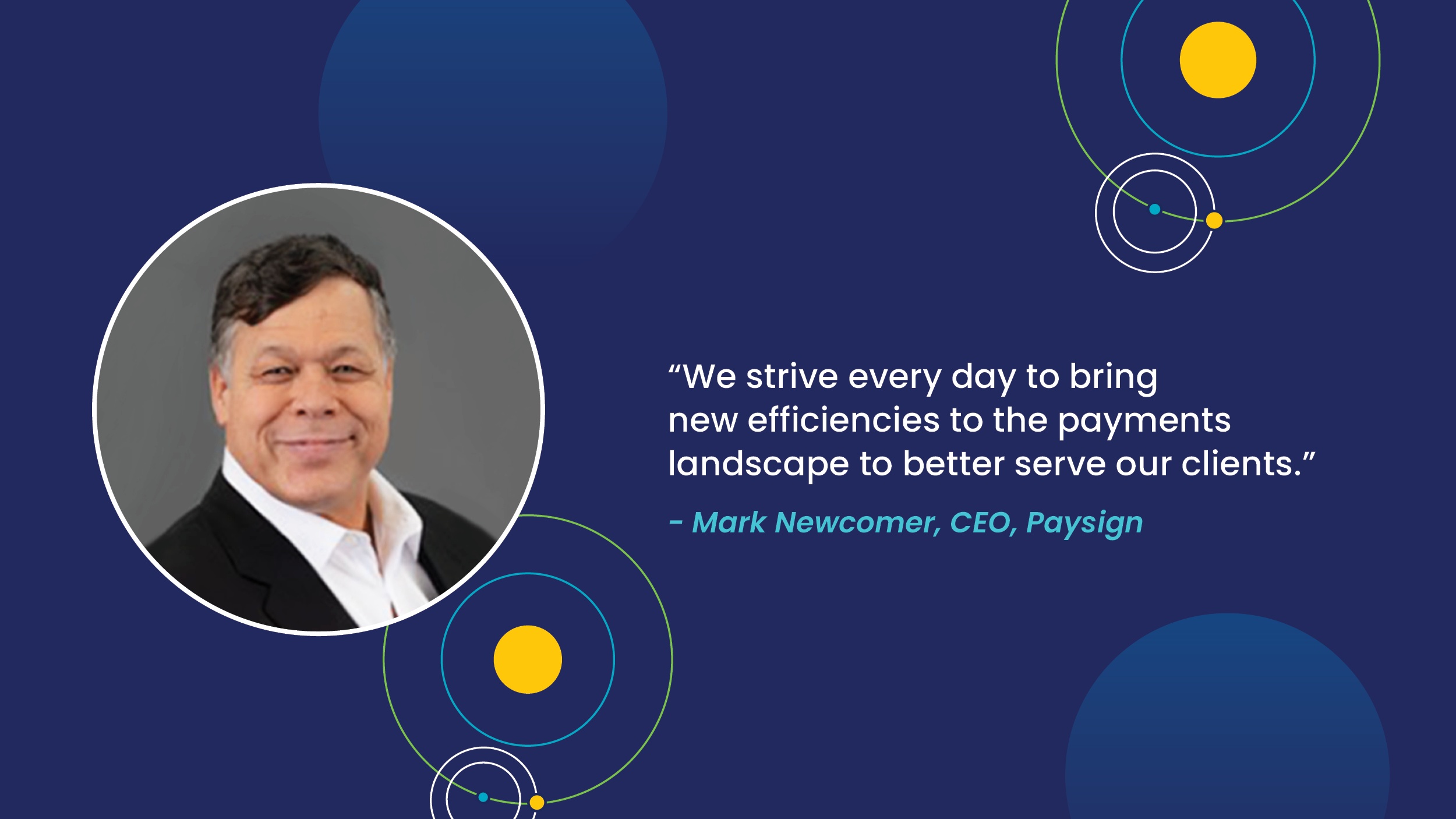
“I am thrilled to announce our up-listing to Nasdaq,” he said when approval arrived. He described the opportunity in terms of a broader shareholder base and access to more retail and institutional investors. Dan Henry, who had become chairman that May, pointed to liquidity and the company’s profile with investors and prospective partners. Henry had previously led Netspend. For Newcomer, the occasion brought experienced payments leadership and the market’s attention into the same frame. The achievement came with a continuing obligation to explain the business to people who could examine it every quarter.
“I am thrilled to announce our up-listing to Nasdaq.”
Mark Newcomer · August 8, 2018
The numbers beneath the new listing
The operating figures give that milestone some weight. Revenue for 2017 was $15.2 million. In 2018, it reached $23.4 million, an increase of approximately 54%. Net income attributable to 3PEA rose from roughly $1.8 million to $2.6 million. Those are company results, earned by an organization, but they establish the scale of the business Newcomer was leading when it reached Nasdaq.
There is a useful distinction between the money a payments company handles and the revenue it keeps. During 2018, $621 million was loaded onto the company’s cards. Its reported revenue was a much smaller number. The difference is fundamental to understanding this kind of business. A card balance belongs to the payment program; company revenue reflects the services supplied around it. For a founder addressing new investors, describing that distinction is part of the work. Large flows of money can make a presentation look imposing. Explaining the economics requires a steadier hand.
Three years of revenue
When the product name became the company name
In April 2019, 3PEA International became Paysign. The change took effect on April 23; trading under PAYS followed on April 29. PaySign was already the brand used for its prepaid-card and virtual-payment solutions. The corporate identity caught up with the identity attached to the product. Anyone who has explained a company name twice can appreciate the modest pleasure of needing to explain it once.
Underneath the new name was a business that combined payment processing with program management. It earned revenue at different stages of the prepaid-card lifecycle, rather than supplying only one isolated task. For clients, the offer included customized payment programs. For Newcomer, the strategy meant overseeing both the machinery that processed transactions and the continuing work of operating the programs. The rebranding gave this arrangement a simpler public name. It also supplies a helpful way to read his career: the names changed, while responsibility for making the payments business function continued.
Growth, with an explanation attached
Paysign’s 2019 revenue reached approximately $34.7 million, compared with $23.4 million the year before. By the end of that year, Newcomer said the platform had more than 2.9 million cardholders. The company had added 49 card programs during the year. The figures describe a business serving a growing collection of programs, with the founder still presenting the results himself.
The discussion also contained less festive business. At the April 2020 earnings call covering 2019, Newcomer addressed a delayed annual filing before discussing performance. He attributed the delay to additional auditor requests and said the preliminary financial numbers had not changed. He also acknowledged that annual revenue had missed guidance. Growth and a missed target appeared in the same account. For a public-company operator, both belong in the room. A rising revenue line does not remove the need to explain what had been promised, what happened and why the paperwork took longer.
Someone still has to answer the payment question
The company’s corporate disbursement products show the everyday work behind its payments vocabulary. Its payout cards can be used for vendors and consumer incentives. A separate reloadable-card offering addresses payments to freelancers and contract workers. The proposed benefits include less check handling, limits on spending and the ability to follow spending in real time. The tasks are familiar to anyone who has waited for an expense reimbursement.
This is the practical territory in which Newcomer has built his career. A payment must be issued, tracked and supported; each step gives a service provider something useful to do. It also creates obligations that persist after the initial sale. The executive’s subject is therefore larger than the moment money changes hands. It includes the people administering the program, the recipient trying to use it and the client expecting a clear account of what happened. The product has to survive ordinary working days, which can be more demanding than a demonstration.
Hiring for the parts nobody applauds
In March 2024, Paysign appointed Sandy Ortins as vice president of electronic funds transfer services. Her remit covered daily processing operations, audit, compliance, risk management and future processing connections. Her professional credentials included ACH, payments risk and check-processing qualifications. These subjects rarely lend themselves to a launch party, although their absence can certainly ruin one.
Newcomer welcomed the appointment as the company scaled its processing operations to accommodate transaction growth. The hire gives a concrete example of how he pursued that growth: add experience where the operating demands are becoming more exacting. A founder can remain central without expecting to be the specialist in every room. Around him, the business has included finance leadership from Jeffery Baker and payments experience from Matt Lanford. The work becomes an exercise in assembling people whose expertise can carry the commitments the company makes to clients. The chief executive’s decisions extend to who gets trusted with those details.
Quarterly company revenue
48.1% above Q2 2025
Twenty-five years in, another quarter awaits
By the second quarter of 2026, Paysign reported revenue of $28.25 million, up 48.1% from the comparable quarter. It ended the quarter with $27.37 million of unrestricted cash and no bank debt. Its revised full-year revenue outlook was $114 million to $117 million. That last figure was an expectation, distinct from the results already reported. A company’s next destination should always retain its future tense.
Newcomer’s stated priorities included sustainable growth, further margin expansion and long-term shareholder value. On October 13, Paysign scheduled its next earnings discussion for November 9. The calendar offers a fitting ending for a founder whose work has stretched across a quarter-century: another appointment to explain the numbers. From Torrance and the PayPad to Henderson and PAYS, his career follows the changing forms of a stubbornly practical problem. Somebody wants to move money. Somebody else must make the system work, then keep working when the next transaction arrives.