There are two ways to encounter Paysign. You can donate plasma and receive compensation on a prepaid card. Or you can need a medicine whose out-of-pocket cost puts it out of reach, and encounter a manufacturer’s assistance program running on Paysign’s infrastructure. In one case, money comes to you. In the other, money helps cover a bill. The common problem is getting the right payment through a surprisingly particular set of rules.
- Paysign processes payments and manages the programs around them.
- Plasma centers and pharmaceutical sponsors anchor the business.
- Pharma revenue overtook plasma in the second quarter of 2026.
- Its move into donor software brings opportunity and execution risk.
The company’s website supplies a compact promise: “Your Complex Payment Problems. Solved.” The interesting word is complex. A payment terminal already knows how to move money. A plasma operator also needs donor accounts, repeat loads and reconciliation. A drug manufacturer needs eligibility rules, claims processing and a record of where assistance went. Paysign sells the machinery surrounding the transfer.
A payment with a memory
Mark Newcomer and Daniel Spence co-founded the operating business in 2001. Newcomer remains president and chief executive. Spence, its original payments-platform architect, previously worked in technology planning at The Associated Press. Moving information accurately across a network turns out to be useful preparation for moving money accurately across one.
Paysign combines payment processing with prepaid program management. Its plasma offering includes a donor compensation card and an administrative portal. Instead of repeatedly issuing cash or checks, an operator can load a donor’s card and track the payment. LFB Plasma, for example, publicly identifies Paysign as its donor-card provider. The donor gets an account interface; the operator gets a repeatable process.
The distinction matters commercially. Paysign can earn revenue across the card’s lifecycle through transaction fees, interchange and program services. A prepaid card is the object a person holds. Enrollment, authorization, settlement and support are the work that makes the object useful.
The pharmacy counter changes the arithmetic
Patient affordability adds another layer. Paysign works with pharmaceutical services companies, manufacturers and hub providers to administer assistance. Pharmacy copay programs use the NCPDP transaction standard already embedded in pharmacy workflows. A claim is evaluated against the sponsor’s rules; assistance can cover some or all of an eligible patient’s responsibility.
Other products handle medical-benefit claims and buy-and-bill arrangements, where a provider stocks and administers a therapy. Support can also extend to travel, lodging and daily expenses associated with treatment. The practical attraction is continuity: enrollment, payments, receipts and reporting can live within a coordinated program.
That does not make assistance universal. A patient needs to qualify for the particular program, and the sponsor defines what it covers. Paysign operates the process. It does not turn every expensive prescription into an affordable one.
Reported business-line revenue. Other revenue excluded.
The economics explain the attention. Pharmaceutical programs generate setup, monthly management and claims-processing fees, plus charges for services such as business rules and contact-center support. Paysign’s 2025 pharmaceutical revenue rose 167.8% to $33.89 million. By the following second quarter, it exceeded plasma revenue. The company had 148 active affordability programs at June 30, 2026.
Buying the work before the payment
In March 2025, Paysign acquired Gamma Innovation’s assets, expanding into donor engagement and management technology. The software business now carries the Apherion name and earns licensing, hosting and professional-service fees. Strategically, this moves Paysign further into the collection center’s daily operations.
The commitment was tangible: $10 million in cash scheduled across five annual installments, 2.5 million restricted shares and potential performance shares. The June 2026 filing reported acquisition-date consideration valued at about $15.56 million, reflecting discounted future payments and other components. Cash promised and accounting purchase price measure different things.
Then came a useful check on the ambition. By June 2026, management valued the contingent earn-out liability at zero because acquired-technology revenue was materially below what the performance thresholds required. Releasing the remaining $990,000 liability benefited quarterly operating expenses. That accounting gain was not a customer payment.
Winning the payment does not automatically win the software around it.THE QUESTION INSIDE THE GAMMA DEAL
The filing does not establish that Gamma’s technology failed. It establishes that expectations for the performance payout changed. Buyers considering the software should judge the working modules, implementation demands and fit with existing systems. A relationship built around donor cards supplies access to a customer, not proof of software adoption.
The cost of being useful
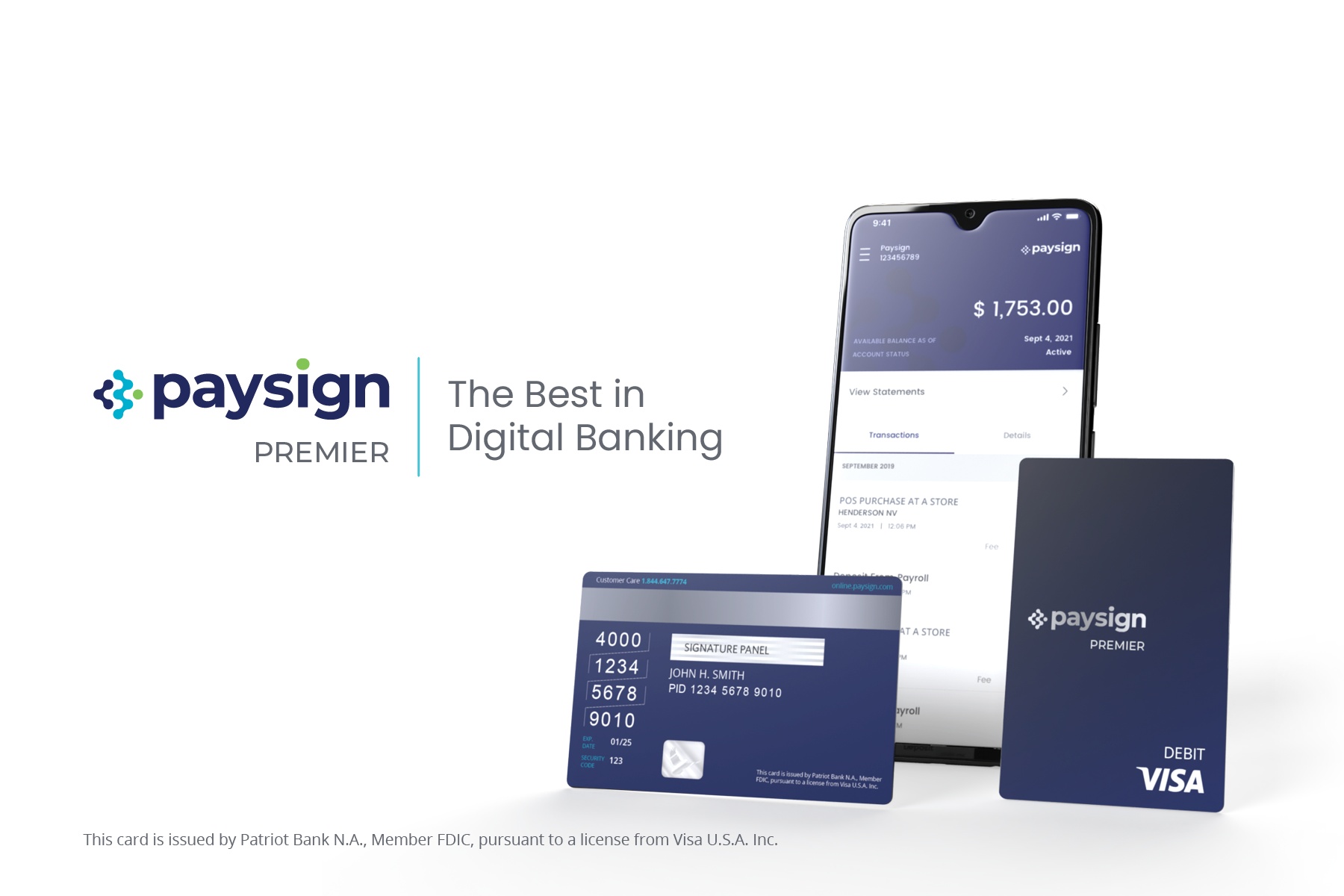
Paysign also offers corporate rewards, contractor and vendor payouts, and Premier digital accounts. Banking services for Premier come from Patriot Bank. These products extend the payment platform into other jobs, but healthcare supplies the distinctive commercial story.
Alternatives vary by job. Onbe competes in donor disbursements; Mercalis offers overlapping affordability services. Paysign’s case rests on combining processing, program administration and healthcare workflow expertise. Enterprise pricing is negotiated. For cardholders, the relevant cost is the fee schedule attached to their specific program.
Scale still needs people. Q2 2026 cost of revenue reached $10.36 million, including network charges and support expenses. A new contact center opened in November 2025. Meanwhile, plasma revenue grew even as center count fell, with activity at remaining locations helping offset closures and ownership changes. Distribution and utilization are separate levers.
For an operator choosing a provider, the useful questions are concrete. Can staff reconcile each payout? Can patients or donors get help when an account behaves unexpectedly? Can administrators change program rules without losing the transaction history? Those questions follow from the services Paysign sells: account management, reporting, configurable rules and customer care. A buyer running a simple, occasional payout may need much less infrastructure. A buyer coordinating repeated payments across clinics or collection centers has more reason to pay for the surrounding administration.
The transferable lesson is to study what happens before and after a recurring payment. Eligibility, reconciliation and customer support may contain the harder problem. This approach needs enough repeat activity to justify integration and service costs, dependable banking relationships and sponsors willing to fund programs. Paysign’s next test is whether deeper involvement in those workflows earns its keep, one claim and one donation at a time.
Company website ↗ · Patient affordability ↗ · Premier accounts ↗ · News and investor updates ↗
LinkedIn ↗ · X ↗ · Facebook ↗