A telecom tower looks simple from a distance. Up close, it becomes a parliament of tasks: crews, permits, equipment, measurements, photographs, approvals, deadlines, and the occasional spreadsheet behaving like a minor aristocrat. Mariano Lisiotti spent years inside that operational world. As a telecommunications engineer and later VP Projects for South America at NERA, he learned that building infrastructure is only half the job. The other half is proving what happened, telling the right people, and making the next decision before a delay becomes expensive.
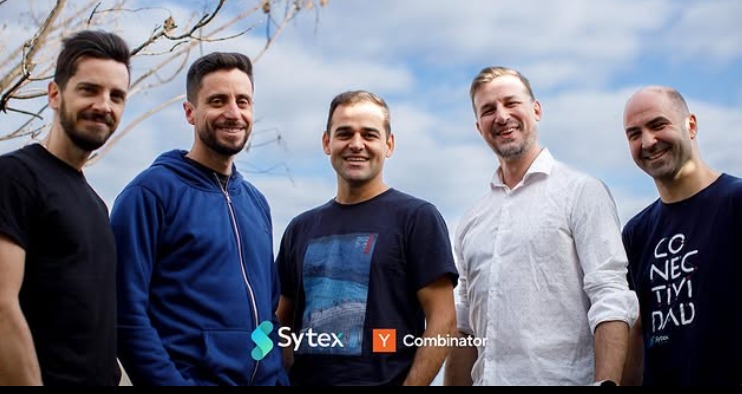
That experience now sits inside Sytex, the Córdoba-based software company Lisiotti co-founded and leads as CEO. Sytex connects the people carrying out work in the field with the people coordinating it from an office. Crews record tasks and evidence through a mobile app. Managers follow progress, approvals, materials, documents, and exceptions in the same system. What once ricocheted among messages, folders, and Excel files becomes a shared trail of work.
The phrase “digital transformation” can arrive wearing too much cologne. Here it has dirt on its boots. A technician uploads a photograph. A measurement is checked. A report is assembled. A manager sees the same facts without waiting for the end of the day. The charm, if software for industrial projects may be permitted charm, lies in removing the clerical afterlife from physical work.
The trouble with work that moves
Office software is happiest when everyone has a chair, a stable connection, and a predictable sequence of tabs. Infrastructure offers none of those courtesies. A network rollout may span hundreds of sites. Construction advances in quantities rather than tidy checkboxes. Maintenance interrupts the plan. Oil and gas operations place people in remote, exacting environments where evidence matters because returning is costly.
Lisiotti and his co-founders knew those conditions from telecom and software engineering. Their early description of the problem was plain: industrial projects run thousands of activities, documents, crews, and materials in parallel, while information tends to scatter. Large corporate systems satisfy reporting needs, but the project team still reaches for the spreadsheet because it is close, flexible, and familiar. Soon there are twelve versions, three owners, and no elected government.
The Sytex operating loop
Sytex approached the mess as a configurable workflow. Teams design a process, assign work, collect documentation on mobile, and connect the result to contractors, stock, quotations, checklists, or other systems. The product began with telecommunications deployment and maintenance. Customers named in its Y Combinator profile include Telefónica and Claro. That was a sensible first market for a founder who already understood microwave links, rollouts, and the difference between a project that looks complete in a report and one that is actually ready.
“Excited to simplify work for project teams worldwide.”Mariano Lisiotti's founder note
A narrow door into a wide market
Sytex entered Y Combinator's Summer 2022 batch as a project-management platform for field infrastructure. Its pitch was not to rebuild every corporate system. It was to make the operating layer used by project teams easier to create and better to use. Córdoba remained home, but the customer map stretched across Latin America and into Europe. The company supplied the connective tissue between field activity and management visibility.
Then the workflow widened. In 2024, Lisiotti announced tools for construction projects that track installed quantities, daily reports, total progress, and certification by stage. His examples crossed from solar panels to backbone fiber and buildings. The industries differed; the verbs did not. Install. Record. Check. Approve. The product followed those verbs.
Oil and gas provided another demanding version of the same problem. By 2025, Sytex was working with companies including Tenaris on maintenance, installations, sensors, and field evidence connected to operations in Vaca Muerta. Lisiotti described a mobile process in which operators document each step and make completion visible in real time. Photographs that once sat on individual phones could be centralized, checked, and turned into a common record for everyone involved.
AI entered this system as an inspector, not a stage act. Sytex uses predefined criteria to validate photos, measurements, and reports. The practical ambition is to catch a missing item or inconsistent record while somebody can still correct it, then automate the reporting that follows. Lisiotti's formulation is similarly workmanlike: automate validations, accelerate time, and reduce operating costs. In a remote field operation, saving a second visit may be a more persuasive demonstration of intelligence than composing a sonnet.
The founder as project manager
Lisiotti's public comments retain the caution of someone accustomed to dependencies. When Córdoba's startup monitor asked about raising capital, he warned that selling too much equity can constrain later rounds. He also argued that a product aimed at an international market should try to connect with American investors, provided it can show credible growth metrics and a large enough opportunity. The message was hopeful, but conditional. Possible is a useful word; possible with good numbers is a business plan.
That candor appeared again in his August 2026 talk at FAMAF, the computing and science faculty of Argentina's National University of Córdoba. The session promised product-market fit, financing, founder priorities, and “realistic expectations” about entrepreneurship. The parenthesis matters. Startup folklore often treats optimism as an unlimited natural resource. Lisiotti's career began in projects, where optimism eventually meets a schedule.
- BEFORE SYTEXTelecommunications engineer and projects executive, including responsibility for South America at NERA.
- 2019Sytex's Y Combinator directory records the company's founding year.
- 2022Sytex joins Y Combinator's Summer batch from Córdoba.
- 2024Construction workflows add quantity tracking, daily reports, and staged certification.
- 2025-26AI validation, oil and gas work, product updates, and international expansion move to the foreground.
He is also a father of three, a compact detail in his founder biography that puts “project teams worldwide” beside another team with famously dynamic requirements. His professional languages mirror Sytex's geography: Spanish and English at bilingual or native proficiency, with professional working Portuguese. In 2025 he posted a product update in English and Portuguese, thanking users for feedback after Sytex redesigned project management and rewrote part of its app for speed.
The post included a number: an NPS of 39.1. More interesting than the score was the choice to publish it alongside the work still underway. The company's three stated goals for the year were to simplify, improve the field app, and make it faster. None makes a flamboyant conference slogan. All three make sense when the person holding the phone is balancing actual equipment.
Software returns to the scene
The usual management dashboard is a map viewed from a comfortable altitude. Lisiotti's work pushes in the opposite direction. It begins where a task happens and asks what evidence should travel with it. The answer might be a form tailored to a process, an optical measurement, a photograph of completed work, a preventive-maintenance checklist, or an approval that releases the next stage.
There is a modest philosophy inside that design. The person nearest the work should not have to translate reality into office language twice: once while doing the task, then again for a report. Capture the useful detail at the moment it exists, and the rest of the organization can work from the same account. This is why customization matters in Sytex. A fiber validation does not ask the same questions as a construction delivery or an oil-field inspection, yet each can move through a defined sequence of evidence and responsibility. Standardization becomes practical when the form respects the job.
That orientation explains Sytex's range. Telecom rollout, building construction, and oil-field maintenance appear far apart when sorted by industry. Seen as field operations, they share a grammar. People move. Conditions vary. Work must be documented. Quality must be checked. Someone elsewhere needs to understand the result. Software earns its keep by preserving context through every handoff.
In 2026, Sytex added built-in video calls inside work orders, allowing field and office teams to resolve an issue without abandoning the record around it. The feature is almost comically literal: when the gap between two teams causes trouble, give them a window inside the workflow. The company also continued building grids, automations, business rules, integrations, and AI validation around the same core promise of shared visibility.
The product follows the work: capture what happened, check it early, and keep the next decision close.The Sytex pattern
Lisiotti has said he sees an opportunity to keep growing in the United States. The ambition fits the company he has described from the beginning: one designed in Córdoba around a problem that ignores borders. Every country has infrastructure. Every infrastructure project creates evidence. And somewhere, inevitably, a spreadsheet waits with the quiet confidence of a temporary solution planning to become permanent.
Sytex is betting that temporary arrangement can be replaced by a living record of the project itself. Lisiotti brings the useful impatience of an engineer who has watched information arrive too late. His second career is still about deployment, only now the thing being deployed is a way for everyone involved to see the work at once.