Company Profile • Food & Fast Casual
Lorena Cantarovici Landed in Denver With $300 and a Recipe Nobody Ordered
She bet a savory Argentine empanada could win a city that only knew the sweet kind. Fifteen years, five locations, and a $3.5 million check later, the bet looks smart.
The empanada is a small, closed argument. Dough on the outside, a case for something on the inside, sealed with a crimp that doubles as a signature. In Denver, most people who reached for one in 2010 expected sugar - a sweet Mexican-style pastry. Lorena Cantarovici handed them beef, onion, egg, and a little oregano instead, and then waited to see whether a city would change its mind one bite at a time. It did.
Maria Empanada is now a five-location fast-casual chain in metro Denver, baking more than 1,500 empanadas a day and selling them everywhere from a South Broadway cafe to a gate at Denver International Airport. It is Argentine, not Mexican; savory first, sweet second; and named not for a marketing focus group but for three women in the founder's family, all called Maria - her mother, her grandmother, and her great-grandmother. The recipes came down through them. The business is what Cantarovici built on top.
01 / THE ARRIVAL$300 and a Language She Didn't Speak Yet
Cantarovici did not arrive in Colorado as a chef. In Argentina she had worked in finance - by several accounts the youngest branch manager at Buenos Aires' Banco de Galicia - and later did accounting and auditing work in Mexico. She came to Denver around 2000 with roughly $300 and very little English. For a decade she worked other people's restaurant jobs before betting on her own.
The bet started in a home garage in 2010. She made empanadas the way she remembered them - the sensory memory of cooking alongside her grandmother and mother - and sold them mostly to friends and family. There was no test kitchen and no professional culinary training. There was a recipe, a small oven, and a market that did not yet exist.

02 / THE PROBLEMA City That Wanted the Wrong Empanada
The first real obstacle was not money or menus. It was expectation. Denver's large Hispanic population knew the empanada as a Mexican dessert - sweet, fruit-filled, closer to a hand pie. Cantarovici's version was Argentine and savory: seasoned beef, chicken, spinach, corn, cheese. The people most likely to recognize the word were the least likely to recognize the thing.
That mismatch could have sunk the concept. Instead it became the whole pitch. She kept explaining, kept sampling, kept baking, and slowly reframed the empanada in Denver's mind from dessert to lunch. The first storefront opened in the Lakewood area in 2011. The product did the convincing.
She named the business after her heroines - her mother, grandmother, and great-grandmother, all named Maria.
The origin of the name03 / THE PRODUCTHand-Crimped, Baked All Day, Stamped Like a Code
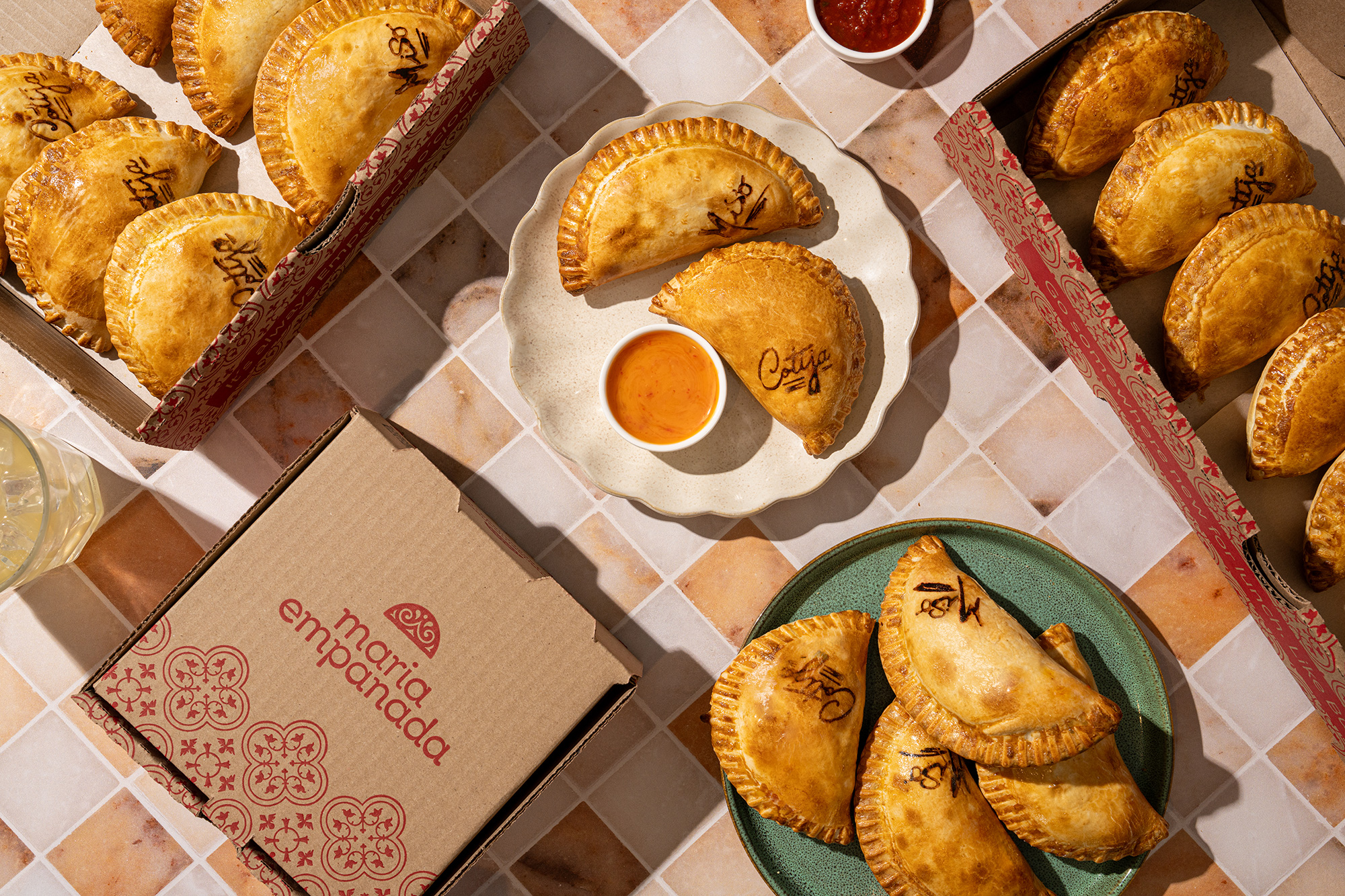
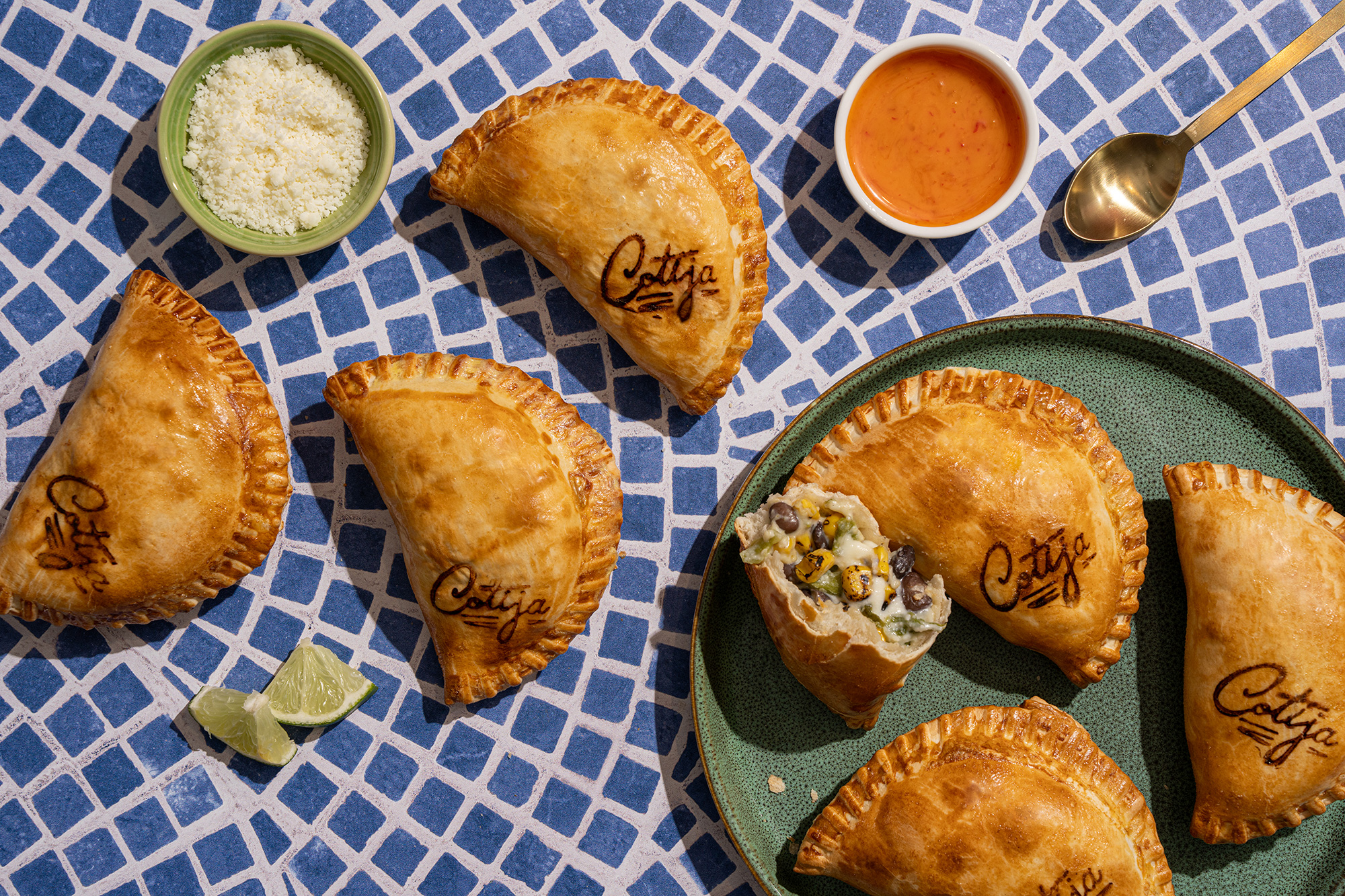
Walk up to the counter and the menu is a wall of savory options - Argentina (beef), Chorizo, Beef Classico, Chicken Chimichurri, Mushroom, Caprese, Spinach, Corn, Potato and Cheese - plus sweet ones like Banana Nutella, and Argentine alfajores for dessert. There is espresso, Argentine wine, and local craft beer. The empanadas are baked fresh through the day rather than made once and held.
The detail regulars love: each empanada is finished with a small hand-marking that identifies what is inside. The crimp is not just a seal, it is a legend. It is the kind of handmade tell that is hard to fake at scale, which is exactly why it matters as the company grows.
04 / THE MODELOne Product, Made Well, Then Repeated
Maria Empanada runs on focus. Rather than a sprawling menu, it perfects a single portable, affordable format and sells it through several channels: dine-in cafes, takeout, catering boxes for groups of roughly 8 to 30, and high-traffic non-traditional spots. A central commissary kitchen keeps the recipe consistent as locations multiply, so a beef empanada at the airport tastes like one on South Broadway.
That discipline is the reason the concept travels. Estimated annual revenue is around $3.8 million, and the kitchens' output - more than 1,500 empanadas a day - is a production number as much as a menu boast. The company has reported employing dozens of people across its operations.
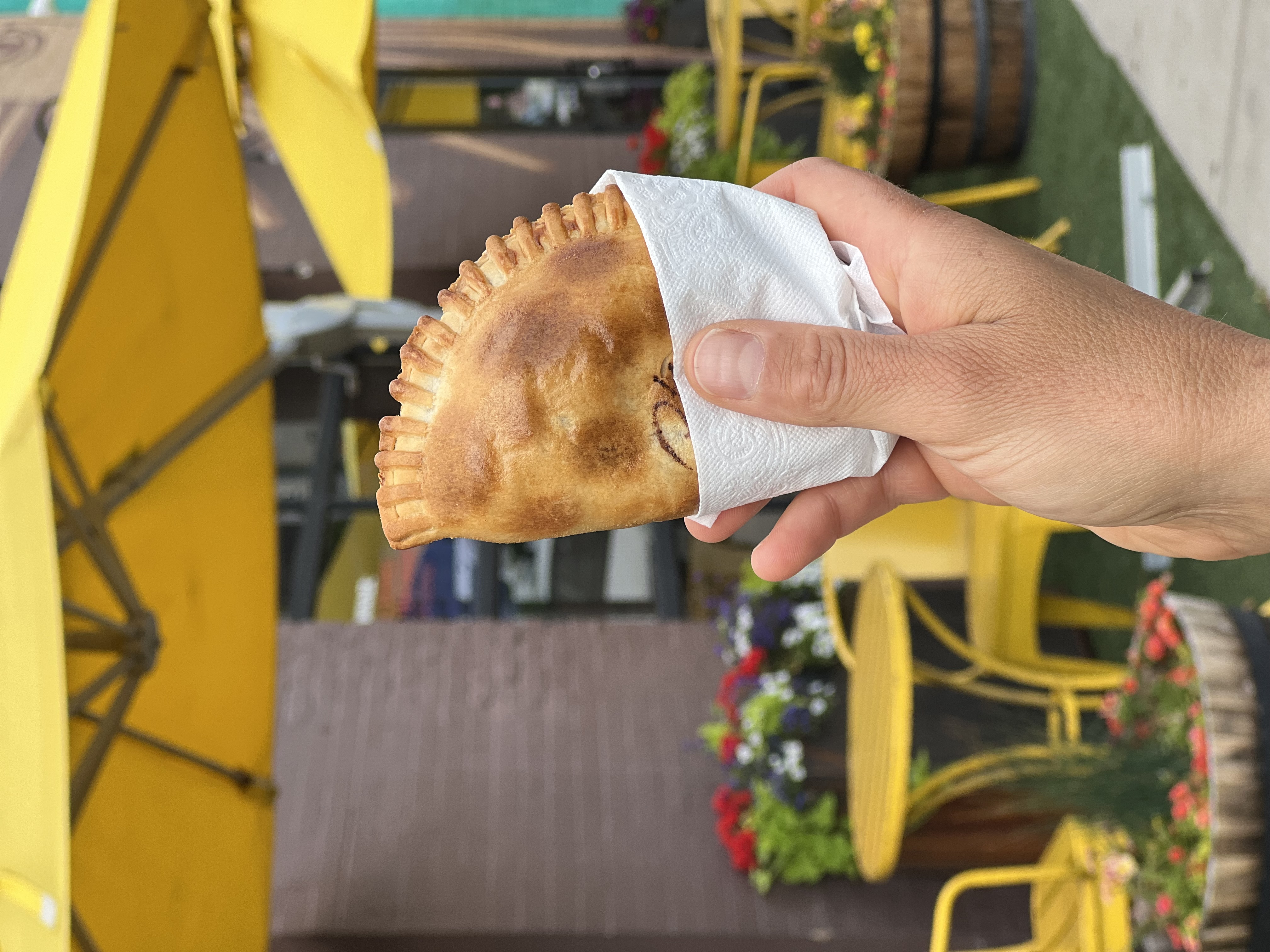
The kitchens now produce more than 1,500 empanadas a day.
Production, not just menu05 / THE MONEYAn Impact Fund Bets $3.5 Million on Empanadas
In 2017 the business took on serious growth capital: up to $3.5 million in a Series A round from the Colorado Impact Fund, a Denver venture fund that backs local companies. The money was earmarked for the unglamorous machinery of scale - new locations, kitchen equipment, and the central commissary that keeps quality even across a growing footprint.
That same year, the U.S. Small Business Administration named Cantarovici its Colorado Small Business Person of the Year. The recognition kept coming: Nation's Restaurant News listed Maria Empanada among its 8 Breakout Brands of 2018, Zagat cited it among the country's hottest new bakeries, and Food Network's Diners, Drive-Ins and Dives put it on television. In 2021, Cantarovici hosted Vice President Kamala Harris on a tour spotlighting small businesses, and was later invited to Washington to represent Latino business owners.
Moves from Argentina with about $300 and little English.
Starts baking and selling family recipes from home.
Opens the first Maria Empanada location in the Lakewood/Denver area.
Raises up to $3.5M from the Colorado Impact Fund; named SBA Colorado Small Business Person of the Year.
Nation's Restaurant News names it one of 8 Breakout Brands of 2018.
Hosts Vice President Kamala Harris on a small-business tour.
Opens at Denver International Airport; Andrew Jaffe joins as CEO for the next phase.
Press profiles a brand now serving airport travelers, Rapids fans, and reportedly Lionel Messi.
06 / THE DIFFERENCEArgentine Heritage vs. the Lunch-Hour Field
Maria Empanada competes for the same lunch and catering dollars as any fast-casual name in Denver - the burrito shops, the arepa stands, the national chains built for speed. Its edge is not price or footprint. It is specificity: an Argentine, not Mexican, identity; a single product made by hand rather than a broad assembly-line menu; and a founder story that reads as real because it is.
That specificity is also a moat. A crowded lunch market can copy a format, but the hand-crimped stamp, the family name, and a recipe handed down through three Marias are harder to reverse-engineer than a menu board.
07 / THE NEXT PHASEHanding Off the Oven
In 2025 the company made the move most founder-led brands delay too long: it brought in an operator. Andrew Jaffe, formerly of the Denver breakfast chain Snooze A.M. Eatery, joined as CEO to lead the next growth phase, while Cantarovici stayed on to steward the brand she named after her family. The same year, Maria Empanada opened at Denver International Airport's Concourse A as a featured local concession and turned up at Colorado Rapids games at Dick's Sporting Goods Park.
By 2026, local coverage framed a brand "having its moment" - the kind of line a garage business does not usually earn. What is copyable here is less about empanadas and more about sequence: perfect one product, keep it consistent through a commissary, take patient capital aligned with your mission, then hire the operator when scale demands it. What is not easily copyable is the thing at the center - a recipe someone's grandmother actually made.
She came to Denver with about $300 and little English, and started selling empanadas from her garage.
Where it beganThe conditions where this playbook stalls are worth naming too. A single-product concept lives or dies on that product staying great at volume - lose the crimp, the freshness, or the story, and the moat drains fast. Impact capital is patient, but it still expects the store count to grow. And a market that has to be re-educated, as Denver was on savory empanadas, only rewards the operators stubborn enough to keep explaining. Cantarovici was. That is the part of the recipe that never made it onto a card.
Find Maria Empanada