Long before Maria Bennett had a company to run, she had a wheelchair to think about. The engineering-management student at Miami University was working on a mobility project when the machinery of human movement began to look less like an abstract problem and more like a calling. It was the early 1990s. Bennett, one of five women in her program, had grown up in Carmel, Indiana, the daughter of a civil engineer. Math and science were familiar territory. The wheelchair introduced stakes.
Movement already occupied a cheerful amount of her life. She had taken tap, jazz and ballet, joined her high-school drill team and played in a marching band that won the Indiana state championship in her senior year. Years later, she would tell an alumni magazine that Zumba still satisfied the urge to dance. The detail is more than decorative. Bennett's career has its own choreography: advance, turn, circle back, keep time through a sequence that makes more sense once the whole routine is visible.
After graduating from Miami in 1995, she went to Case Western Reserve University for a master's degree in biomedical engineering. There she joined work involving electrical stimulation and the restoration of function. The observation that stayed with her concerned pain. It became part of her 1998 thesis, then waited while Bennett acquired the less glamorous knowledge required to turn an academic result into a regulated product and an operating company.
The winding road, compressed
- 1998Case master's thesis
- 2000sNeuroControl, Boston Scientific, NDI
- 2010SPR founded
- 2016Commercial clearance
- 2026Medtronic acquisition
An apprenticeship disguised as a career
Founder stories tend to compress the years before founding into a fog called “experience.” Bennett's years deserve sharper edges. At NeuroControl, she managed clinical studies and led research and development involving neurostimulation. At Boston Scientific, she led a large multicenter clinical trial for an angioplasty-balloon product that achieved regulatory clearance. At NDI Medical, back in Cleveland, she served as vice president of clinical affairs and contributed to another neurostimulation system. Medtronic acquired that part of NDI's business in 2008.
Each job added a dialect. Research asks whether an idea works. Clinical affairs asks how to prove it. Regulation asks whether the proof meets an exacting standard. Operations asks whether a team can repeat the result without exhausting its people or its cash. A medical-device founder must speak all four, usually while a fifth conversation with investors is happening in the hallway.
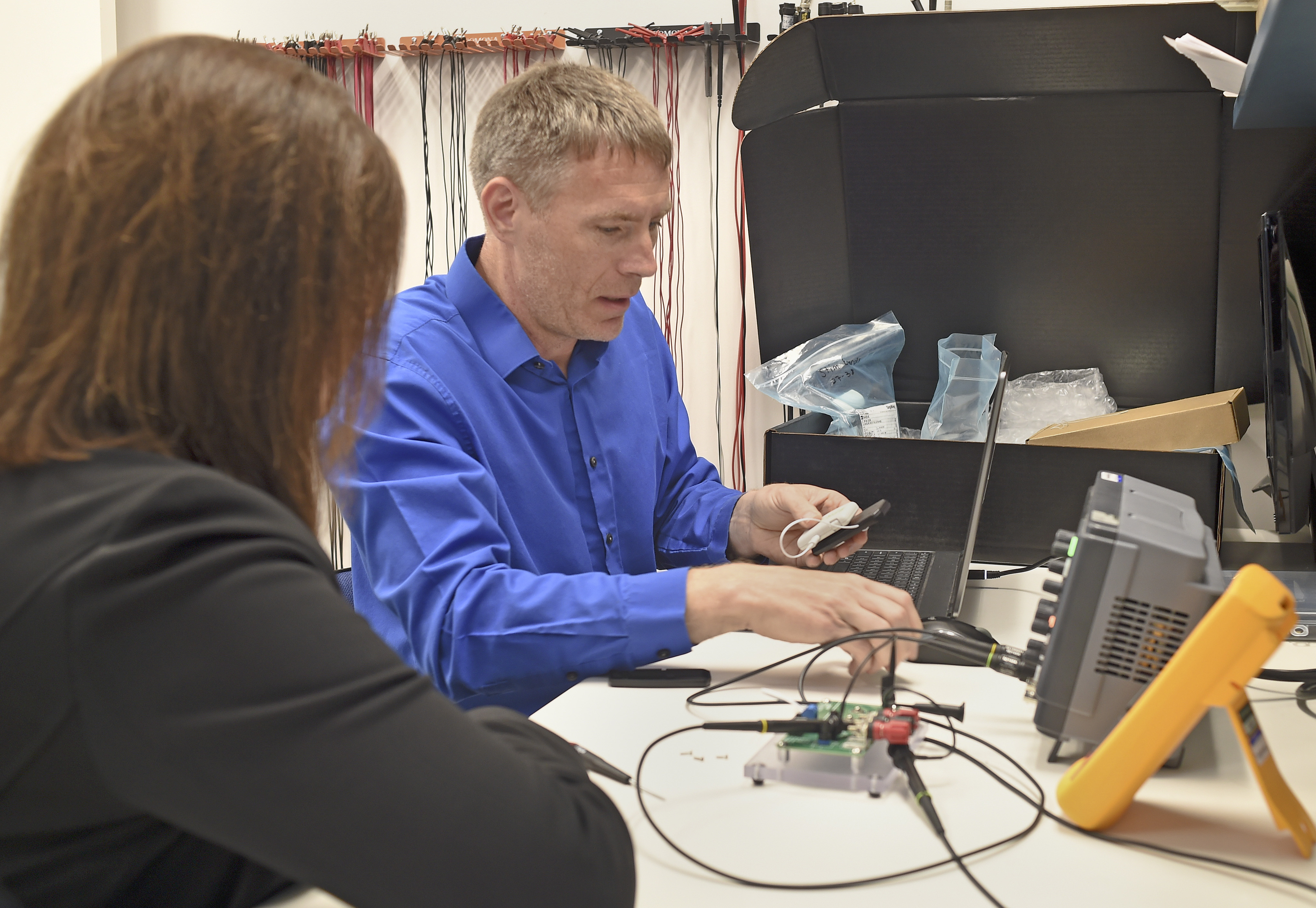
By 2009 and 2010, Bennett returned to her graduate work with more than nostalgia. She did validation work, studied the market and found room for a temporary peripheral nerve stimulation approach that could be used earlier in care. SPR Therapeutics was founded in 2010. The idea was a decade old. Bennett was finally equipped to defend it from the thousand practical objections that separate an invention from a company.
“We embarked on a mission to carry this product forward all the way from benchtop.”Maria Bennett, 2023
The boardroom warning
Early in SPR's life, Bennett received a piece of advice masquerading as a forecast: her age and gender, she was told, would make it difficult to recruit qualified directors. She could do nothing about either variable. Her answer was to concentrate on the one she controlled. She believed experienced people would share the vision, understand the opportunity and want to participate. SPR went on to assemble a veteran board and a leadership group with substantial gender diversity.
This is Bennett's temperament in miniature. She rarely presents the founder as a lone genius wrestling the future into submission. Her public remarks keep returning to teams, physician partners, research collaborators and patients. Even her account of Cleveland's medtech ecosystem is a map of institutions working together: Case Western, Cleveland Clinic, University Hospitals and the companies spun from their orbit. The city is not incidental scenery in the SPR story. It is part of the machinery.
Age, gender and other people's assumptions were not useful places to spend operating energy.
A clear mission, experienced directors and a team able to move evidence into practice were.
Bennett's civic life rhymes with that cooperative instinct. She has volunteered in her community and served as an elected member and vice president of a local school board. She is also a wife and mother of two sons, details she has shared while arguing that serious work and a rich personal life should not be treated as enemies. Under her leadership, SPR earned repeated workplace awards based on employee surveys, including a fifth consecutive Northeast Ohio recognition in 2026.
The same pattern appears in how she talks about milestones. At 20,000 patients in 2023, Bennett described the moment as rewarding, then quickly redirected attention to the people doing the daily work. At 50,000 in 2026, her emphasis moved again to shared commitment and collaboration. Numbers provide the marker; the team receives the sentence. For a founder whose name appears on the patents and the company biography, that rhetorical habit is revealing. She claims responsibility without making herself the entire plot.
Trust has a second verb
A useful Bennett admission concerns a mistake. Early in her career, she gave too much weight to people stating opinions as though they were facts. Her correction became a compact operating rule: “trust, yet verify.” It preserves generosity without outsourcing judgment. In a field full of data, regulation, conviction and money, the distinction is expensive to ignore.
Verification does not mean suspicion as a personality. Bennett describes it as asking better questions while maintaining a respectful exchange. That formulation has an engineer's neatness. Curiosity is not merely a trait; it is quality control for a leader's worldview. Her graduate education at Case, she has said, taught her how to research, ask a question and reach a data-supported answer. The habit survived the degree.
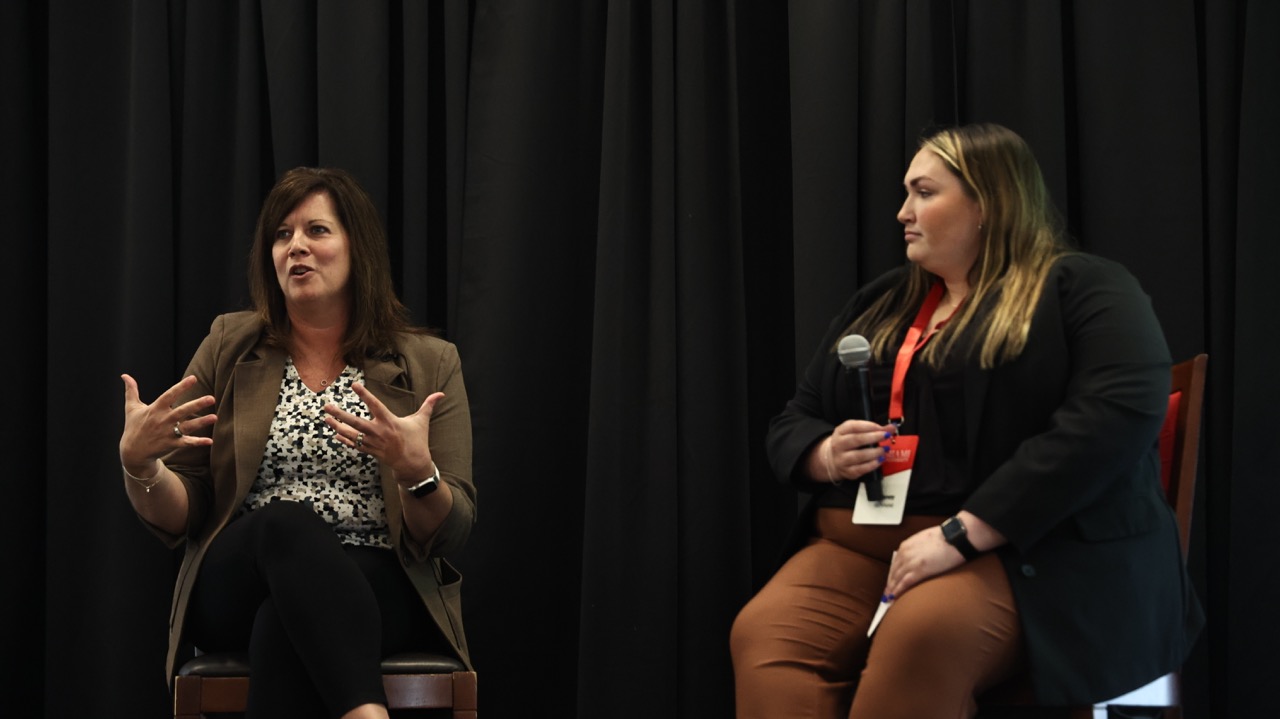
In 2024, Bennett returned to Miami University to give a keynote with an admirably honest title: “The Winding Road of Entrepreneurship - Translating Technology to an Impactful Business.” The winding part matters. Her old thesis did not produce a company on graduation day. The intervening jobs were neither delays nor detours. They were where she learned the clinical, regulatory and managerial moves that her company would later require.
An exit, and a larger stage
SPR's timeline accelerated in public view. The company moved toward commercialization after FDA clearance in 2016. Bennett received the EY Entrepreneur Of The Year East Central regional award in 2021. SPR marked more than 20,000 patients treated in 2023, more than 37,000 by early 2025 and more than 50,000 in 2026. Those figures are company-reported milestones, but their progression captures the operating problem that followed invention: manufacturing, training, reimbursement, evidence and access all had to grow together.
In May 2026, Medtronic announced an agreement to acquire SPR. On July 16, the transaction closed for approximately $650 million in upfront cash. The symmetry is almost too tidy. Bennett had helped an NDI business reach a Medtronic acquisition in 2008. Eighteen years later, she arrived at another transaction from the founder's chair, carrying technology rooted in her own graduate research.
The price is easy to repeat and less interesting to study. More useful is the sequence beneath it. Bennett stayed close to a real problem. She learned how evidence moves through institutions. She recruited people who knew what she did not. She returned to an old idea only after testing whether a market existed. Then she remained with the company for sixteen years, long enough for an academic question to become an organization with hundreds of employees.
“Together, we will reach more patients helping them find relief earlier in their care journey.”Maria Bennett, May 2026
Keep the question; improve the questioner
There is a popular romance in beginning before one feels ready. Bennett's life suggests a companion idea: readiness can be built deliberately without abandoning urgency. Her jobs before SPR were an apprenticeship in the exact frictions SPR would face. Clinical trials taught evidence. Startups taught constraint. An acquisition showed what a strategic buyer valued. Cleveland supplied collaborators and a reason to stay.
Her story also makes room for a kind of ambition that is less noisy than founder folklore. Bennett's published aspirations focus on access and on reaching more people earlier. Her leadership language is full of “we.” The dancing, the school board, the student conversations and the employee culture are not cute counterweights to serious business. They reveal what kind of serious business she wanted to build.
A thesis can sit on a shelf. An observation can become a patent. A patent can become a product. A product can become a company. None of those transformations is automatic, and each requires a different version of its inventor. Maria Bennett kept the original question. Across twenty-eight years, she kept improving the person responsible for answering it.