YesPress Profile / Founder / Mental Health
The woman who turned 60 seconds
into a lifeline for every student
"Kids shouldn't have to go through hard things alone."
Coach connection time
Languages supported
Total funding raised
School districts served
Who She Is
She designed systems at Boeing and GE. She helped Nearpod grow from scrappy edtech startup to a $650M acquisition. Then she read a New York Times article about eight-year-olds dying by suicide - and she made a different kind of calculation.
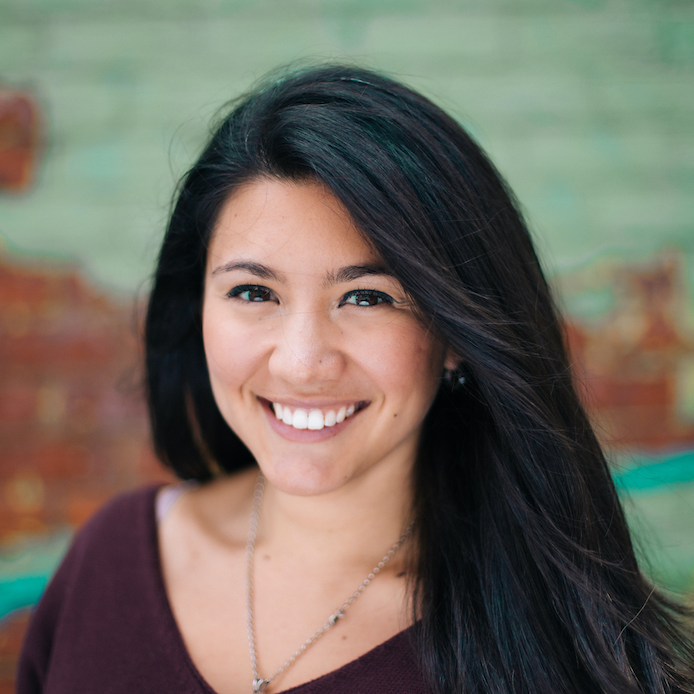
Maria Barrera is the CEO and co-founder of Clayful, a platform that connects K-12 students with certified mental health coaches via text in under 60 seconds. Not 60 minutes. Not a week until your next appointment. Sixty seconds. It sounds like a product claim. It is also, for a kid in crisis at 2pm on a Tuesday, everything.
She holds a BS and MS in Mechanical Engineering from Stanford - the kind of credential that keeps doors open indefinitely. She walked through several of them, then built a new door entirely.
"I didn't want to be an extra burden on her, so I kept a lot in - even when I needed help."
- Maria Barrera, on growing up as a Colombian immigrant in the USMaria arrived in the United States at age 10. Her mother worked multiple jobs. She felt isolated. She felt the weight of not wanting to add to her mother's load. She carried that weight quietly, the way immigrant kids often do - tucking it into good grades and forward momentum. Clayful exists because she knows exactly what it feels like when the help you need is just out of reach.
She co-founded Clayful in 2021 with Melissa Pelochino, who had her own parallel story: a classroom teacher who watched capable students get swallowed whole by anxiety and self-doubt. Two different vantage points. One shared conviction. No kid should have to go through hard things alone.
Both had worked together at Nearpod. Both watched that company get acquired. Both decided the next chapter needed to matter more personally.
Clayful's approach is deliberately counterintuitive. It calls its service "coaching," not "therapy." That's not a semantic dodge - it's a design decision. Stigma is the enemy of access. A student who would never walk into the school counselor's office will text a coach on their phone between classes. The frame changes the behavior. The behavior changes outcomes. Students using Clayful show up to school at a 95% attendance rate versus 91% for peers without it. Four percentage points. Ask any school administrator what that costs - and what it saves.
The platform operates in 133 languages, serves students aged 8 to 18, and is free for students because school districts pay the bill. That last part matters: Clayful positioned itself not as a consumer product parents might forget to subscribe to, but as infrastructure. Something a district buys once and deploys for everyone.
The $7M seed round that closed in November 2023 - bringing total funding to $9.15M - was led by Reach Capital, joined by Google Latino Founders Fund, Charter School Growth Fund, Common Sense Ventures, Wisdom Ventures, and Ovo Fund. Google's Latino Founders Fund backing carries a quiet resonance: it's a direct line between the founder's heritage and the communities most underserved by existing mental health infrastructure.
Maria has been building toward this her entire career without knowing it. The aerospace engineer who became an edtech operator who became a mental health founder. Each step looks obvious in hindsight. Almost none of it was planned.
The Clayful Promise
Not a chatbot. Not a hotline. A real human coach, trained and vetted, reachable by text the moment a student needs support - in school, after school, between classes, before the spiral gets worse.
Career Arc
Earned BS and MS in Mechanical Engineering at Stanford University. Built the technical foundation that would eventually power a different kind of product entirely.
Early-career engineering roles at Boeing and GE in aerospace. Learning what it means to build systems at scale - systems where failure is not an option.
Joined Nearpod as its first product manager, pivoting from aerospace to edtech. That first PM role would shape her product instincts for the next decade.
Led product, strategy, operations, and growth at Nearpod. Helped scale the company through multiple stages of growth, culminating in its acquisition by Renaissance Learning for $650 million in 2021.
Co-founded Clayful with Melissa Pelochino. The trigger: a New York Times article documenting rising suicide rates among eight-year-olds. The response: a company built around the belief that every child deserves a trusted voice within reach.
Clayful closes a $7M seed round led by Reach Capital. Investors include Google Latino Founders Fund, Charter School Growth Fund, Common Sense Ventures, Wisdom Ventures, and Ovo Fund. Total funding: $9.15M. Platform active in 50+ schools across 6 states.
Featured at Stanford's Entrepreneurial Thought Leaders series and ASU GSV Summit. Declared intention to "10x the number of students we're helping" - a familiar engineering mindset, applied to the most human of problems.
In Her Words
"There were too many kids and too few providers. Those who desperately needed help were left behind."
Maria Barrera - TechCrunch, 2023
"Kids shouldn't have to go through hard things alone."
Core mission statement
"Ensure every student gets a trusted, certified human coach in their pockets."
On Clayful's design philosophy
"Our design is based on meeting kids where they are - in and outside of school."
On product design
"In 2024, we aim to 10x the number of students we're helping, tackling the youth mental health crisis head-on."
On Clayful's ambition
"I didn't want to be an extra burden on her, so I kept a lot in - even when I needed help."
On her experience as an immigrant child
The Model
Clayful deliberately calls its service "coaching," not "therapy." Students who would never visit a school counselor will text a coach between classes. Language shapes willingness. Willingness shapes outcomes.
The gap between "I need help" and "help is available" is where kids fall through. Clayful closed that gap to under a minute. Not a callback. Not a scheduled appointment. A live human, now.
Free for students, paid by districts. This positions Clayful as infrastructure rather than a consumer subscription. A district buys it once; every student in it gains access. Universal reach at institutional scale.
A student whose first language is Tagalog or Amharic deserves the same coaching experience as one who speaks English at home. Language inclusion is not a feature; it's the baseline for equity.
Every Clayful coach is certified and vetted. This is a human-powered platform at its core. The technology removes the friction; the humans provide the connection.
Clayful's goal is to catch students before they escalate. It frames itself as the first universal Tier 1 mental health intervention - prevention at population scale, not crisis response one student at a time.
Achievements
The Human Behind the Founder
Maria didn't decide to start a mental health company in a strategy session. She read a single New York Times article about rising suicide rates among eight-year-olds - and couldn't move on. That article is why Clayful exists.
At age 10, she arrived in the US while her mother worked multiple jobs. She kept her struggles entirely to herself, not wanting to add to the burden. The girl who stayed quiet became the adult who made sure no child has to.
Most people who see their company acquired for $650M take a comfortable pause. Maria used the exit as a starting gun. The Nearpod acquisition happened in 2021. Clayful launched in 2021. The timing was not a coincidence.
Fun Facts
The time it takes Clayful to connect a student to a live certified coach - faster than most people respond to a text message.
Languages supported. Clayful may be the most linguistically inclusive mental health platform in K-12 education.
Nearpod's acquisition price - the company where Maria was the first product manager. She used that chapter as runway for the next one.
When Maria immigrated from Colombia to the US. That experience of isolation is the emotional engine behind everything Clayful does.
School attendance rate among Clayful students vs. 91% for non-users. Four points that compound into thousands of missed - or not missed - school days.
Stanford degrees (BS + MS), both in Mechanical Engineering. She built the technical instincts to engineer a solution most people only discuss.
Backed By
Find Her Online