Ly Transees skin.
He spent two decades making sure the right alert reached the right person in a crisis. Now he runs Belle.ai, the company teaching a smartphone camera to help a clinician read the largest organ in the human body.
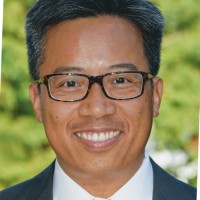
A camera, a clinic, and a very large organ
Point a phone at a patch of skin. Belle.ai's software studies the geometry in that clinical photo and surfaces reference images and text for what it resembles - drawn from a library of more than 1,600 skin conditions and variations. It will not tell you what you have. It is built to hand a trained clinician a sharper second look, then get out of the way.
That restraint is the point. Belle.ai's tools are designed to assist healthcare professionals using their own independent medical judgment, not to diagnose, treat, or cure. In a field crowded with software promising to replace the doctor, Tran's company sells the opposite: a better-informed doctor, working faster.
The reach is the headline. Belle.ai's technology runs at over 1,000 provider sites in more than 60 countries. The World Health Organization folded its algorithms into the updated app it uses to fight skin-related neglected tropical diseases - the kind of validation a startup cannot buy.
The unmet demand
The world has far more skin than it has dermatologists. Belle.ai exists in that gap. Its BellePro app proposes objective severity scoring for immune-mediated conditions - psoriasis, eczema, alopecia areata, vitiligo - and tracks how they change over time, which turns a subjective glance into something a clinician can measure and compare.
Tran took the CEO seat at BelleTorus Corporation, the company behind Belle.ai, in 2021. The startup itself was founded in 2017 in Cambridge. Under him it has chased the unglamorous, high-stakes work of getting clinical AI in front of regulators and into real exam rooms.
Before skin, there were sirens
In 1999, Tran co-founded AtHoc, a company built around a deceptively simple promise: when something goes wrong, get the right message to the right people, instantly and securely. He owned global sales and go-to-market strategy, and the bet paid off - AtHoc became the number-one provider of crisis communications to the U.S. Defense and Homeland Security markets.
Selling certainty to governments is a particular discipline. The buyers are skeptical, the procurement cycles are long, and the cost of a missed alert is measured in lives. Tran spent sixteen years inside that pressure, building a network of the most demanding customers a software company can have.
BlackBerry acquired AtHoc in 2015. Tran stayed on as Senior Vice President of BlackBerry AtHoc through 2017, then turned to boards and investing - a director's seat at Jane Technologies and at Cirkul, an investor role at CNEX Labs, and a strategic-advisor post at Genasys to push its critical-communications business.
Then he did the unexpected thing. Instead of doing crisis communications again, he aimed the same playbook at a problem with no sirens at all.
"I am honored to serve... and excited to work with the management team to make the company the industry's leading provider."
— Ly Tran, on joining Genasys as strategic advisor (2019)Twenty-five years, two industries, one method
From a lab demo to a global network
Belle.ai's progress under Tran reads like the AtHoc playbook run a second time: win the hardest, most credentialed customers first, and let them vouch for you. The WHO. ARPA-H. The Centers for Medicare & Medicaid Services. These are not easy logos to earn.
In 2023, ARPA-H awarded Belle.ai and partner Urban Health Plan a $3.5 million contract to expand pediatric healthcare access - using AI to remotely examine children with skin, ear, and throat conditions and reduce unnecessary office visits. A year later, the company beat roughly 300 applicants to present at the inaugural CMS AI Demo Day in Baltimore.
The bars at right are the proof of distribution - the part that takes years and rarely makes the press release.
Five details worth keeping
He read history at Princeton before earning a Harvard MBA - a humanities-to-hard-tech route most engineers never take.
In 2013 he sat the National Security Seminar at the U.S. Army War College, an unusual line on a tech CEO's bio.
His two companies bookend one idea: AtHoc kept people safe in emergencies; Belle.ai keeps a watchful eye on their skin.
The WHO uses Belle.ai's algorithms in its app to fight skin-related neglected tropical diseases.
Belle.ai is careful about its lane - it assists clinicians' judgment rather than claiming to diagnose anything.
He still keeps a foot in consumer and beverage worlds, sitting on the boards of Cirkul and Jane Technologies.
Where to find Ly Tran
Profile compiled from public sources including Belle.ai, LinkedIn, Crunchbase, ARPA-H/GlobeNewswire, PR Newswire and AiThority. Facts are presented as reported; figures such as country and provider-site counts reflect company statements.