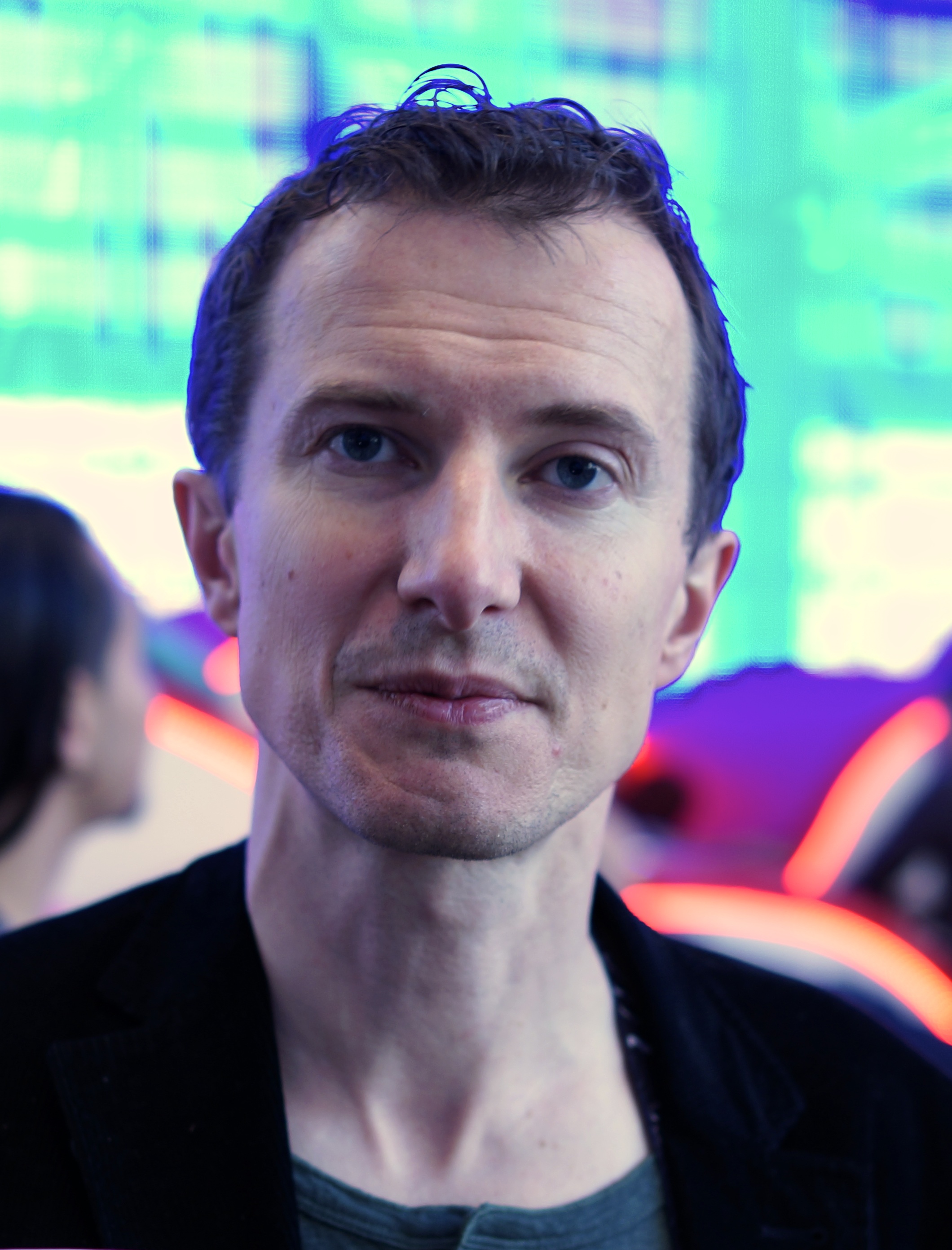
PayPal Co-Founder & VP of MarketingFirst VC Investor in SpaceX - $20M bet in 2008Co-Founded Founders Fund & Gigafund$1B+ Invested in SpaceX Since 2017SpaceX Board Member Since 2008Net Worth: $1.2B - $1.5BImmigrated from Communist PolandConvinced Peter Thiel to Sign Up for CryonicsPayPal Co-Founder & VP of MarketingFirst VC Investor in SpaceX - $20M bet in 2008Co-Founded Founders Fund & Gigafund$1B+ Invested in SpaceX Since 2017SpaceX Board Member Since 2008Net Worth: $1.2B - $1.5BImmigrated from Communist PolandConvinced Peter Thiel to Sign Up for Cryonics
★ The Venture Capitalist Who Thinks in Decades, Not Quarters ★
Luke Nosek
The man who bet $20 million on rockets when three had already exploded - and never looked back.
Origin Story
Tarnów, Poland → Silicon Valley
Current Mission
Managing Partner, Gigafund
Superpower
20-Year Conviction
Best Known For
First VC in SpaceX
The Immigrant Who Built Three Silicon Valley Dynasties
When Luke Nosek wrote a $20 million check to SpaceX in July 2008, Elon Musk had just watched three Falcon 1 rockets explode. The smart money was running for the exits. Nosek ran toward the fire.
That's not bravado. That's a philosophy refined over three decades - from communist Poland to PayPal to a billion-dollar bet that rockets could be reusable after all.
Born Łukasz Nosek in Tarnów, Poland in 1975, he grew up under communist rule before his family fled to America in the great Polish exodus of the 1970s. By the time he landed at the University of Illinois studying computer engineering, he wasn't just learning about supercomputers. He was learning what happens when you bet on the unthinkable.
In 1995, still in college, Nosek co-founded SponsorNet New Media with a fellow student named Max Levchin. The company didn't change the world. But the partnership did. Three years later, in 1998, Nosek and Levchin reunited with Peter Thiel and Ken Howery to launch a little fintech experiment called PayPal.
Most of the return potential from venture capital backed companies comes from 1-2 companies per decade. The difference between an average and an extraordinary business becomes clear when looking out 20 years.
As VP of Marketing and Strategy, Nosek didn't just sell PayPal. He invented its killer feature: instant transfer. The product that made sending money as easy as sending email. Under his watch, PayPal exploded from zero to one million users in six months. When eBay acquired the company for $1.5 billion in 2002, Nosek was 27 years old.
What he did next is revealing. While other PayPal alums rushed to start the next big thing, Nosek traveled. He thought. He angel invested. He spent three years asking a question most entrepreneurs never pause to consider: what actually matters over the long haul?
By 2005, he had his answer. He rejoined his PayPal co-founders Thiel and Howery to launch Founders Fund, a venture firm with a radical premise - back founders building companies that would matter in 20 years, not 2 quarters. The portfolio became a Silicon Valley greatest hits album: Facebook, Airbnb, Palantir.
1998Co-Founded PayPal
2008First SpaceX VC Investor
$1B+Invested in SpaceX via Gigafund
The $20 Million Bet That Changed Space
In 2008, SpaceX was a punchline. Three orbital launch attempts. Three fireballs. The aerospace industry was laughing. Wall Street was skeptical. And Luke Nosek was writing a check.
The $20 million investment from Founders Fund wasn't just capital. It was conviction. Nosek had watched Elon Musk think from first principles - stripping rocket science down to physics and engineering, ignoring everyone who said "it can't be done this way." Where others saw hubris, Nosek saw the kind of founder who stays for 20 years.
He joined SpaceX's board. He's still there 18 years later. The company that couldn't keep a rocket in the air now dominates commercial spaceflight, lands boosters on drone ships, and launches more payload to orbit than entire nations. Nosek's stake? Worth exponentially more than that initial bet.
The Gigafund Thesis: Go Big or Go Home
In July 2017, Nosek left Founders Fund to launch something even more audacious: Gigafund. The name isn't subtle. Neither is the strategy - concentrate billions on a handful of companies solving decade-scale problems in space, longevity, nuclear energy, and AI. Since inception, Gigafund has poured over $1 billion into SpaceX alone. They also back Neuralink, The Boring Company, Last Energy, and other moonshots that won't pay off until 2040.
Nosek's co-founder at Gigafund, Stephen Oskoui, shares his appetite for the seemingly impossible. The firm operates out of Austin, Texas - where Nosek relocated from California in 2019 - betting that the future of deep tech won't be built in the Bay Area's echo chamber.
Nosek's investment philosophy is deceptively simple: most venture returns come from one or two companies per decade. So why waste time diversifying across 50 mediocre bets? Find the extraordinary founder, commit for 20 years, and never fire the CEO. It's a strategy that sounds insane until you realize Nosek has been doing exactly this since 1998 - and it's worked every single time.
Career Arc: From Immigrant to Kingmaker
1975
Born in Tarnów, Poland under communist rule. Family emigrates to the United States.
1995
Co-founds SponsorNet New Media with Max Levchin and Scott Banister while at University of Illinois.
1998
Co-founds PayPal with Max Levchin, Peter Thiel, and Ken Howery. Serves as VP of Marketing & Strategy, creates instant transfer feature.
2002
PayPal acquired by eBay for $1.5 billion. Nosek begins traveling and angel investing.
2005
Co-founds Founders Fund with Peter Thiel and Ken Howery. Introduces Series FF stock structure.
2008
Leads $20M Founders Fund investment in SpaceX after three failed launches. Joins SpaceX board.
2017
Leaves Founders Fund to co-found Gigafund with Stephen Oskoui, focusing on transformative technologies.
2019
Relocates from California to Austin, Texas.
2026
Joins X (formerly Twitter), sparking speculation about involvement in Elon Musk's X Money payment platform.
The Man Behind the Billions
First Conversation
The Cryonics Pitch
In his first meeting with Peter Thiel, Nosek casually mentioned he'd just signed up for cryonic suspension - having his body frozen at death in hopes future medicine could revive him. Most people would think that's a strange icebreaker. Thiel thought it was brilliant and signed up too. That's the kind of founder-investor fit that builds empires.
Investment Style
Never Fire the CEO
Nosek has a stated policy: he never fires CEOs. Instead, he asks founders upfront if they'll commit to their company for 20 years. If they say yes, he backs them through hell and high water. If they say no, he walks. This isn't sentimentality - it's first principles thinking about how transformative companies actually get built.
Fun Fact: Nosek was a space enthusiast from childhood - long before it was cool to invest in rockets. When Founders Fund put $20 million into SpaceX in 2008, it wasn't a contrarian bet. For Nosek, it was destiny meeting preparation.
The PayPal Growth Machine: Under Nosek's marketing leadership, PayPal grew from zero to one million users in the first six months. The secret? Instant transfer wasn't just a feature. It was the feature - and Nosek invented it.
Nosek's personality is a study in contrasts. He's a futurist who quotes first principles physics. A billionaire who relocated to Austin for the BBQ and housing policy debates (his wife Nicole founded Texans for Reasonable Solutions). A venture capitalist who thinks tech's job is "to help everybody on the planet" - then backs nuclear energy and brain-computer interfaces to prove it.
He's also brutally honest about the venture game. "As I became a venture capitalist, it's almost like I went to the dark side for a while," he's said. But then he pivots: "Great companies founded for a long-term purpose, such as Google or Facebook or SpaceX, may do more good in the world than any other vehicle we have."
The most important thing in the deployment of future tech is to have an incredibly talented entrepreneurial leader driving the adoption of the tech - it's about the person, not as much the tech, to determine what happens in the future.
Portfolio: The Companies That Will Define 2045
Nosek doesn't invest in companies. He invests in eras. His portfolio reads like a sci-fi novel's table of contents - and he wants it that way.
Space
SpaceX
First VC investor (2008). Board member. Over $1B invested via Gigafund. Reusable rockets, Starlink, Mars missions - Nosek was there before launch one.
Brain Tech
Neuralink
Brain-computer interfaces that could restore movement to the paralyzed and thought to the speechless. Another Musk moonshot backed by Gigafund.
AI
DeepMind
Early investor and board member before Google's acquisition. DeepMind's AlphaGo defeated the world champion - proving AI could master intuition.
Energy
Last Energy
Modular nuclear reactors to power cities without carbon. Nosek sits on the board, betting that nuclear's comeback starts now.
Computing
Luminous Computing
Photonic AI chips that use light instead of electricity. Board member backing the next leap in computing physics.
Science
ResearchGate
Social network for scientists. Board member championing open collaboration that accelerates discovery.
The Founders Fund Legacy
Before Gigafund, Nosek helped build Founders Fund's portfolio of world-changers:
Facebook - Early investor in social networking's empire
Airbnb - Bet on strangers sleeping in strangers' homes
Palantir - Data analytics for government and enterprise
SpaceX - The investment that became his life's work
The Nosek Philosophy: Think in Decades
If you want to understand Luke Nosek, understand this: he doesn't invest in companies that will 10x in five years. He invests in companies that will 1000x in 20.
Traditional venture capital operates on 10-year fund cycles. Nosek thinks that's insane. The most transformative technologies - from the internet to spaceflight to AI - take decades to mature. So Gigafund's structure matches the timeline: permanent capital, decades-long commitment, zero pressure to exit early.
"Technology is a way to help everybody on the planet," Nosek says. But he doesn't mean apps. He means nuclear reactors. Brain chips. Reusable rockets. The kind of technology that shifts civilization's trajectory - if you're patient enough to wait for it.
First PrinciplesLong-Term ThinkingContrarian BetsNever Fire CEOs20-Year CommitmentSpace ExplorationDeep TechPayPal MafiaCryonics BelieverAustin, TX
His approach is almost monastic in its discipline. Gigafund concentrates capital on a small number of companies. They ask founders to commit for 20 years. They never fire CEOs. They ignore market cycles, fashion trends, and the hot take du jour.
It's the same discipline that took him from communist Poland to PayPal to a $1.5 billion fortune. The same discipline that convinced him to write that $20 million check when SpaceX's rockets kept exploding. The same discipline that keeps him on SpaceX's board 18 years later, watching Starship prepare for Mars.
What's Next: X Marks the Spot?
In March 2026, Luke Nosek joined X - Elon Musk's everything app formerly known as Twitter. Given that Nosek co-founded PayPal and Musk is building X Money (a payment platform), the speculation is irresistible: is the original PayPal gang getting back together?
Nosek hasn't confirmed anything. But consider his track record. He invented instant transfer at PayPal. He backed Musk on SpaceX when three rockets had exploded. He's spent $1 billion betting on Musk's space dreams. If Musk is rebuilding digital payments for the social media age, who better to consult than the guy who got it right the first time?
Meanwhile, Gigafund continues deploying capital into companies that won't peak until 2045. Last Energy's nuclear reactors. Neuralink's brain chips. SpaceX's Mars architecture. And a dozen other moonshots the public won't hear about for years.
Net Worth Update: Estimates put Nosek's net worth between $1.2 billion and $1.5 billion as of 2025, though some sources suggest it could be higher. Much of his wealth is illiquid - tied up in SpaceX shares that appreciate every time another Starship doesn't explode.
Nosek is 50 years old. If his investment thesis is correct - that the difference between average and extraordinary becomes clear when you look out 20 years - then he's only halfway through Act Two. The companies he's backing today won't mature until 2045. The founders he's mentoring are just getting started. And the technologies he's funding - reusable rockets, brain-computer interfaces, modular nuclear - are still in their infancy.
Which means the best Luke Nosek story hasn't been written yet. It's still compounding in a SpaceX hangar, a Neuralink lab, a nuclear reactor prototype. Waiting for the world to catch up to what Nosek saw 20 years ago: that the future belongs to people crazy enough to stay for the whole ride.