The pin was bent. That was the problem. In 2018, a Canadian television crew carried a MacBook to Louis Rossmann after receiving an expensive repair quote from Apple. The screen had no backlight. Rossmann looked at the display connection, found the damaged pin, and restored the machine on camera without replacing a part. The quoted work involved a new logic board and display, more than $1,200 Canadian. His fix took less than a minute to diagnose. Viewers did not need to know what a logic board was to understand the distance between those two answers.
Rossmann had spent years making that distance his subject. He was the technician at the bench, showing failed components to anyone willing to watch. A small repair could seem almost comic beside a large quote, yet he knew the joke had a serious cost. When owners cannot see how a machine fails, they cannot judge whether they are paying for a repair, a replacement, or a refusal to investigate.
Apple's estimate included major assembly replacements.
Rossmann corrected the display cable connection on camera.
The laptop he needed, and the job he found
The story began with a different MacBook. At 17, Rossmann was working in a New York recording studio and wanted to become an audio engineer. He needed a computer that could run Logic for a session, but a new one was beyond his means. He bought a used machine online. It arrived broken. He obtained a partial refund, repaired it, completed the session, and sold the laptop at a profit. In an interview, he recalled earning only a few hundred dollars a month at the time. The money from roughly twenty minutes of work made an impression.
He tried again. The experiments became Rossmann Repair Group, founded in 2008. His company account puts the starting equipment at $268. The young business did not have a polished front desk or a waiting room. In Herald Square Park, a customer could sit at a green table while Rossmann worked on a laptop in plain view. The city supplied the chairs. Transparency, often announced in expensive type on corporate walls, was simply how the service happened.
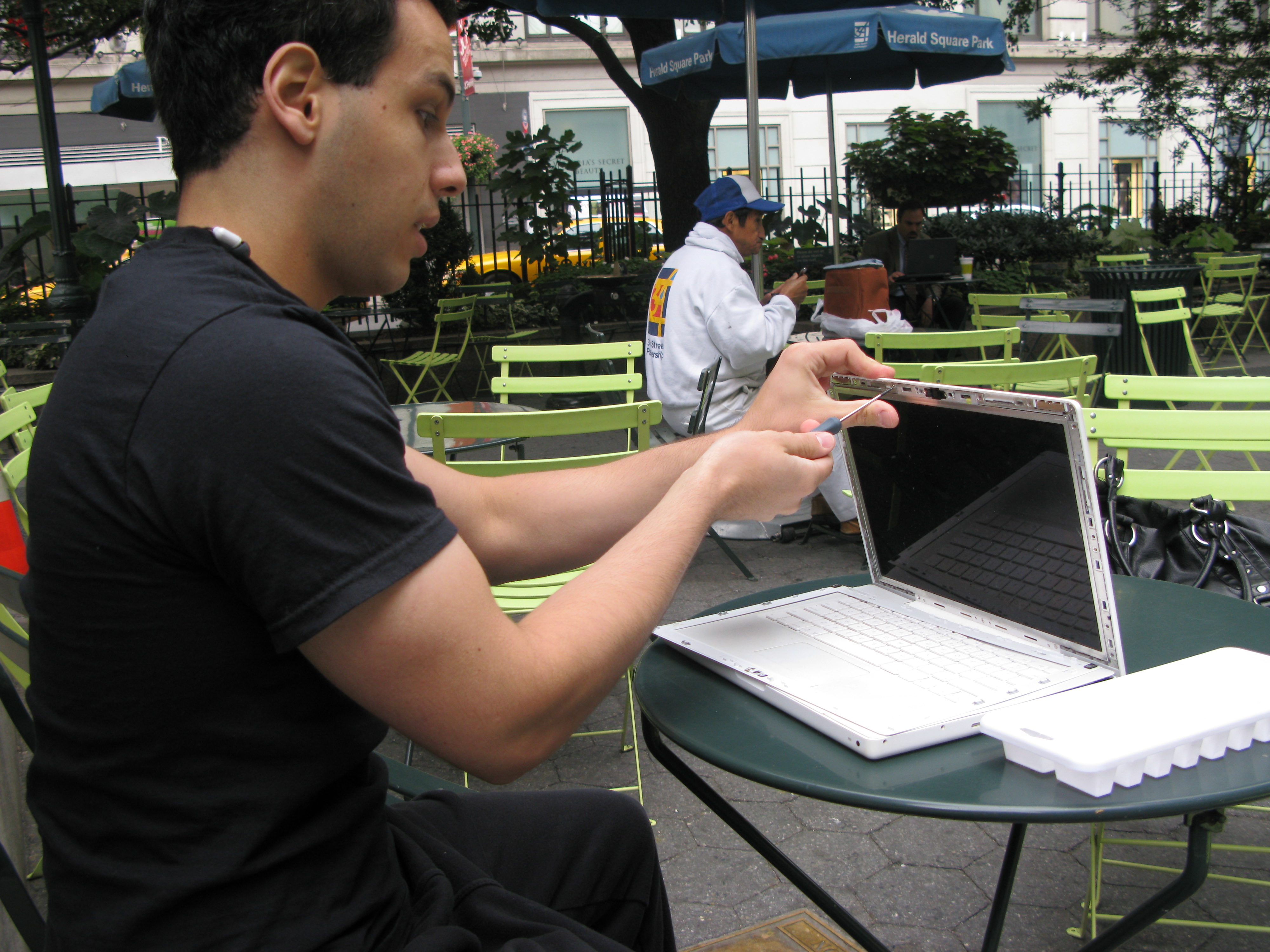
His early shop arrangements were similarly improvised. When he rented a storefront in 2011, the deposit left him so short of cash that he installed a Home Depot patio door at the entrance. He later joked that the place was a dump, but his. The same account explains a more durable choice: he posted part numbers, answered questions in forums, and told people when a repair was not worth doing. Keeping the method secret might have protected a transaction. Explaining it gave a stranger a reason to trust the person charging for it.
Put the camera where the hands are
The camera came next. Rossmann began posting repair videos in 2011, turning component level diagnosis into something viewers could follow. In a conventional service counter, a machine disappears into a back room and returns with an invoice. On his channel, the viewer could watch a technician trace a fault, inspect a board, and decide which tiny component had failed. The repairs were painstaking and often unglamorous. That was part of their force. A working circuit did not need a miracle. It needed a diagnosis.
One 2016 video showed him repairing a MacBook Air with a failed zero ohm resistor after Apple had recommended a logic board replacement. Rossmann displayed the relevant schematic as he explained the fault. He says lawyers for Apple called and asked him to remove the video. He refused unless they filed a formal takedown request. No such request followed, and the video remained online. The episode put a legal edge on a problem he had met at the bench: if a technician cannot share the diagram, even a simple component can become difficult to find.
By the time the CBC crew arrived, the videos had already taught an audience how to look at a broken laptop. The television repair made the lesson unusually legible. A bent pin is small enough to explain in a sentence. A four figure quote is large enough to remember. Rossmann's diagnosis traveled widely because it gave viewers a concrete question to take to their next repair counter: what, exactly, failed?
“If you are unable to fix what you own, do you really own it?”Louis Rossmann
The bill for missing information
As the channel grew, Rossmann took that question to state legislatures. His first right to repair video appeared in 2015. He visited hearings in New York, Nebraska, Massachusetts, Maine, and other states to argue for access to parts, tools, and information. At the bench, the missing schematic wasted a technician's time. At a hearing, the same absence became a question of public policy. His work helped show legislators what a repair restriction looks like when someone is holding the board in his hands.
The campaigning also changed scale. Repair Preservation Group supported education and the RepairWiki resource. An associated action fund could spend more directly on lobbying. Rossmann says the groups raised roughly $1 million each, enabling organizers and professional advocates to join work he had once done by showing up with a camera. Steve Wozniak publicly endorsed the right to repair in 2021, recalling an earlier electronics culture in which diagrams came with the products. It was a useful connection: the person arguing for open repair was hardly asking to abandon the tradition of making and modifying computers.
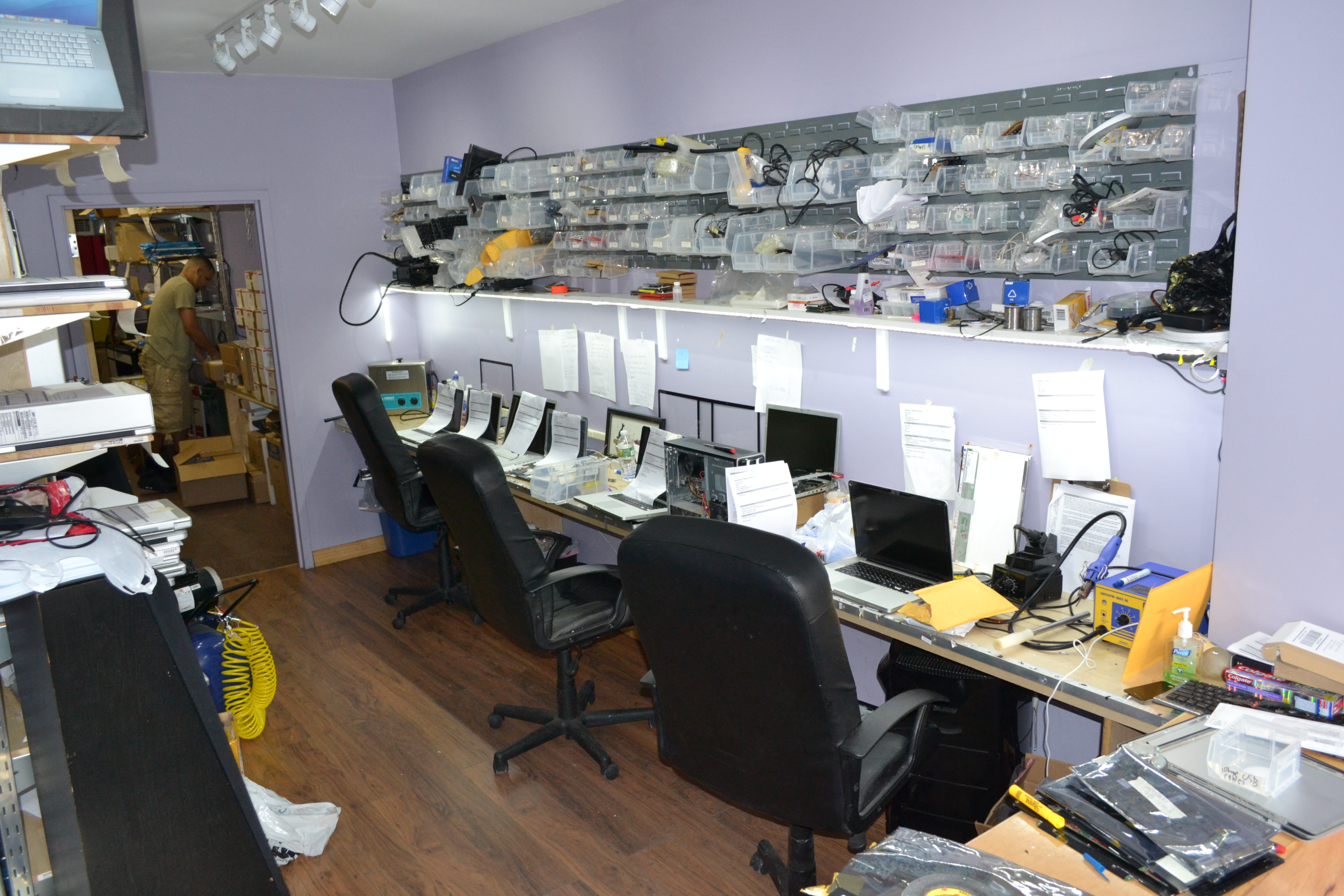
The shop itself moved from Manhattan to Austin in 2022. Several technicians went with him. Rossmann Repair Group now handles board repair and data recovery in its Texas lab, with mail in work coming from across the United States. The methods have become more specialized: microscopic soldering, donor components, tools that read damaged drives. But the public explanation has remained an ordinary part of the business. The repair is the service; showing why it works is the argument.
A lock inside the thing you bought
Repair has led Rossmann to a broader difficulty. More products contain software that decides what owners may do with the hardware in their hands. A part can be physically sound and still be rejected by a device. A feature can disappear when a service closes. An owner might know precisely how to fix a machine and still encounter a digital lock. These cases led him and collaborators to create FULU Foundation USA, a nonprofit focused on digital ownership and reform of Section 1201 of the Digital Millennium Copyright Act, which restricts bypassing technological protection measures.
FULU's work includes a consumer rights wiki that records products with revoked features, locked consumables, and other limits. It has offered bounties for ways around certain device locks. Rossmann's argument has a practical rhythm: document what the product did, show what changed, and identify who now has control. The object of concern may be a game console, an air purifier, or a car. The owner faces the same uncertainty that a laptop customer faced at the repair counter, only with software between the problem and the screwdriver.
In 2026, he took the subject on the road with FULU's Own Your Shit tour. At a San Jose gathering, a train repeatedly passed the venue and interrupted the speakers. Rossmann kept talking, raising his voice over the noise. The scene was funny, and it suited a speaker who has never seemed especially interested in waiting for silence. The event brought together repair advocates, students, and owners of products whose continued use depends on corporate support. In his hands, a legal section and a service shutdown became questions that people could recognize from the devices in their homes.
The argument also follows him into ordinary disputes. In 2026, he publicly challenged Samsung after a warranty claim on his failed SSD turned into an offer of a refund rather than the replacement he sought. That same spring, FULU hosted a software fork connected to a dispute over third party control of Bambu Lab printers. The products and the companies were different. In each case, Rossmann reached for the same tools he had used in the repair shop: paperwork, a camera, the technical details, and an invitation for viewers to inspect the claim themselves. It is a demanding way to advocate. Every public example can be checked, challenged, or complicated by facts that emerge later. He keeps returning to examples anyway, because a specific device makes an abstract right easier to argue about.
What the bent pin still says
Rossmann's style is blunt. He can move from a microscopic chip to a pointed complaint about a multinational company in a single breath. That manner has made him watchable, but his more lasting contribution is the habit beneath it. He insists on naming the failed part, displaying the evidence, and letting the customer understand the options. It is a technician's form of public accountability.
The park table, the repair videos, the legislative testimony, and the ownership tour are different stages of the same demonstration. A person bought a machine. Something went wrong. Someone else claimed the authority to decide what could happen next. Rossmann's first answer was to open the laptop and look. It remains a useful place to start.