Before Louis Hernandez Jr. was responsible for other people’s money, he helped his mother count the family’s food stamps. He was five. Arithmetic had a purpose: work out what the household could afford, and make it stretch. In the account he later gave of his childhood, the lesson stayed with him long after the numbers acquired more zeroes.
His father offered another sort of calculation. Weekends in a computer lab made technology something a boy could touch and explore. His mother pursued her own education while raising a family. Both parents treated learning as a practical route toward a different life. A classroom, in this household, had consequences beyond the report card.
Today, Hernandez is the founder, chairman and CEO of Black Dragon Capital. His career has passed through banking software, electronic payments and the equipment and software behind television production. These businesses occupy an interesting patch of modern life: everyone uses their results, while relatively few people could name the companies doing the work. They are the plumbing behind the polished surface.
Arithmetic before the spreadsheet
Hernandez grew up in lower-income Los Angeles neighborhoods. He helped his mother distribute clothes the family had outgrown. Resources moved between people because somebody noticed where they were needed. There was an early education in community alongside the one in arithmetic.

A childhood photograph shows him on a soccer field in 1973, holding a ball against his hip. It gives the eventual executive a welcome interruption from the language of transactions. Here is a child with a game to play. The photograph also places youth sport in his story decades before his later involvement in athletic programs.
He went on to earn a business degree and an MBA at San Diego State University. Accounting and advisory work followed. The sequence matters: the investor’s working life began with learning how businesses were put together. The technology interest survived the journey through the accounts.
The bank behind the bank
By 1997, Hernandez was chief financial officer at RoweCom, an electronic commerce software company. He became its executive vice president the following year. In November 1999, he took over as CEO of Open Solutions, adding the chairmanship in March 2000. The business served financial institutions that needed software for the daily, exacting work of handling accounts and customers.
It is easy to overlook a bank’s internal systems. A customer sees a balance, a payment, perhaps a familiar teller. Underneath sit records that have to agree with one another. Open Solutions sold the software that helped institutions manage those operations and use information across the business. The product was useful precisely because so much depended on it behaving predictably.
In 2007, Bank Technology News ranked Hernandez fifth on its Innovators list. The recognition came from a world where progress often means giving an existing institution a better way to work. There is less theatre in that than in inventing a new consumer gadget. There are still plenty of people waiting for it to work.
The two figures describe different parts of the acquisition. Keeping them separate makes the transaction easier to understand.
Fiserv acquired Open Solutions in January 2013. Its announcement specified a $55 million purchase price and approximately $960 million of assumed debt. That distinction belongs beside any account of the deal. A transaction can move a large business without the equity purchase price being the same as the combined financial obligations.
Hernandez had already started another Connecticut business, Payveris, in 2011. It developed digital money-movement technology. Paymentus acquired the company he founded for $152 million in 2021. The relationship with Connecticut continued beyond a single company: people who had worked together had reason to consider another project.
An investor who wanted an operator
Black Dragon Capital began in 2013. Hernandez’s explanation for starting it is rooted in frustration. As an entrepreneur, he had wanted investors who understood the experience of building a company. Financial backing brought necessary resources; operating knowledge helped determine what happened once the money arrived.
That is the premise behind the firm’s emphasis on operators and its focus on financial technology, media technology and digital commerce. Each field asks an established business to adapt while continuing to serve its customers. Familiarity with the work can help an investor ask more useful questions. It also gives the investor fewer excuses for overlooking the answers.
He has described reading data science research and Spanish history. It is an unusual pair of interests for a conventional business bookshelf, and a useful detail in a career often reduced to deal announcements. His stated preference was for learning about particular fields. He also said he wished he had expressed more gratitude to the people who trusted his ideas early on. Behind the investment thesis sits the older experience of needing someone else to take a chance.
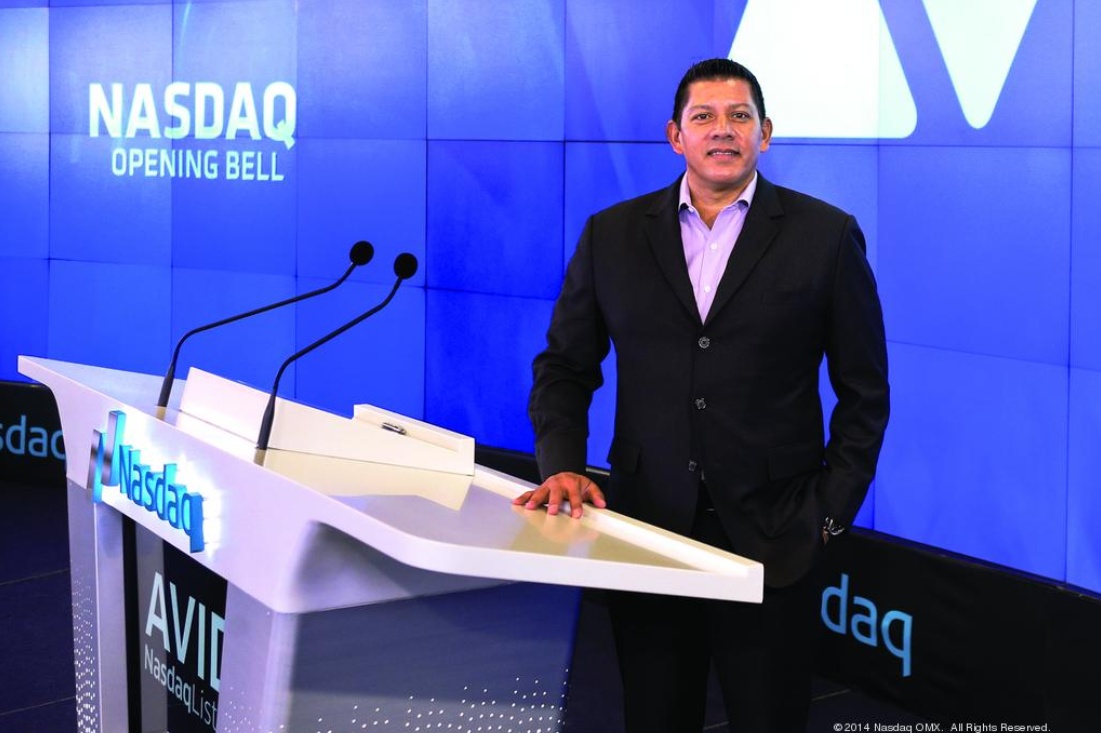
His career took a public turn at Avid, where he became CEO in 2013. The company’s tools included Pro Tools and Media Composer, placing him close to the work of musicians, editors and broadcasters. A photograph from 2014 catches Hernandez at Nasdaq, standing beside a lectern carrying Avid’s name. For once, the business behind the screen was itself on display.
The show has to keep running
In July 2020, Black Dragon completed its acquisition of Grass Valley from Belden. Grass Valley supplied broadcast and media production technology, bringing Hernandez back into the industry after his Avid years. The ambition included moving toward software-based production and more flexible ways for customers to buy and use technology.
For a broadcaster, a transition has an awkward constraint: the audience still expects a programme. Existing equipment, staff routines and investments have to figure in the plan. An appealing future system has to meet the operation already in progress. The customers have schedules; the schedules tend to be firm.
Grass Valley’s AMPP platform became central to that direction. Hernandez publicly described the effort to connect hardware and simplify the separate systems inherited through acquisitions. The goal involved bringing pieces together, a recurring theme in his work across industries. New software would have to earn its place among the things customers already depended on.
Different customers. A recurring task: give organizations the systems to do their work.
In April 2025, Jon Wilson became Grass Valley’s CEO, with Hernandez continuing as executive chairman. The transition put day-to-day leadership with Wilson while Hernandez retained a role in long-term strategy. At the NAB Show, the handover included a ceremonial key to the Grass Valley Media Universe. Corporate succession occasionally comes with props.
That September, Hernandez accepted the IABM Impact Awards’ Visionary Leadership Award at IBC. He also had a new book to discuss: Digital Tsunami, launched in April 2025. It joined Too Small to Fail, Saving the American Dream and The Storyteller’s Dilemma. The titles trace his interests from community finance to the business of making and distributing stories.
The responsibilities on the other side of the desk
The record includes abrupt reversals. On February 26, 2018, Avid terminated Hernandez’s employment, citing violations of company policies related to workplace conduct. The company said an independent board committee had investigated with outside legal counsel. It described the conduct as unrelated to finances. Hernandez also resigned from the board, and Jeff Rosica became CEO.
In September 2024, the Securities and Exchange Commission charged Hernandez and two Black Dragon entities with investment-adviser registration and other violations, including marketing-related allegations. The defendants consented to a settlement without admitting or denying the allegations. A final judgment against Hernandez was entered on September 25, 2024.
Black Dragon Capital Investment Management’s SEC registration became effective that month. These events are part of the same career as the acquisitions and awards. Running a technology company and managing investment capital carry obligations to employees, customers and investors. A record of building businesses has to be read alongside the decisions made while holding those responsibilities.
Back to the price of admission
In March 2026, Hernandez was discussing Digital Tsunami with credit-union broadcaster Mike Lawson, emphasizing human needs and collaborative vendor relationships. In June, another conversation covered AI, investment trends and partnerships. His subjects had acquired new vocabulary. He was still talking about how institutions use tools and work with other people.
His foundation gives the opportunity question a more direct expression. He established the nonprofit in 2011. For A Bright Future supports underserved young people through educational programs, scholarships, the arts and leadership development. His later involvement in Dragons Academy and Dragons Elite extends that interest into schooling and youth athletics.
“Education is the cornerstone of opportunity.”
Louis Hernandez Jr. / April 2026
In April 2026, the foundation announced a $500,000 annual donation from Hernandez, alongside a matching initiative ahead of a New York fundraising event. The scale is a long way from counting food stamps at home. The underlying question remains recognizable: what resources will let somebody take the next step?
His public life has room for a soccer ball, a bank’s accounts, an editing suite and a book-signing table. What connects them is the practical business of participation. A child needs access to a place to learn. A financial institution needs usable systems. A production team needs tools that survive the demands of a live show. Hernandez has spent his working life around those points of entry. Whether his ambitions succeed is ultimately measured in what the people using them can do.
Keep following the story
Public profiles, conversations and the record behind the career.
- Louis Hernandez Jr.’s website Biography, books and updates
- LinkedIn · X · Instagram · Facebook · Medium
- Black Dragon Capital’s company profile
- Four Cornerstones That Shaped My Childhood Hernandez’s autobiographical essay
- Watch: Hernandez and Tim Banks on AMPP Grass Valley / YouTube, 2024
- Watch: AI and collaborative partnerships CUbroadcast, June 2026
- For A Bright Future’s story Childhood photographs and the foundation’s origins
- Fiserv’s Open Solutions acquisition announcement
- Avid’s February 2018 leadership announcement
- SEC’s September 2024 release · Final judgment · Adviser registration