The best customer for the Limitless Pendant was not a gadget collector. It was the person walking out of a fourth meeting, certain that somebody had promised something and unable to remember who. Clip the black disc to a lapel, let it listen, and the phone app turned the day into a searchable Lifelog: transcript, summary, names, action items, the restaurant recommendation that otherwise would have vanished before dinner. For that person, the Pendant reduced the small panic of modern work.
That is also the first thing a 2026 buyer needs to know. The product is no longer sold. Meta acquired Limitless on December 5, 2025, and new hardware sales stopped the same day. Existing owners in supported regions received the Unlimited plan for free and a promise of service through the end of 2026. There is no public promise for 2027. A used unit may be beautifully machined and temptingly priced, but its useful life still depends on an account, mobile app and cloud service with a dated guarantee.
Why it existed: the notes you never took
Limitless began life several times. Dan Siroker and team first built Scribe.ai, then Rewind, a Mac app pitched as a search engine for your digital life. In April 2024 the company adopted the Limitless name and moved the idea into the physical room. The little wearable was announced at $99 after an earlier $59 offer. More than 10,000 preorders arrived within a day, according to the company. It was a crisp proposition during a year crowded with vague AI hardware: wear this, pay attention to the human, retrieve the details later.
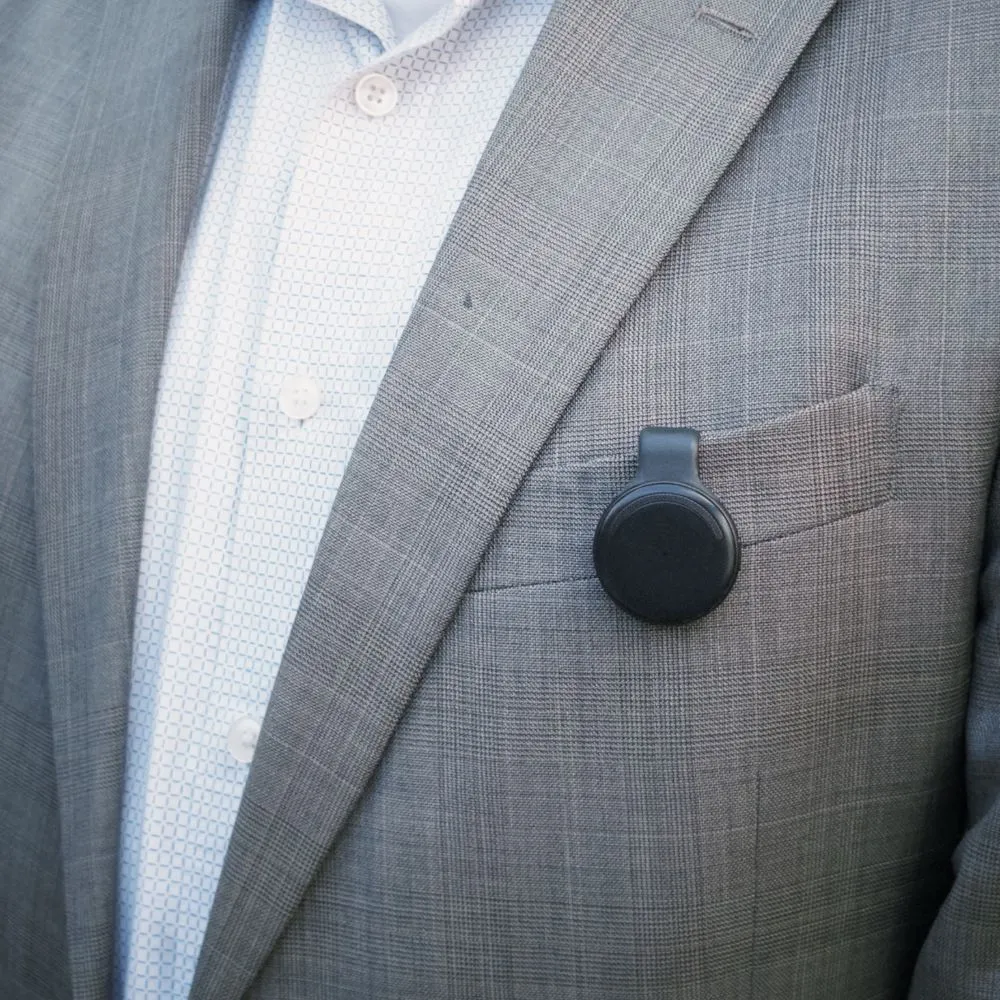
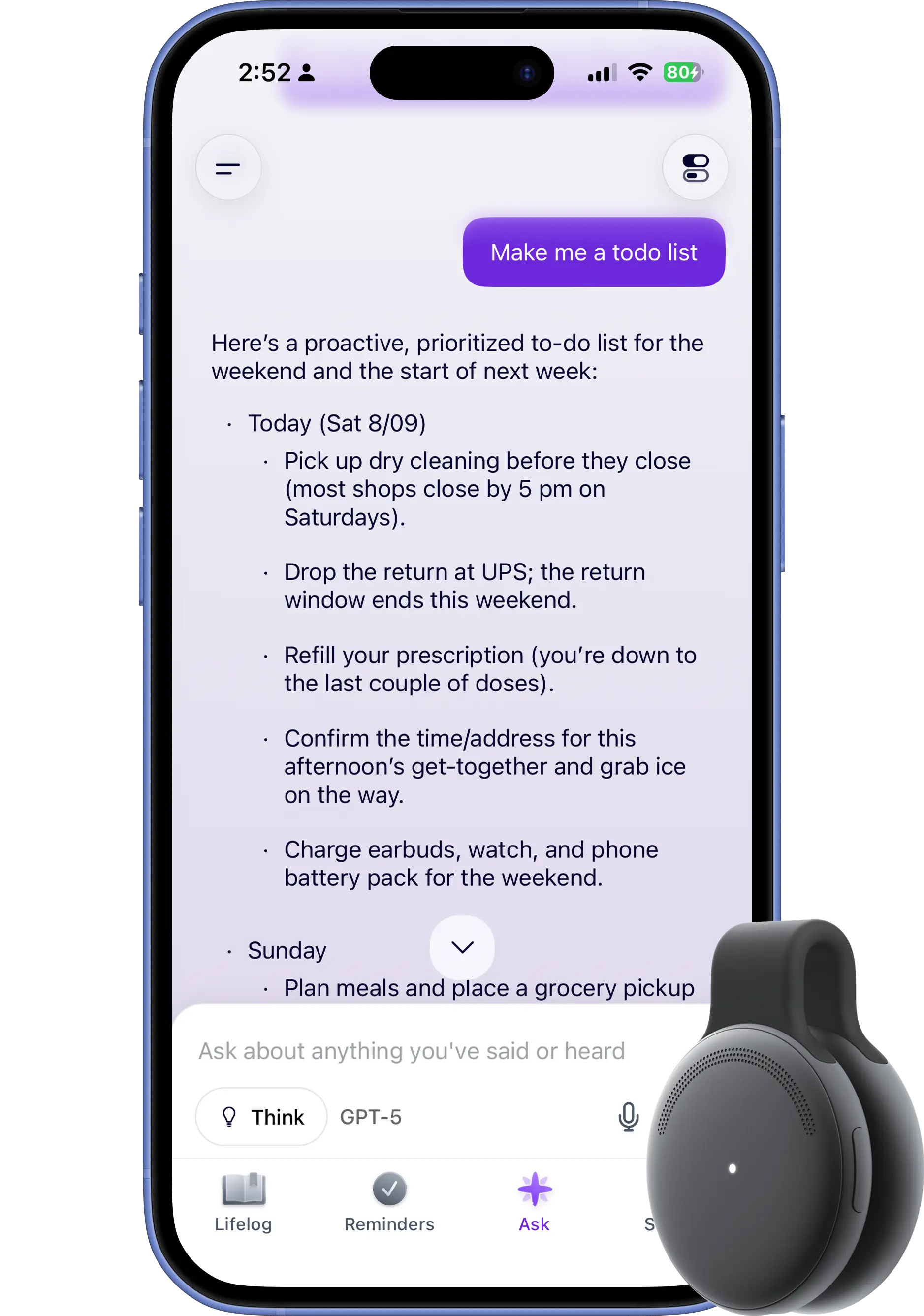
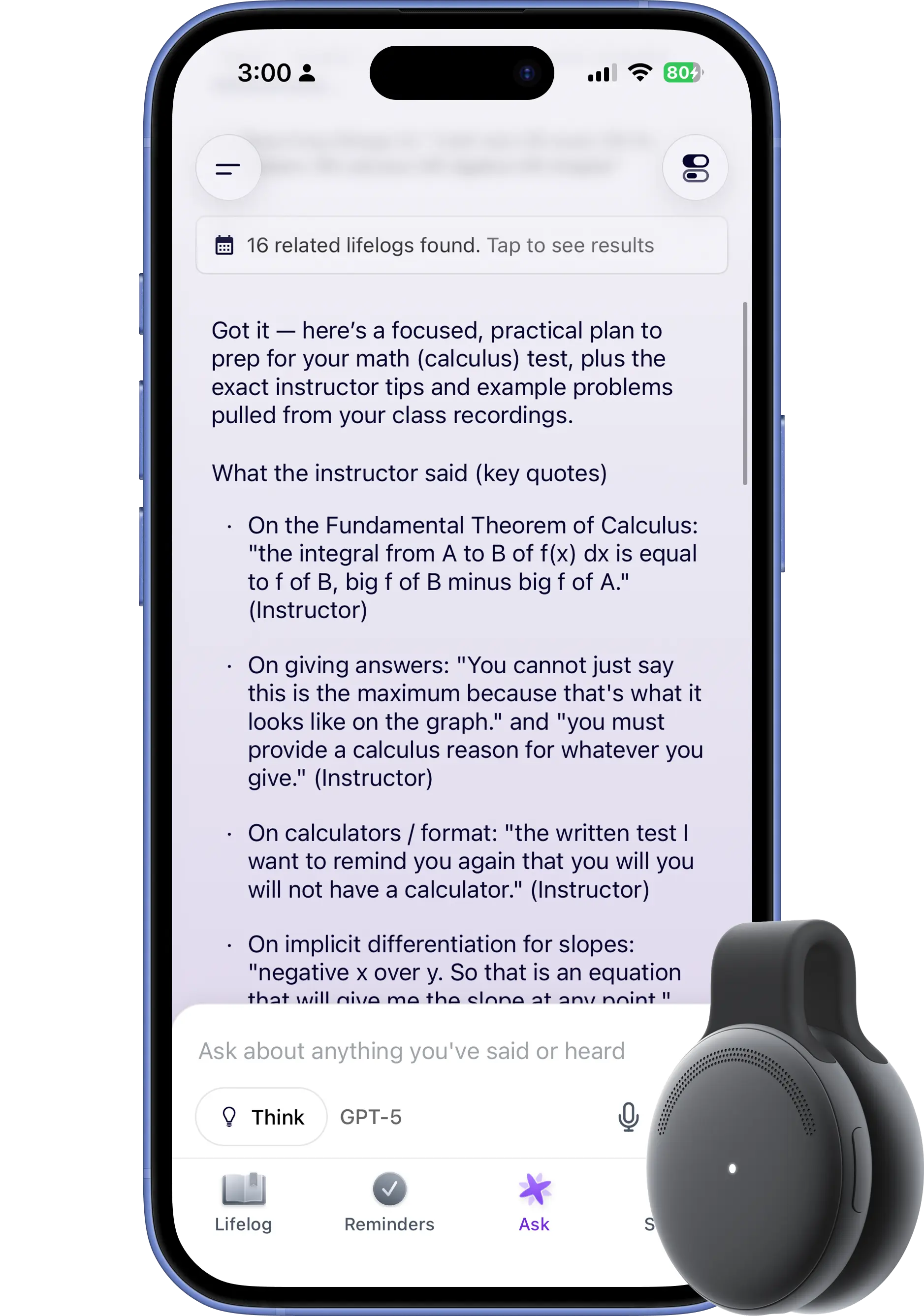
The shipping product kept the job narrow. It recorded with its own microphone, stored audio until it could sync, and handed the computational work to Limitless. The app broke speech into chronological entries, labeled speakers, generated notes and let users ask questions across their history. A physical tap starred a moment. Scheduled prompts could produce a morning digest or task list. More technical owners could query Lifelogs and chats through a beta REST API or MCP endpoint, and download audio in Ogg Opus format.
This sequence mattered more than any language-model flourish. Phones already contained microphones, and meeting bots already produced transcripts. The Pendant removed the moment when a distracted person had to remember to start either one. It made recording ambient, which was useful at lunch, after a conference panel, during a corridor decision or while talking an idea through on a walk. One App Store reviewer described the result in five tidy words: “It is an external brain.”
The killer feature was remembering to record before you forgot what needed remembering.YesPress verdict
Who got real value from it
Meeting-heavy founders, consultants, salespeople and product managers were the cleanest fit. Their days generate dozens of minor commitments, and their workplaces already tolerate formal recording. Students could revisit lectures. Journalists could preserve interviews, though a dedicated recorder remains wiser for critical work. People who think aloud found another use: speak through a decision while walking, then search the reasoning weeks later. A retired App Store reviewer wrote about recalling details from medical visits, shopping lists and new neighbors. That is more affecting than “meeting productivity,” and closer to the original dream of memory augmentation.
The weak fit was ordinary social life. Mike Cann, after trying Limitless and Omi, found that an always-listening device could not reliably understand whether speech came from his conversation or a television in the background. His Limitless also felt geared toward business rather than the personal to-do companion he wanted, so he stopped wearing it after a few days. This is the category’s recurring comedy: a device can capture the entire room and still misunderstand the day.

The hardware was ready before the habit
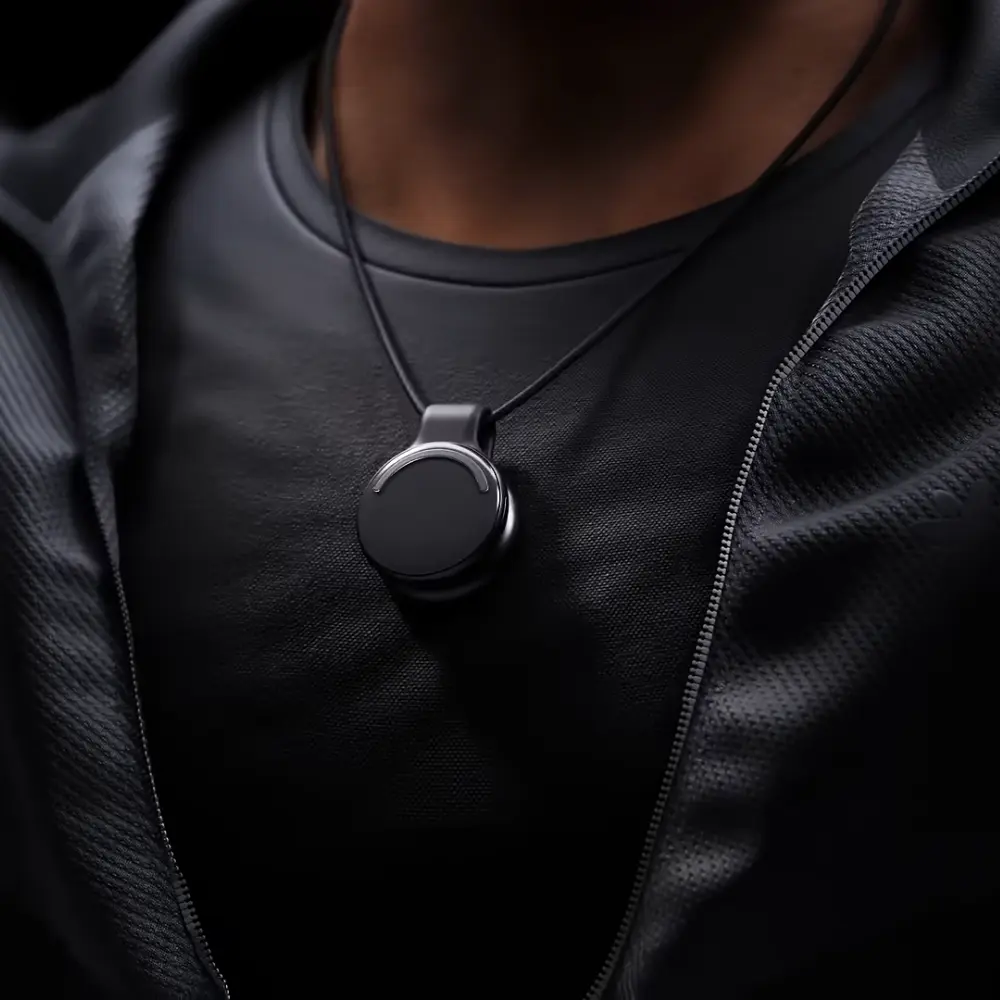
Owners repeatedly praised the physical object. One App Store review called it “premium, sturdy, and thoughtfully designed,” then criticized the software as unfinished. That split is fair. The magnetic clasp and shirt clip made wearing simple. USB-C charging was civilised. Limitless said the battery lasted a full day of continuous capture and recommended nightly charging. IP54 protection covered dust, damp conditions and light splashes, not a shower, swim or washing machine.
The white recording light could be dimmed but not switched off. That was deliberate, and it occasionally made the wearer look like a tiny lighthouse. It also served an important purpose. A microphone designed to disappear into daily routine needs a visible sign that it is working. The Pendant could only capture sound from its own mic, so calls through AirPods required speakerphone. Position mattered too: microphone and light faced outward for clearer audio, an instruction easy to ignore when a necklace flipped.
Consent was a feature, a duty and a mood killer
Limitless required wearers to notify people and obtain consent before recording them. The light signaled active capture, but a light is not consent. Local laws vary, and the burden stayed with the owner. In a scheduled work meeting, “mind if I record notes?” is manageable. At a playground, doctor’s office, café or family dinner, it changes the atmosphere. Anyone buying an ambient recorder is also volunteering to become the room’s privacy administrator.
The data posture was serious but still cloud-based. Limitless described encryption in transit with TLS and protected storage using hardware security modules. Users could delete Lifelogs, export data and choose audio-retention periods. Its developer interface required API keys and offered deletion endpoints. After the Meta deal, however, the regional map shrank: service ended in Brazil, China, the European Union, Israel, South Korea, Turkey and the United Kingdom. Customers there were given a short export window before account deletion. The episode shows why privacy controls and platform continuity belong in the same conversation.
Transcription: helpful, not testimony
Experiences varied widely. Positive owners reported strong English transcription, useful summaries and surprisingly good range. Others complained about sentence fragments, missed conversations and unreliable speaker recognition, particularly with accents, background noise or several people talking. The custom dictionary helped with uncommon names and specialist terms, and the service supported more than 100 languages. None of that turned an automatically generated transcript into an authoritative record.
Treat the audio as the source, the transcript as navigation and the summary as a draft. Names, numbers, medical instructions and contractual promises deserve a replay. That rule applies to every AI recorder, but it matters more when an interface encourages a user to search a neat answer rather than hear the messy conversation beneath it.
| Option | Best use | Advantage | Catch in 2026 |
|---|---|---|---|
| Limitless Pendant | Existing owners with all-day conversations | Passive capture, searchable Lifelogs, API | No new sales; support promised only through 2026 |
| Plaud NotePin | Wearable meeting recording | Available product and active ecosystem | Cloud plan and deliberate recording workflow |
| Omi | Tinkerers and open integrations | Open-source orientation and app ecosystem | More setup and uneven polish reported by users |
| Otter / Granola / Fathom | Online meetings | No extra necklace to charge or explain | Less useful for spontaneous in-person talk |
The price now is service risk
Pricing changed during the product’s life. Limitless revealed the Pendant at $99, while later bundles paired hardware and a year of Unlimited service at higher prices. The free tier eventually included 1,200 minutes of spoken transcription each month. Unlimited had been $29 monthly or $19 a month with annual billing. Following the acquisition, continuing owners stopped paying. On a spreadsheet, free Unlimited looks generous. For a secondhand buyer, it is irrelevant unless account activation, regional access and device pairing actually work.
Only one Pendant could pair to an account, and the company no longer accepts new customers. Do not buy a sealed unit assuming it will behave like ordinary offline audio gear. Before considering a used one, confirm that the seller can unpair it, your country remains supported, you can access the mobile app, and Limitless support will accept the account. Even after those checks, value it as hardware with months of stated service, not years.
Buy, keep or skip?
New buyer: skip it and choose an actively sold recorder. Existing owner: keep using it if the workflow helps, export regularly and plan a replacement. Collector: buy only as a piece of AI-wearable history, preferably one that costs less than the story you will tell about it.
What Limitless got right
The Pendant understood that an assistant is only useful when it has context, and context disappears while people are busy living. It put capture at the body, retrieval in natural language and a bookmark under one finger. It also exposed every unsolved part of ambient computing at once: consent, speaker identity, noisy rooms, social comfort, cloud cost and the fear that intimate archives can outlive the company’s promises.
Meta did not disclose the acquisition price. Siroker said the team joined because both companies shared a vision for AI-enabled wearables. That makes Limitless less a dead end than a field test whose lessons may surface in another shape, perhaps glasses or earbuds. The object itself remains a warning with good industrial design. When hardware sells access to a cloud brain, support duration is part of the battery specification.
For owners, the practical ending is simple: use the tool while it helps, export the archive, and do not let a memory product become the only place your memories live. For everyone else, Plaud NotePin, Omi and software meeting tools offer routes into the same idea with live product roadmaps. None fully removes the human work of asking permission, checking important details and deciding which parts of life deserve a permanent transcript.