The back of a work van is where neat procurement spreadsheets go to get hit with a wrench. Floors collect wet boots, dropped compressors, spilled chemicals and shelving screws. Doors attract pry bars. Entry steps see the same worker hundreds of times a day. Most of these parts are ignored at purchase because they are not the van. Then they begin deciding how long the van lasts, how safely its driver works and how much the fleet recovers when it sells the vehicle.
LEGEND Fleet Solutions built a company in that gap. Founded in 2004 and headquartered in Tillsonburg, Ontario, the private manufacturer makes fitted composite floors, rubber mats, wall and ceiling liners, thermal insulation, locks, lights, ventilation and steps for commercial vehicles. In 2025 it added BedBoss, a structural floor for pickup beds. Its products reach fleets through vehicle makers, distributors and certified local upfitters across North America and the UK and Europe.
The catalog is broad, but the idea underneath it is narrow: take abuse before the vehicle does. That turns an unlovely rectangle of composite into a lifecycle-cost argument. The floor protects sheet metal, gives shelving a stable base and reduces slipping. Liners stop dented walls and heat buildup. A slam lock removes the tiny human decision that leaves tools exposed. The company is selling fewer bad days, one fitted part at a time.
What failed first
LEGEND's best sales material begins with failure, not features. Plywood is familiar and inexpensive, until repeated impacts splinter it and water finds the exposed edges. A factory mat is adequate, until it tears, shifts or needs another replacement. Smooth metal steps work, until rain or ice turns an ordinary exit into an injury. A manual “hockey puck” lock is formidable, until a hurried technician forgets to engage it.
Those are not laboratory anxieties. Greenthumb, the lawn-care company, found that heavy aerators and scarifiers damaged plywood and allowed water into the floor. U-Haul needed mats that survived fast rental turnovers without constant replacement. A Phoenix HVAC fleet had been using plywood and rubber before its upfitter proposed LEGEND's StabiliGrip rigid floor. The premium made the customer hesitate. A week after installation, the fleet manager reportedly called back and asked that nothing else go into future vans.

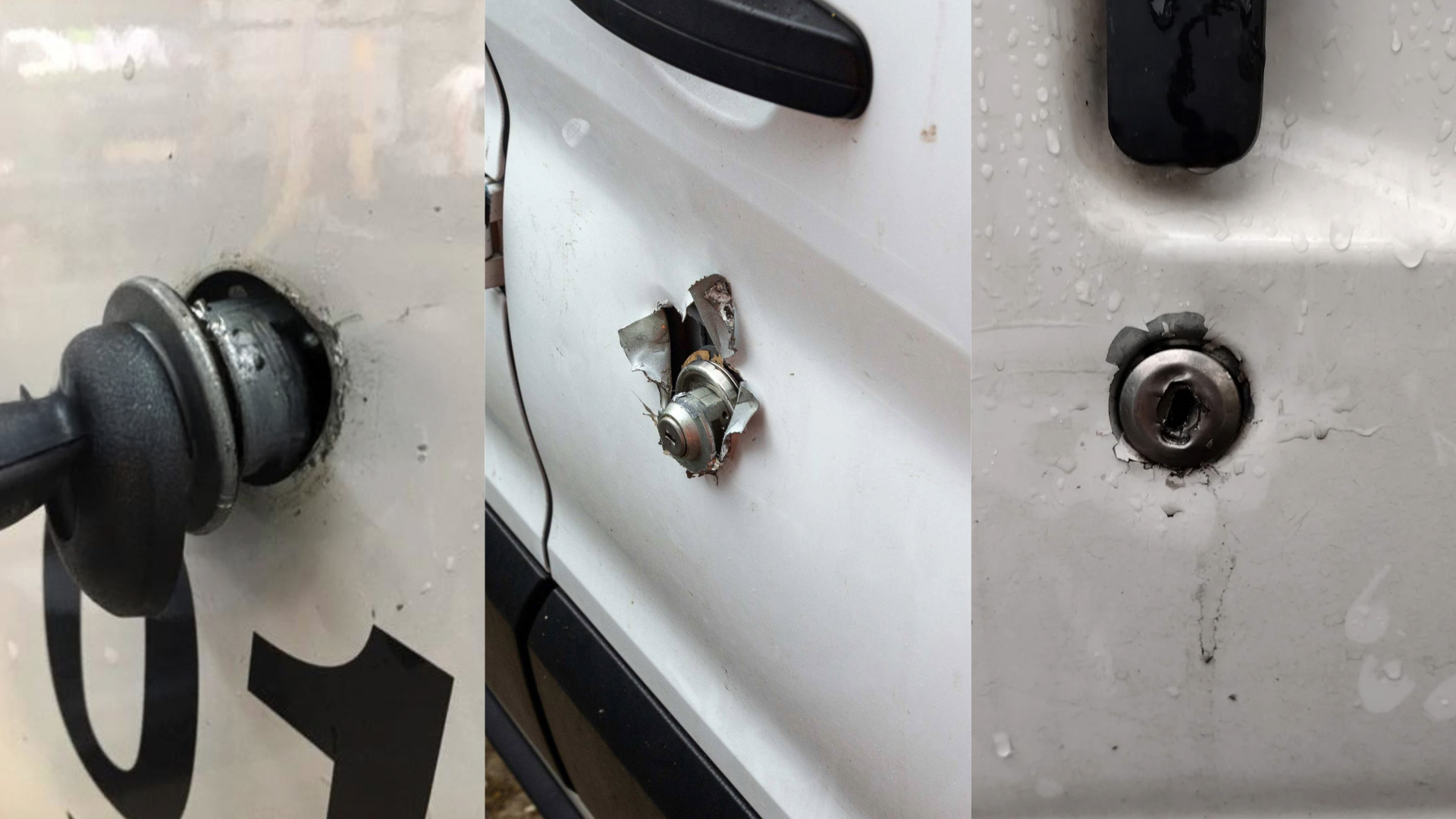
Security made the lesson more expensive. San Diego's Bill Howe Plumbing estimated that tool theft had cost roughly $1 million in 2024. The company had tried locks, alarms and other systems that thieves learned to beat. So it put LEGEND's SecuriLock on one van. Thieves examined it, played with it and gave up, according to the fleet's account. Bill Howe expanded the system and reported zero break-ins in 2025. The failed thing was not only the old hardware. It was a strategy that depended on adding one more warning instead of removing a point of defeat.
“They went and looked at it. They played with it and they gave up.”Bill Howe fleet case study
The floor is the core
A standard upfit often begins with shelving, bins and racks because those are the visible tools of organization. LEGEND reverses the order. A rigid floor makes the ribbed metal cargo bay flat, resists moisture and chemicals, and creates a base into which compatible shelving can be secured. Its StabiliGrip line targets heavier work. BaseAir, launched in 2025 with folding technology, is a lighter, economy option for milder duty. Rubber AutoMats serve rental and low-demand use. The right answer depends on the load, not the brochure.
Above that floor, DuraTherm panels line walls and ceilings with a fitted, insulated barrier. TempShield adds another thermal layer behind them. VanFan vents heat from the roof, while motion-sensing lights illuminate the cargo area without asking a driver to remember a switch. FixSteps deal with entry at the doors, and SecuriLock deals with whoever should not enter at all. This is the company's competitive distinction in miniature: not a generic sheet cut in a local shop, but a coordinated set of parts modeled for particular vehicles. The rival is as often the bare factory interior or a patchwork of commodity materials as it is another branded upfit system.
The visual is simple on purpose: if the floor moves, rots or cannot hold the build, everything above it inherits the problem.
That product ladder is a useful clue to the business model. LEGEND is the manufacturer, while local certified upfitters commonly handle fitment. A national fleet can set one specification for Transits, Sprinters, ProMasters and pickups, then have vehicles installed near each operating market. OEM relationships take the idea upstream: LEGEND says it has worked with Ford Pro through the Ford Modification Center since 2018, holds Mercedes-Benz upfitter recognition and serves Rivian as a Tier 1 partner.
When weight becomes revenue
Electric vans made an old material choice newly consequential. Heavy lining consumes payload and can nibble at driving range. Drilling into a floor can be forbidden when batteries sit below it. Riverford Organic Farmers, which delivers produce to tens of thousands of UK households each week, needed an interior that was light, washable, made with recycled material and installed without drilling into its Ford E-Transit chassis.
LEGEND developed a custom prototype using its lightweight composite approach. The company says the build saved more than 75 kilograms per vehicle compared with traditional lining. Riverford could load more produce, clean the cargo space properly and preserve battery-system integrity. LEGEND's case study attributed £1.25 million in additional annual revenue to the added payload. That figure comes from the companies involved, not an independent audit, but the mechanism is easy to understand: a delivery van that carries more saleable product earns more per route.
The environmental claim is similarly concrete when kept within bounds. LEGEND says its flagship rigid floors use up to 75 percent recycled material, and it returns production offcuts from mats and liners to manufacturing. A long-lived, moisture-resistant floor may also avoid the replacement cycle of damaged plywood. It will not make a fleet green by itself. It can prevent an electrified fleet from carrying yesterday's material assumptions into tomorrow's drivetrain.
So, what does it cost?
There is no honest universal sticker price. Vehicle length, door layout, material, sills, accessories, installation and fleet volume all change the quote. Many official product pages ask buyers to request pricing or log into a dealer portal. LEGEND's public distributor program shows the shape of the economics: tiered discounts and custom pricing at high annual spend. Buyers should compare installed cost, not a panel alone.
The invoice
Product, freight, fitment and any vehicle downtime. This is the number a cheap mat usually wins.
The ownership bill
Replacement, repairs, lost payload, theft exposure, worker safety and resale condition. This is the argument LEGEND asks a fleet to calculate.
The comparison still needs discipline. A lightly used van may never punish a basic mat. A rigid floor can be over-specified for personnel transport. Some BaseAir configurations require proper spacers beneath shelving to preserve the warranty. Certain steps require drilling, add more than 63 pounds and can conflict with a trailer hitch. Good fleet buying is not putting the most expensive product everywhere. It is matching the failure mode to the route, cargo, climate and duty cycle.
The factory behind the pitch
In August 2025, LEGEND acquired the extrusion facility in Romeoville, Illinois, previously operated by Corplex. The plant continues to serve packaging customers while giving LEGEND a larger US manufacturing footprint. Vertical integration is not glamorous either, but it reaches the same promise as the products: control the layer on which the rest depends. In this case, that layer is material supply, production capacity and delivery speed.
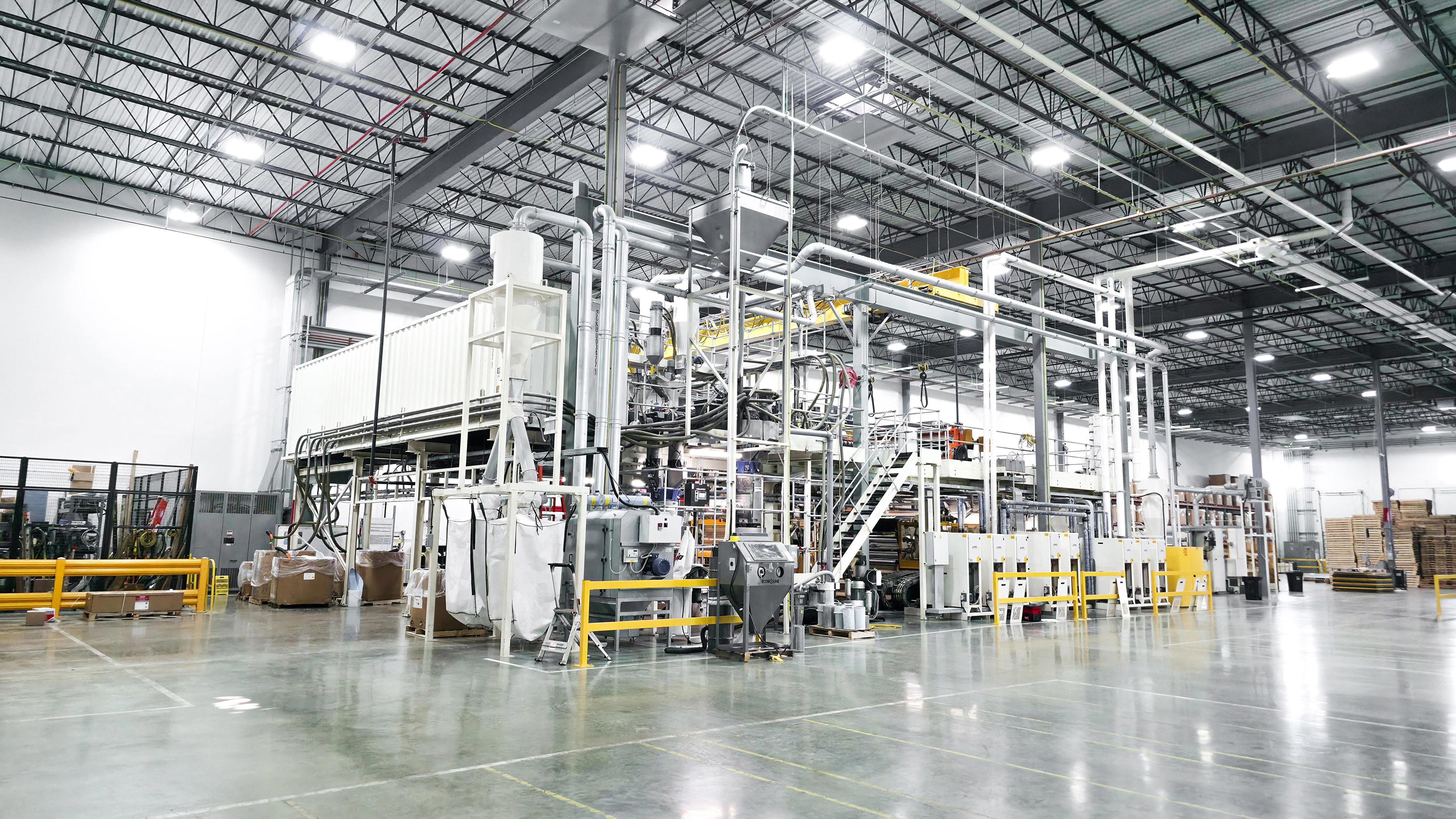
The company also joined The AAM Group's specialty-automotive network in December 2025, a distribution move intended to place inventory nearer US upfitters. Together, the acquisition and channel deal show where LEGEND fits in the market. It is not a local conversion shop and not a full vehicle maker. It designs repeatable protection systems between the OEM shell and the technician's working day, then relies on manufacturing and installers to make that spec travel.
What a reader can steal
Start with the first ugly failure
Ask operators what tears, rusts, shifts, overheats or gets forgotten. Build the product map around those verbs.
Turn features into route math
“Lightweight” is vague. Kilograms saved, extra payload and fewer replacements give a buyer something to model.
Run a one-vehicle trial
The HVAC and Bill Howe stories became persuasive after a controlled test. A small proof can change a fleet-wide specification.
Standardize the object, localize the service
A common product spec plus certified nearby installers gives multi-city customers consistency without centralizing every job.
Own more of the fragile layer
LEGEND moved from design and assembly toward extrusion capacity. Integrate where supply instability can break the customer promise.
The company even makes this normally invisible category easy to demonstrate. Its trade-show history includes axes thrown at liners, an unsubtle but effective answer to “is it durable?” Its public mantra - Be Legendary, Sit In Their Seat, Foot To The Floor and Drive Change - can sound loud. “Sit In Their Seat” is the useful part. The fleet manager buys total cost. The upfitter buys fit and speed. The technician buys grip, light, access and the hope that today's tools will still be there tomorrow morning.
When the playbook does not work
Conditions that weaken the case
- The vehicle has a short holding period, light cargo and little risk of interior damage.
- Added step or structural-floor weight costs more payload than the protection returns.
- A required drilling pattern, hitch, sensor package or shelving system is incompatible.
- The fleet cannot enforce correct installation, cleaning or key management.
- The purchase is judged only on upfront price and nobody owns lifecycle cost.
Those limits are a feature of the story, not a footnote. LEGEND is most convincing where vehicles are worked hard, people enter them constantly, tools are valuable, interiors need washing or every kilogram affects a delivery route. It is less compelling when the van is barely used or the buyer cannot capture the future savings. The lesson hiding under the floor is not “buy premium.” It is to find the abused component beneath an expensive system, measure what happens when it fails and fix that first.