A coffee shop can teach a founder many things: how early the milk arrives, how late the customers do, and how rapidly a tidy counter becomes an archaeological dig. Lasse Kalkar learned something less decorative. He did not really know his margins. The numbers existed, presumably. Their usefulness did not. For someone who now runs a finance-software company, this is a wonderfully inconvenient origin story.
Kalkar's route to LiveFlow did not travel through the usual procession of accounting qualifications. As a teenager in Denmark, he helped turn football tricks into FodboldTricks.dk, a booking business for football entertainment. He later worked at Nova Founders Capital, helped build an executive conference, ran businesses in the United States and tried a micro-investing app that rounded spare change into cryptocurrency. That app failed. His Y Combinator biography says so with a smiley, a tiny mark of punctuation that makes an excellent antidote to founder varnish.
Then came Revolut. Kalkar joined in 2019 and led growth and market launches across the Nordics. The regional operation was lean. In a 2020 interview he described a company organized around sprints, weekly check-ins and the satisfying discipline of getting work over the line. He was 23 at the time, carrying a market-sized brief with little appetite for micromanagement.
One episode from that period sounds almost too neatly Kalkarian. At a match in Copenhagen's Parken stadium, he watched an old friend play and began talking with the club's sales team. The conversations developed into Revolut becoming a stand sponsor for F.C. Copenhagen. Kalkar explained the decision in practical channels rather than pure exposure: the club's television platform mattered, while an international money product also made sense for players constantly crossing borders and sending money home. A football connection had become a market-entry conversation, years after football first became his business.
An operator's route
The apprenticeship of friction
Look closely and the early jobs form a coherent education. FodboldTricks taught him that a pastime can become an inventory of people, dates and sales. The coffee shop supplied a personal demonstration of financial fog. The crypto app proved that a neat consumer behavior does not guarantee a company. Revolut showed what speed looks like when it has process behind it.
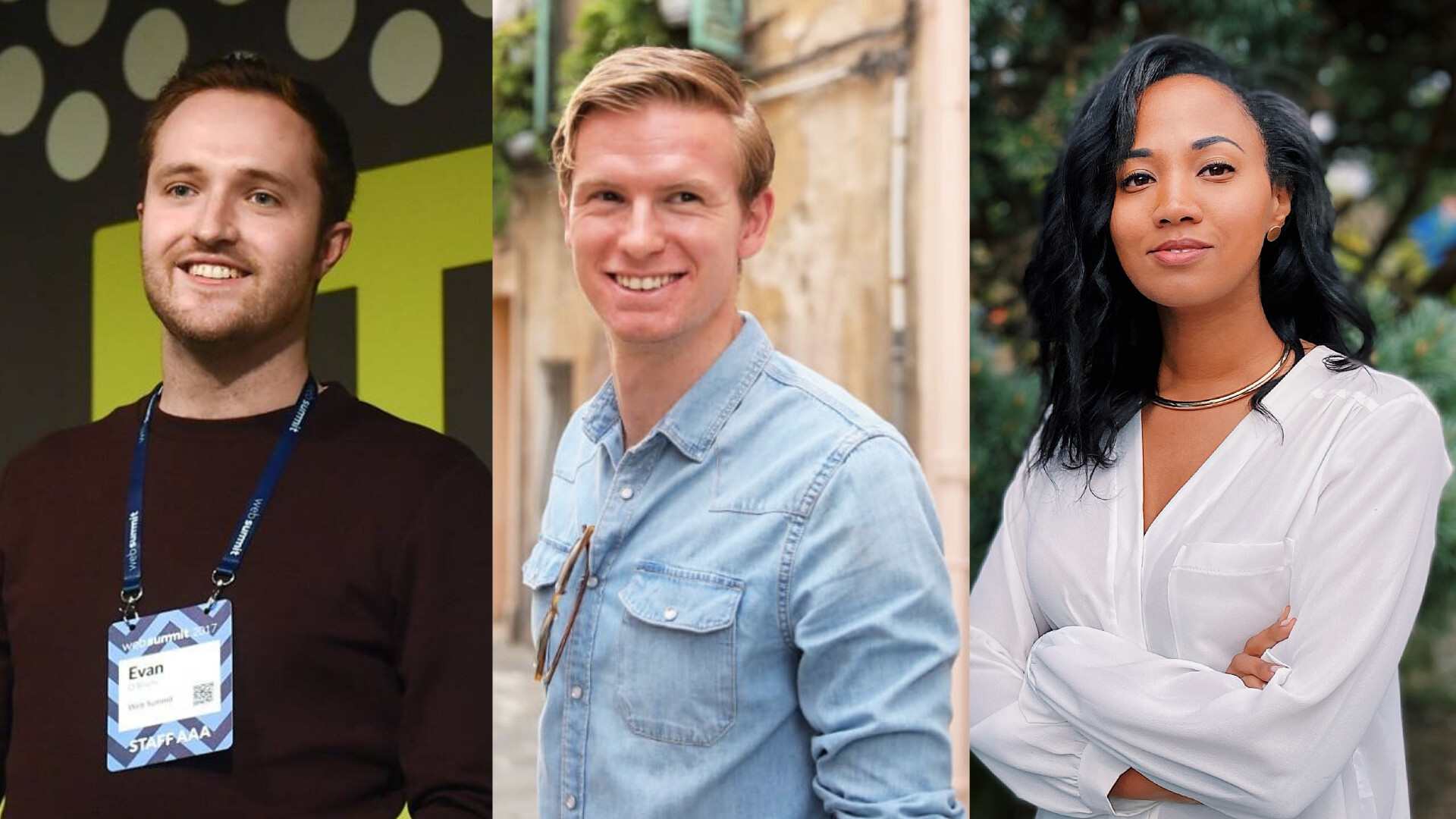
It also produced a useful connection. Anita Koimur had led business development for Revolut Rewards, rolling the product into markets across Europe, the United States and Asia-Pacific. She and Kalkar kept in touch. With engineer Evan O'Brien, formerly of Web Summit, they formed LiveFlow and entered Y Combinator's Winter 2021 batch.
The first product was almost aggressively practical. Accounting data sat in one place. Financial models sat in Google Sheets or Microsoft Excel. Every update invited copying, pasting and the quiet terror of a broken formula. LiveFlow connected the two. The spreadsheet remained; the stale data did not have to.
“People are realising that finance is a function that is still executed very manually.”
This matters because spreadsheets are easy to mock and hard to dislodge. They are flexible, visible and already sitting under the fingertips of the finance team. LiveFlow did not begin by declaring war on them. It made them livelier. The approach was less like replacing a kitchen and more like fixing the plumbing. People notice the difference immediately, even if the room looks familiar.
The founders later gave themselves a sharper version of the customer's experience. LiveFlow took its own accounting in-house while preparing to build Flow. Learning to close the books in QuickBooks meant confronting the copying and pasting that outside bookkeepers had previously absorbed. Kalkar said the team's original spreadsheet extension suddenly felt invaluable. Years of customer requests had explained the problem intellectually. A month-end close made it tactile. The simple product at the beginning of LiveFlow's story became the tool its own builders reached for.
A small fix finds a larger problem
Customers liked the integration. They also showed the founders what lay beyond it. Reporting was only one repetitive frontier. Multi-entity consolidation meant currencies, intercompany accounts, eliminations and long nights. Budgeting lived elsewhere. Accounting lived beneath everything. A stack of connected tools could still become a stack.
The company expanded from spreadsheet sync into reporting, dashboards, budgeting and consolidation. In 2024 it raised a $13.5 million Series A led by Valar Ventures and introduced LiveFlow Next for accounting firms. Publicly named customers included BDO, KLR, Wendy's and Crumbl Cookies. The funding was a milestone; the product sequence was the more revealing achievement. Each wider bet followed time spent with the previous workflow.
There is a founder lesson here worth stealing. Begin with a recurring irritation close enough to observe. Solve it without demanding that the customer abandon every familiar habit. Then watch what the solution exposes. Product expansion looks more credible when it resembles a trail of customer evidence rather than a collection of fashionable nouns.
The accountant stays in the picture
Kalkar's public argument for automation is unusually attentive to what software cannot make people stop wanting. Small businesses hire accountants partly for accuracy, but also for reassurance. They want, as he put it, “someone to have their back.” His plan for AI is to make firms more efficient while keeping the accountant present.
That position became more important as LiveFlow moved closer to the ledger. In February 2026 the company launched Flow, an AI-native ERP designed for established, multi-entity businesses. It brings accounting, consolidation and financial planning into one system. The stated idea is a continuous close: transactions, plans and consolidated numbers updating together instead of meeting periodically in a frantic ritual.
The phrase “AI-native” has acquired the nutritional value of decorative parsley, so Kalkar's more specific comments are useful. In a 2026 interview he argued that systems must be auditable, stress-tested and designed so AI outputs do not become final or irreversible without review. He suggested separating execution from validation, with distinct agents or rules challenging the work. This is less cinematic than a robot bookkeeper. It is also closer to how trust is earned in finance.
His timing argument is similarly concrete. LiveFlow's customer base, he said, began showing formal AI adoption in early to mid-2024. By then finance teams had already moved toward shared workspaces, real-time data and a more central role inside the company. AI accelerated a shift that cloud software and remote work had begun. The bottleneck was confidence: repetitive processes such as accruals and reconciliation suited automation, yet a familiar spreadsheet could still feel safer than an opaque new system. Reliability, review and an audit trail are therefore part of the product, not paperwork added after the interesting work.
“Small businesses hire an accountant to feel safe. They want to know that someone has their back.”
The aspiration is not merely a quicker spreadsheet. It is to move finance from a backward-looking department into what Kalkar calls a central operating hub. Repetitive work goes to automation. Analysis, judgment and advice stay with people. The better the machinery becomes, in this telling, the more interesting the human job should be.
What the founder keeps repeating
Kalkar's oldest public line may still be the clearest: “I love to build companies.” The plural is important. His history is not a straight climb toward LiveFlow. It is a shelf of experiments, some prosperous, some not, each leaving behind a tool. Sales. Online marketing. Market launches. Sprint discipline. A practical dislike of blind spots.
There is also continuity in how he talks about work. Former collaborators describe persistence and execution. At Revolut, he emphasized efficiency and autonomy. LiveFlow's hiring philosophy has included mapping people's natural strengths to roles they enjoy. The common preference is for forward motion with enough structure to keep motion from becoming noise.
That philosophy once appeared directly in the company's interview process. Candidates moved through an introductory call, a work review, a talent assessment, a career-history conversation and a final interview. The point of the assessment was not to manufacture a universal founder type. It was to identify recurring sources of energy and match them with the work. A person inclined toward empathy, invention and problem-solving might thrive close to customers. For a distributed company trying to change a profession famous for exactness, putting the right temperament beside the right problem is a sensible kind of bookkeeping.
The company now has a broader product, more capital and offices on several continents. The original annoyance remains visible beneath it all: a number changes in one system and a human must repair the story somewhere else. Kalkar has spent years widening the answer to that problem.
Perhaps the coffee shop was the right classroom after all. A business can look lively while its economics remain obscure. A report can look polished while its cells have gone stale. Good finance software has the modest duty of making reality arrive on time. Kalkar's ambition is to make that duty continuous, leaving the people around the table to do what a table is for: argue, decide and order another coffee with a much clearer idea of the margin.