The IPA That Refused to Whisper
A reggae drummer with a homebrew kit built one of America's loudest IPAs, sold it to Heineken for a reported $1 billion, and somehow kept the dog on the label.
The origin story sounds too tidy to be true. It was Christmas 1992, and Tony Magee - a Chicago transplant who had studied music composition, played in a reggae band, and spent the better part of a decade in the printing trade - unwrapped a homebrew kit from his little brother. He brewed the batch in January and drank it in February. That was it. He was, in his own words, immediately smitten. By the fall of 1993 he had a brewery in the tiny West Marin hamlet of Lagunitas, California, and a name he never bothered to make sound serious.
Three decades later, that garage-scale experiment is a national beer brand owned by Heineken, one of the largest brewing companies on earth. It is a story about hops, obviously. But it is also a story about a company that grew to roughly a million barrels a year without ever quite losing the tone of a friend telling you something at a bar.
What it actually does
A brewery built on volume - of flavor and of voice
Lagunitas makes beer, and it makes beer that announces itself. The house style is boldly hop-forward: aggressive bitterness, big aromatics, and an almost stubborn refusal to be subtle. The flagship Lagunitas IPA, which arrived in the mid-1990s, is the beer everything else hangs from. It remains one of the best-selling draught IPAs in the country, and it helped push the India Pale Ale from a nerdy niche to the default order at half the taps in America.
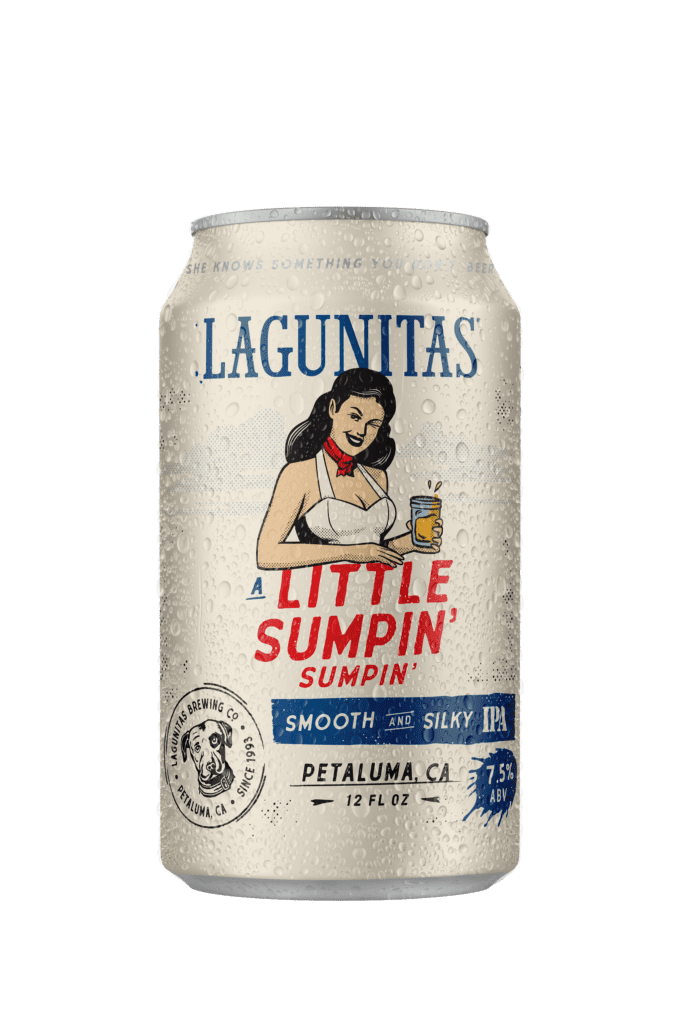
The second pillar is A Little Sumpin' Sumpin' Ale, a hop-forward wheat ale that splits the difference between an IPA's intensity and a wheat beer's softness, using a roughly 50/50 wheat-to-barley mash and a blend of hops. Between them, IPA and Little Sumpin' are not a side act - they are the business.
Around those two anchors sits a wider catalog that keeps the brand from feeling like a one-note act: Maximus and the 9% ABV Hazicus Maximus for drinkers who want more of everything, Censored (a red ale originally slated to be called "The Kronik"), and seasonal and limited releases that give the taprooms something to talk about.
The clever pivot
Selling hops without the beer
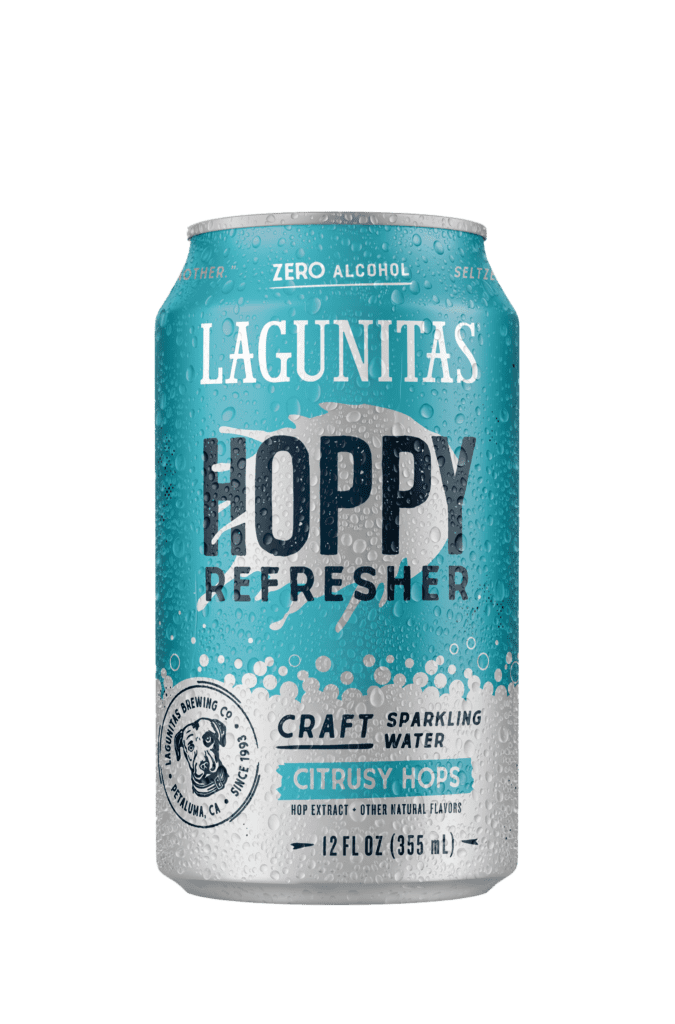
The most quietly strategic thing Lagunitas ever did did not contain alcohol. Back in 2018, while the brewing team was making its annual Waldos Special Ale, they ended up with a non-alcoholic, hop-heavy refreshment. Instead of tipping it out, they built a product around it. Hoppy Refresher is a sparkling hop water - zero alcohol, zero carbohydrate, zero calorie, gluten-free - that tastes like the aromatic top half of an IPA with none of the payload. It now leads the hop water category and comes in flavors including Original, Blood Orange, Berry Lemon, and Passionfruit.
It was a California Common Beer, an Anchor Steam sort of variety. Drank it in February and was immediately smitten. - Tony Magee, on the homebrew kit that started it all
Who drinks it
From the hop diehards to the sober-curious
The core customer is the American craft drinker who wants flavor loud enough to notice - the person who reaches past the light lager for something with a point of view. But the audience has widened. The non-alcoholic push, first through Hoppy Refresher and more recently through the non-alcoholic Hazy IPNA, aims squarely at drinkers cutting back without giving up taste. Lagunitas beers are stocked nationally across grocery, liquor, and on-premise accounts, and taprooms pull in a family-and-dog crowd that treats the brewery as a hangout, not just a stop.
The billion-dollar exit
Selling to Heineken, and losing a label
In September 2015, Heineken bought a 50% stake in Lagunitas, with the stated goal of taking American-style IPA global. The immediate consequence was symbolic and real: under the Brewers Association's definition, a brewery stops being "craft" once a multinational owns more than a quarter of it. Overnight, one of craft beer's most recognizable names was, by the rulebook, no longer craft.
Magee framed the deal as buying in rather than selling out, arguing the partnership would let Lagunitas go farther, faster than it could alone. In May 2017, Heineken acquired the remaining half, completing a two-part deal reported to value the business near $1 billion - one of the largest exits the craft era produced. The brand kept running from Petaluma.
The comeback
Refresh the core, keep the dog
The years after the boom were not gentle to big craft names, and Lagunitas felt it. The response, under a leadership team that includes interim chief marketing officer Hannah Dray, was less about chasing every trend and more about tightening the story. In 2024 the brewery refreshed the packaging on both flagships, simplifying the look while bringing back recognizable assets - the dog mascot and a character named Millie - and leaning into that Petaluma origin. It put the bulk of its marketing weight behind the beers that already worked.
It's essential to reinvigorate the core while introducing strategic innovations. - Hannah Dray, Chief Marketing Officer
The numbers moved with it. Flagship IPA sales rose about 4.2% and A Little Sumpin' Sumpin' grew around 4%, helping lift Lagunitas back to roughly 4.51% craft market share - its best mark since before the pandemic. In 2025 the brewery extended the flagship into the juicy end of the pool with a 5.5% ABV Hazy IPA and a non-alcoholic Hazy IPNA. Not every experiment made the cut - the barrel-aged Willitized sat out 2025 - but the direction was clear.
Why it is not like the others
Personality is the moat
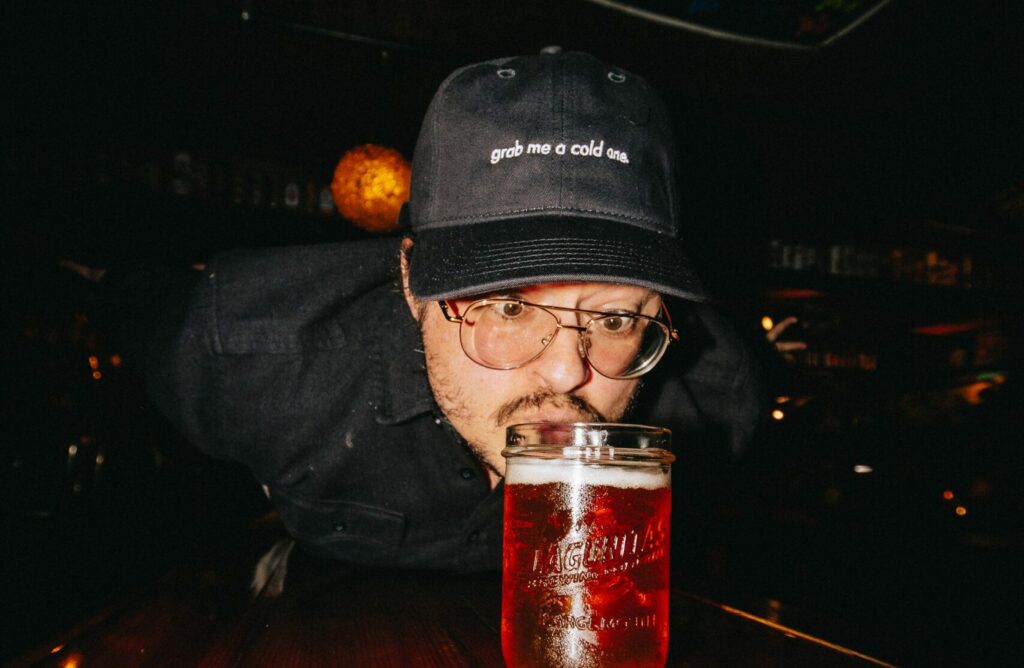
Plenty of breweries make good IPA. What is harder to copy is the voice. Lagunitas labels read like liner notes or a rambling text from a friend, and the brand has never been afraid to make itself the joke. When California's alcohol regulator raided the brewery in 2005 over an investigation and handed down a 20-day suspension, Lagunitas commemorated the whole episode with a beer called Undercover Investigation Shut-down Ale. Years later, it dropped "420" references from its labels amid trademark friction, but the wink stayed. That willingness to be loud, self-deprecating, and a little chaotic is the part competitors cannot buy off a hop supplier.
Buying in will help us go farther more quickly than we could have on our own. - Tony Magee, on the Heineken deal
Where it sits now
A craft heart inside a global machine
Lagunitas occupies an unusual spot in the market. It has the distribution muscle of Heineken and the heritage of an early craft pioneer, which lets it play in three lanes at once: the hoppy beer that built its name, the fast-growing non-alcoholic category, and higher-ABV specialties. Its rivals are the other survivors of the craft boom - Sierra Nevada, Stone, New Belgium, Founders, Bell's, Dogfish Head - plus a newer set of non-alcoholic players like Athletic Brewing in the space Hoppy Refresher helped open. The business runs on wholesale distribution into retail and on-premise accounts, backed by taproom sales and a direct-to-consumer store.
The short version
Thirty-plus years, one clear idea
The tidy origin story turns out to be the whole thesis. A guy got a homebrew kit, made something loud, and never turned the volume down - even when the company got big enough to be owned by the people who make Heineken. What you can do with it is simple: pour a hoppy beer, hand a non-drinker a Hoppy Refresher, and read the fine print for the joke.