Ten days before a groundbreaking in Fort Point, an Oregon developer discovered that the mayor expected a ceremony. This was not merely a scheduling problem. A new apartment building was arriving in a Boston neighborhood with its own artists, loyalties, bakeries, and opinions. A podium and a pile of ceremonial dirt would meet the deadline, but they would not make the building belong.
Kortenhaus Communications built a miniature argument instead. The agency enlisted the Fort Point artist community, staged a “virtual” micro-apartment on site, brought in Flour for the food, and turned an obligation into a local scene. The event reached the front page of The Boston Globe. It also began a longer relationship with developer Gerding Edlen, spanning Factory 63, Troy Boston, The Eddy, and Bower. Kortenhaus says those properties reached 95 percent occupancy within two months of opening.
That ten-day sprint is a tidy explanation of the company. Kortenhaus is a boutique Boston public relations firm, founded by Lynne Kortenhaus in 1984. It handles media relations, brand positioning, openings, social campaigns, crisis counsel, community partnerships, creative work, and even art advisory. But the inventory of services misses the more interesting product. The firm sells context. It knows that in a city, the distance between an unfamiliar building and a welcomed one can be a local artist, a useful introduction, or the correct loaf of bread.
The printmaker's advantage
Lynne Kortenhaus did not study public relations. She trained as a printmaker at the Rhode Island School of Design, earning both a BFA and an MFA. She still works as a visual artist, and she is also a curator and registered art appraiser. Her first client, improbably enough for a new shop, was the Ritz-Carlton.

“Instead of using a canvas to paint, I use words and events to create the right stories for my clients.”Lynne Kortenhaus
The art training is not biographical garnish. It explains why the agency's work often has a physical component. For The Eddy, a 230-unit waterfront apartment building in East Boston, Kortenhaus helped translate the property's name and setting into its public spaces. The firm curated and commissioned artists, many connected to East Boston. A series of hand-blown stained-glass murals turned the lobby windows into shifting fields of color.
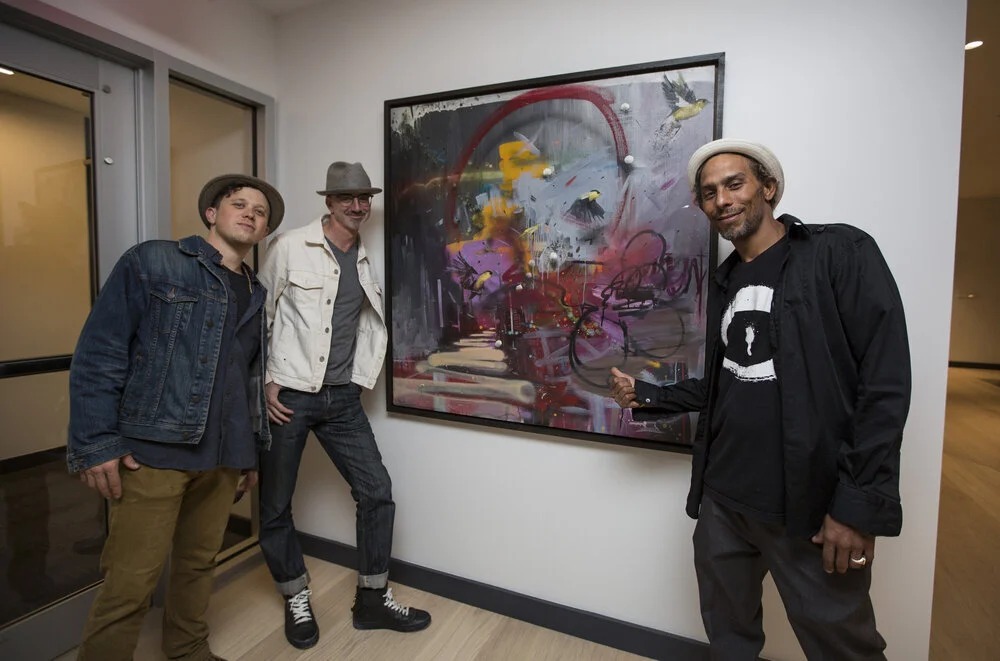
This makes Kortenhaus unusual in a market full of firms selling reach. It can write the message, stage the launch, find the partner, curate the wall, and decide how all those pieces should look together. A larger agency may offer more departments. Kortenhaus argues for fewer layers: its public commitment says that clients work with the principal, who remains active in every project.
The room is the medium
Public relations is often described as the business of getting attention. Kortenhaus works one step earlier, arranging the conditions under which attention becomes natural. When ArcLight Cinemas entered Boston, the firm did not rely only on screenings and announcements. It created intimate dinners at independent restaurants, inviting an eclectic group of moviegoers and local thinkers to talk about cinema. The brand entered town through conversation.
The most durable example began with a connection between Ronald Druker, whose Heritage On The Garden housed luxury fashion brands, and the Red Sox Foundation. Kortenhaus proposed a fashion show in which Red Sox wives modeled and proceeds went to charity. From Fenway to the Runway grew from a 140-seat lunch into an event for more than 250 guests, with a live auction and over 18 participants on the runway. The agency's case study reports annual fundraising of $100,000.
The move is repeatable, if not easily copied. Look for two organizations with adjacent interests but no obvious reason to collaborate. Build an event where each lends credibility to the other. Make the partnership useful before making it visible. The audience gets an experience; the nonprofit gets support; the company gets a story that cannot be reduced to an advertisement.
Demand before opening day
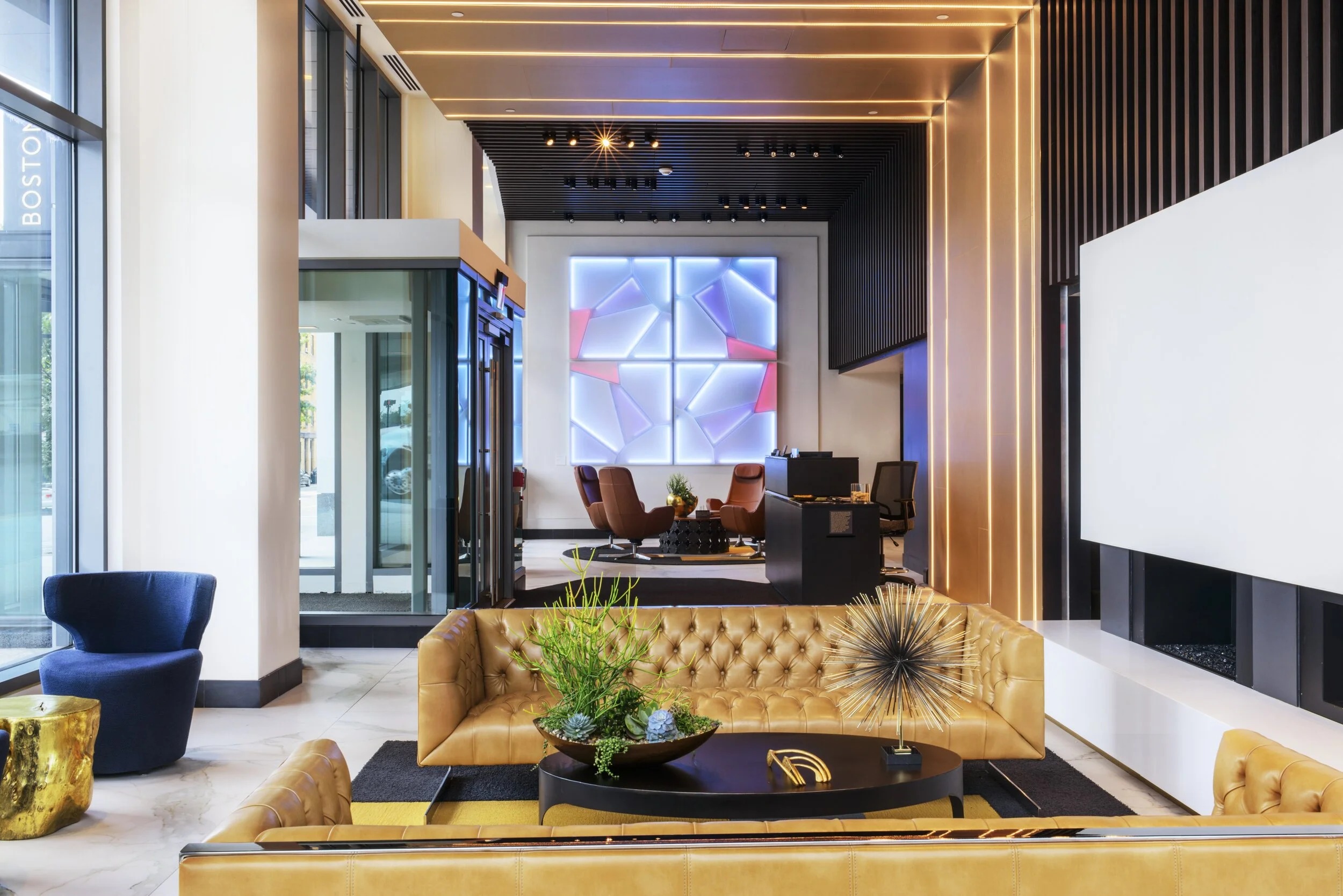
Kortenhaus's customers tend to have expensive, tangible things to introduce: a hotel, a residential tower, a fashion store, a fitness club, an art collection. The problem is timing. If interest starts on opening day, the campaign started too late.
For Life Time Athletic's first 128,000-square-foot New England club, the assignment was to sell memberships while the building was still becoming itself. Kortenhaus combined business and lifestyle coverage, gave The Boston Globe an early look and a CEO interview, then circulated time-lapse drone footage to the Boston Business Journal shortly before opening. The reported waitlist moved from 500 to more than 1,200.
Interest accumulated while the doors were still closed
The useful lesson is sequencing. One outlet establishes seriousness. Visual progress supplies fresh evidence. Lifestyle coverage turns a facility into a desirable routine. Each beat answers a different objection, and the calendar does as much work as the copy.
The danger of a full room
Of course, the room can become too successful. At a 2013 Restoration Hardware opening in Boston, demand outran the venue. The party became overcrowded; officials asked that music stop and food and drink service end so guests would leave. Kortenhaus and event partner Rafanelli issued a statement expressing regret for the inconvenience and emphasizing guest safety.
It is a revealing failure because it is the inverse of the agency's normal problem. A launch is meant to concentrate desire, but physical spaces have hard limits. Influencer access, elaborate invitations, and a coveted guest list can multiply one another. Once the crowd arrives, publicity becomes operations. Capacity planning is no longer backstage; it is part of the brand experience.
A deliberately local kind of scale
Kortenhaus has worked with names that travel - Chanel, Hermès, Tiffany & Co., Ritz-Carlton - but its strongest advantage is geographically dense. Boston's property developers, cultural institutions, philanthropists, journalists, restaurateurs, neighborhood groups, and luxury retailers form overlapping circles. The company has spent four decades learning where they touch.
That defines both the market position and its boundary. Companies hire Kortenhaus when they need a senior-led guide to Boston, especially in real estate, hospitality, retail, wellness, art, design, and nonprofit work. The model is less persuasive for a mass-market brand seeking cheap national volume, a software company demanding a highly technical global press engine, or any client unwilling to let local relationships influence the plan. Trust compounds slowly and does not export like a slide deck.
Kortenhaus describes itself as a brand-building and communications firm. Fair enough. But its more precise business is arranging consequential encounters: between a building and a neighborhood, a retailer and a charity, a reporter and a story, an empty room and the people who will give it meaning. The phone call matters. So does knowing why the person on the other end might say yes.