Consider the awkward moment between choosing a mattress and paying for it. The shopper has done the testing, the measuring, the arithmetic. Then the credit application comes back declined. The mattress has not changed. Neither has the need for sleep. What has changed is the retailer’s ability to turn a willing customer into a completed sale.
- Koalafi brings lease-to-own to store and online checkouts.
- Its underwriting looks beyond conventional credit scores.
- The trade-off: access today comes with an ownership cost.
This is the small commercial drama Koalafi was built to address. Founded in 2014 as West Creek Financial by Rob Finnegan, Boomer Muth and Scott Barton, the company serves shoppers outside conventional credit’s comfortable center. Retailers get another way to complete purchases. Shoppers get another way to bring something home.
The sale after the decline
In 2021, West Creek became Koalafi. The company says the name is pronounced “qualify,” which makes the branding unusually literal. The change accompanied the national expansion of a platform intended to replace multiple financing applications with one. Its diagnosis was practical: every extra form created another opportunity for a customer to give up.
Finnegan described the old checkout experience as “a patchwork of different providers, long applications, and inconsistent customer UX.” That complaint explains the company better than a grand statement about disrupting finance. Koalafi wanted the machinery behind a purchase to demand less attention.
The idea remains visible in its January 2026 integration with Synchrony Business Center. Merchants can offer Synchrony’s store-branded or program credit cards and Koalafi’s lease-to-own option through one application. This arrangement places Koalafi alongside conventional credit at the register, especially for furniture, mattresses and appliances.
- 01Choose
- 02Apply
- 03Lease
- 04Own*
A different way to read a customer
A conventional credit file can be thin for reasons that tell a merchant little about today’s purchase. Koalafi’s response is ClearFit, its proprietary underwriting platform. The company says it evaluates more than 5,000 signals spanning credit, cash flow, identity, devices, fraud and behavior.
In July 2026, Koalafi reported that roughly one in ten approved customers had no valid credit score. It also reported average decisions in under eight seconds. These are internal figures that vary by merchant, channel and period. They describe the company’s underwriting approach; they do not establish that every approval is affordable.
“Qualify” gets you through checkout. Ownership takes longer.The distinction that matters
There is useful expertise here: separating applicants whom a single score groups together. There is also an ongoing job. Koalafi says it refits its models as behavior and economic conditions change. A checkout decision made quickly still depends on judgments about payments months into the future.
The second price on the sofa
With lease-to-own, Koalafi buys merchandise from the retailer and rents it to the customer. Ownership transfers after the scheduled payments or an eligible early purchase. A shopper can use the item immediately, but possession and ownership arrive at different times.
That distinction also explains the business model. Koalafi collects lease payments that include costs above the merchandise’s cash price. It describes these as ownership costs rather than interest. The label does not make the difference disappear. A useful comparison asks how many dollars leave the household before the item belongs to it.
Its help center lists possible 12-, 18- and 24-month terms and an initial early purchase window of 90 to 120 days. Conditions and fees vary. The shorter route can reduce costs, but it requires money on a deadline. A plan that depends on an uncertain future paycheck needs especially careful arithmetic.
Merchant enrollment has no signup or subscription fee, although particular products or promotions may cost extra. Shopify, WooCommerce and Adobe Commerce connections reduce implementation work. Financing capacity matters too: a $150 million Pollen Street credit facility was announced in 2019, followed by an undisclosed multi-million-dollar Forbright facility in 2022. Those are borrowing facilities, not interchangeable measures of venture investment.
A familiar shop, one tap away
Koalafi’s September 2026 app update connects payment management with shopping. Customers can inspect their agreements, manage payments, review purchase options and discover merchants. For the retailer, the app offers another chance to be remembered after the original transaction.
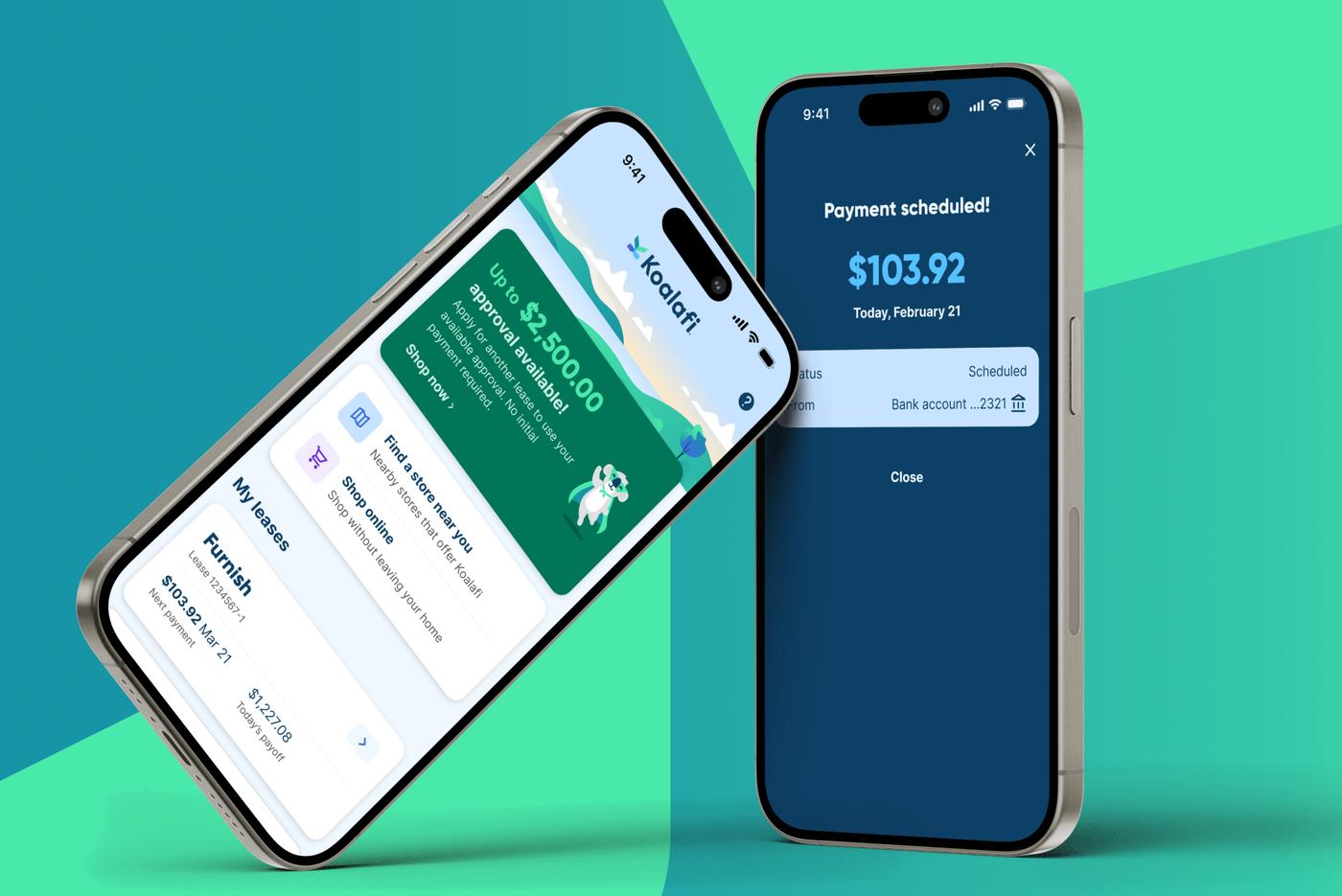
The company reports that more than 70% of customers taking another lease return to the same merchant, using internal data since 2025. That is a share of repeat lessees, not all customers. It helps explain why a financing company would invest in merchant discovery: another purchase can benefit both businesses.
When a repair became a lease
The model encountered a consequential boundary in Michigan. In May 2026, the state attorney general announced a $3.25 million settlement resolving allegations about Koalafi lease-to-own agreements used for auto repairs, including labor, parts and fluids. The investigation began in 2024 after consumer complaints.
The agreement required the company to stop using those agreements for auto-repair parts and services in Michigan. It also provided balance relief for affected customers who had already paid at least 1.75 times the cash price. The settlement payment covers restitution and administrative costs. It shows how much depends on matching a financing structure to the transaction underneath it.
Three months to build something else
Inside Koalafi, a different detail deserves attention. Its employee startup competition gives the winner three months to develop a business while remaining on salary with access to company resources. In 2024, loan specialist Markia Baker won for NM Legaci Marketing, built with her business partner Navi.

That is a concrete practice another employer could copy. Retailers can borrow a separate lesson: offer financing within the shopping process, explain the full ownership price, and make servicing easy to reach. The experience must hold together after the sale. Koalafi reports payments to TransUnion; timely payments may help a credit profile, while missed payments can damage it. Approval begins the relationship. Everything afterward determines its value.