Walk into a furniture store in a small American town, point at a sofa you can't quite afford, and within about ninety seconds you might walk out owning the right to take it home. The decision that makes that possible takes roughly five seconds and runs through software Neal Desai built. Kafene, his New York company, doesn't lend you money. It buys the couch and rents it to you, and if you keep paying, the couch becomes yours.
That is the whole idea, and it sounds modest until you notice who it serves: people with thin or bruised credit files, the shoppers a bank's underwriting model waves off in milliseconds. Buy-now-pay-later apps approve them for around $300. Kafene approves an average closer to $2,700, assigns up to ten different risk grades, and - unusually for the lease-to-own world - reports the whole thing to all three credit bureaus. Pay on time and your file improves. That detail is the argument.
The long way to lease-to-own
Desai is the son of Indian immigrants, raised in Atlantic City and then Cherry Hill, a suburb of Philadelphia. As a kid he chased math and science competitions at the state and national level. He went to Princeton and majored in molecular biology, then did the thing molecular biology majors are not supposed to do - he went to a Wall Street trading floor instead of a lab, drawn to game theory and statistics.
For more than a decade he traded equity derivatives. Susquehanna International Group early on, then a vice president seat in equity derivatives at Merrill Lynch, then portfolio-manager roles at Hard Eight Holdings and Summit Securities Group. Trading taught him to size risk, respect data, and act when the odds tilted. It did not, on its own, teach him about consumers.
That came in 2016, when he earned a Wharton MBA in finance and multinational strategy and joined Octane Lending as chief financial officer. Octane, a lender in the powersports world, grew into a fintech unicorn. Desai watched a consumer-lending business scale from the finance seat and learned the second language he needed - underwriting, unit economics, the texture of borrowers who are real people, not tickers.
Six months of homework
When he left Octane, he left with the board's support and a plan that was less a plan than a research project. For roughly six months he wrote hedge-fund-style reports on more than 45 specialty-finance verticals, grading each on cold fundamentals and on something softer - whether it actually helped anyone. He wanted high margins, positive unit economics, low duration risk, counter-cyclical behavior, and incumbents who weren't very good. He also wanted a real need, not a manufactured want.
Lease-to-own checked every box. The existing players treated customers as marks and charged everyone the maximum. The category served people who genuinely had no other way to finance a refrigerator or a set of tires. In 2019 he co-founded Kafene around a single bet: that you could be sophisticated and fair in a corner of finance where neither was the norm.
A company born into a storm
Kafene was only months old when COVID-19 arrived. The team shipped a beta and then, like much of retail, went quiet. Operations paused for months. Survival was an open question. The company that came out the other side grew 500% year over year, signed more than 1,000 merchant partners, and kept an 80-90% rate of customers who completed payments and took ownership.
The model has a quiet generosity built into the math. Most customers never ride the full twelve-month lease - the majority buy out early, somewhere between months three and nine, at a discount. Fewer than one in five return the item or default. And the people who come back come back hard: some repeat customers have run 16 or more transactions through Kafene. In a sector built on extracting the maximum, loyalty like that is the tell that something different is happening.
Desai is blunt about the line he won't cross. He says he refuses to work with retailers who are indifferent to whether their customers are treated well. Rather than win merchants with bigger rebates, Kafene pitches the consumer benefits - credit reporting, risk-based pricing, transparency, the ability to cancel. It is a strange thing to lead a sales deck with the customer's interests. It is also, in his telling, the point.
Where it's going
He does not describe Kafene as a lease-to-own company. He describes it as a credit-strategy and retailer-analytics company that currently expresses itself through lease-to-own. The ambition is to take the same mathematically tailored approach into auto repair, medical services, and other places where high-need people meet blunt, one-size-fits-all financing. The stated goal is a multi-billion-dollar business that solves real problems with sharper tools.
What he learned building it
Ask Desai what he wishes someone had told him on day one and he answers like a man who keeps a list. Secure your family's buy-in before you start, because their support is what carries you through the months when the company might not make it. Pay yourself enough to survive, because your time is the most valuable asset on the cap table. Don't build infrastructure before you need it - patience with the product beats premature scaffolding. Hand off hiring once you're scaling, rather than burning a founder's hours on recruiting. And reserve your own attention for the work only a CEO can do, sorting the urgent from the genuinely important.
His two governing lines double as a portrait. The professional one - "put yourself in a position where lightning can strike" - is about geography of opportunity, standing where good things tend to land. The personal one - "you can't eat risk-adjusted return" - is the trader's confession that a perfectly hedged life is still no life. They are the same idea told twice: measure carefully, then move.
The case for fairness as strategy
Strip away the fintech vocabulary and Kafene is an argument about who deserves a fair price. Traditional lease-to-own outfits charge everyone the maximum because they can't, or won't, tell their good customers from their risky ones. Desai's pitch is that granularity is mercy: if you can grade risk across ten tiers, you can charge the reliable customer less and still make the math work. The cancellation right matters for the same reason - in a shaky economy, the ability to hand the item back and walk away is a release valve a loan never offers.
It is also, he is quick to note, counter-cyclical by design. When banks tighten and traditional credit dries up, more people get pushed toward exactly the kind of financing Kafene provides. That is uncomfortable to say out loud, and Desai says it anyway, framing the company's job as making that moment less predatory rather than pretending it doesn't exist.
There is a tidy symmetry to the founder. His own children attend Success Academy charter schools, and he speaks admiringly of founder Eva Moskowitz and her refusal to lower expectations for kids written off by other systems. Kafene runs on the same instinct, pointed at borrowers instead of students: assume the upside is there, then build the machinery to find it. The broader hope he describes is bigger than any single company - he wants more people to believe they can build things, at any stage of a career, rather than accept a smaller story about what they're for.
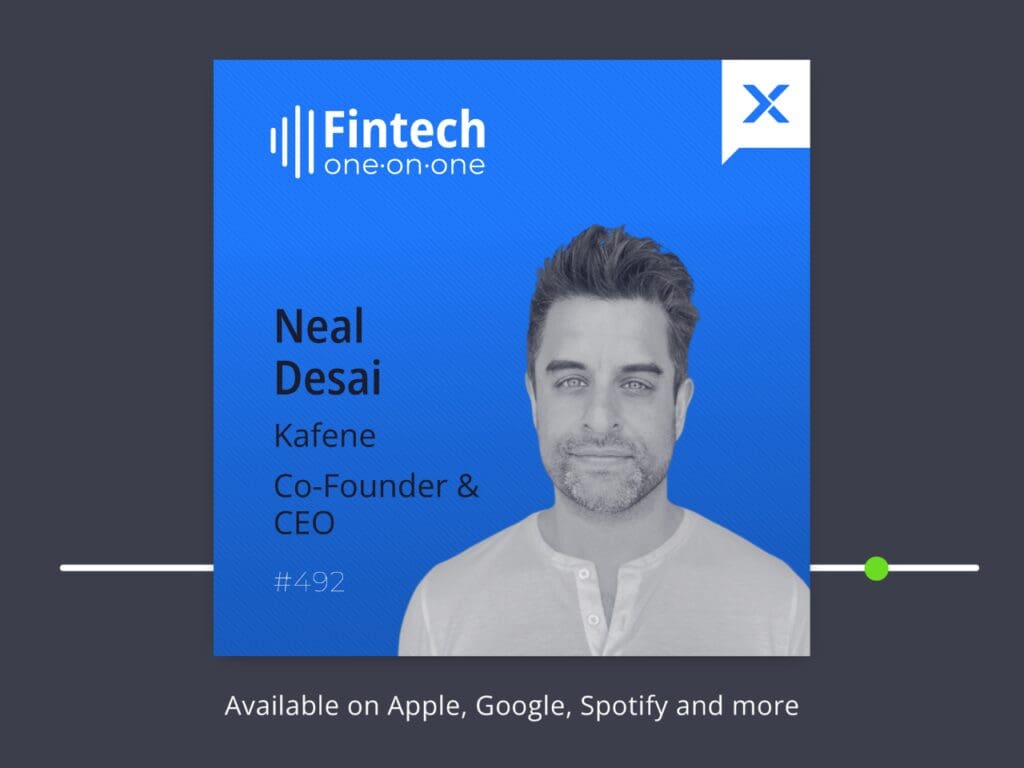 The trader who decided spreadsheets were better aimed at couches than at order books.