The awkward moment in an AI conversation usually arrives with an attachment. A report, a spreadsheet, a folder of notes: the material you actually need help with. Suddenly the clever conversationalist needs the job cut into pieces. You become its clerk, deciding what it should read, repeating what it has forgotten, carrying answers from one window to another. Kimi began by attacking that clerical work. Give the assistant more room, Moonshot AI reasoned, and the conversation could contain more of the problem.
- The starting point: an assistant built for long inputs.
- The bigger ambition: code, research and office files produced through tools.
- The unusual bargain: consumer subscriptions alongside APIs and open model weights.
- The useful lesson: judge the finished work, including the cost of checking it.
The file was bigger than the conversation
Moonshot AI was founded in 2023 by Yang Zhilin, Zhou Xinyu and Wu Yuxin. Kimi arrived that October with a proposition people could understand without a machine-learning degree: it could handle long inputs. The company's expertise sits underneath that convenience, in foundation-model training, context handling, multimodal learning and the engineering needed to turn a model into a service.
Yang's explanation of long context is revealing. In a GeekPark interview, he likened a model's context to a computer's memory. More memory expands the kinds of applications a computer can support. His ambition stretched beyond documents toward an assistant that could sustain a relationship over time. For a reader with a pile of PDFs, however, the immediate attraction was wonderfully prosaic: less copying and pasting.
The name supplies a little rock music to this otherwise scholarly enterprise. Moonshot's Chinese name invokes Pink Floyd's The Dark Side of the Moon. Yang says the founders played in bands; he played drums. An AI company named after a record about human unease is an agreeable piece of accidental branding.
The first thing to break was the queue
Demand made the proposition tangible. In March 2024, Kimi suffered an outage lasting at least two days, according to the South China Morning Post. Moonshot reported traffic increasing beyond the system's designed capacity and said it was expanding the service. A long context window did not provide a long enough queue.
This is a useful distinction for anyone copying the company's approach. A feature can solve a problem well enough to attract users while the service around it still struggles to absorb them. The outage demonstrated pressure on capacity; it did not prove dependable performance at scale. Those are different engineering accomplishments.
There was capital behind the ambition. Alibaba's fiscal 2024 report disclosed an approximately $800 million preferred-stock investment in Moonshot for roughly 36% equity at that time. That is financing, rather than a published model-training bill. Still, it puts the venture's economics in perspective: the friendly chat window belonged to a capital-hungry research business.
Kimi K3's advertised context window
A better reader starts reaching for tools
Today's Kimi is an assistant, a family of models and several routes into them. The website and mobile app serve people who want to ask, upload and create. The Open Platform serves developers putting model capabilities inside other software. Kimi Code brings the assistant into a terminal and editors. Kimi Work extends the idea to local knowledge work.
The customers consequently span students and researchers, office workers, software teams and businesses building their own AI products. A researcher can ask for an organized comparison of documents. A knowledge worker can commission a first draft of slides or a spreadsheet. A developer can give the coding assistant a repository and a bounded change. These are available workflows, rather than promises that every resulting file will be correct.
The direction of travel is visible in the releases. July 2025's K2 emphasized tool use and coding. January 2026's K2.5 joined visual understanding to agent workflows. April's K2.6 concentrated on extended execution. July's K3 added a one-million-token context window and native vision. The conversation had acquired hands, and the product was asking for longer assignments.
The robot discovers the meeting problem
One of the most instructive parts of Kimi's research concerns delegation. The K2.5 team trained an orchestrator to divide work among other agents. On suitable tasks, those agents can work concurrently, shortening the wait. Imagine researching separate companies at the same time, then assembling one comparison.
The team described a failure called serial collapse: despite having helpers available, the orchestrator kept working alone. Encouraging it to create sub-agents introduced another problem, spurious parallelism. It could increase the appearance of collaboration without dividing the task usefully. Anyone who has attended a meeting about reducing meetings will recognize the atmosphere.
Moonshot's response was to reward both delegation and completed subtasks during training, then reduce those auxiliary rewards so that the finished result became the focus. Its reported speed gains are conditional on its evaluations and parallelizable workloads. A sequence in which each step needs the previous answer offers less room to spread the work.
Free weights, expensive electricity
There is a second change in the story. In early interviews, Yang argued that closed models suited Moonshot's ambition to build a major consumer application. The later K-series releases made model weights available to other builders. The observable change matters: developers gained a route that did not require using the consumer chat interface.
Against ChatGPT, Claude and Gemini, Kimi competes for everyday work and coding attention. Against DeepSeek, Qwen and other open model families, it competes as an engine developers can adopt. Publishing weights lets third parties deploy and adapt a model under its license. It also hands them responsibility for the machinery.
Meanwhile, Moonshot sells convenience. Free entry and paid memberships support the consumer service; developers pay separately for API consumption. The API bills input and output tokens, with distinct cache treatment. A large agent assignment can consume many calls. The sensible comparison is the cost of a usable result, including retries and review, rather than the cheapest advertised unit of text.
Bloomberg reported a roughly $2 billion financing in May 2026, led by Meituan's venture arm, at a valuation above $20 billion. The report also cited an annual recurring revenue run rate exceeding $200 million in April. A run rate extrapolates recurring business; it is not the same thing as audited revenue already collected across a year.
The same model, a different answer
Open distribution creates an awkward quality-control problem. Moonshot's Vendor Verifier announcement describes discrepancies between official and third-party deployments, including unsuitable decoding settings. A model's name alone cannot tell a buyer whether the machinery serving it is configured correctly.
“Weights are open. The knowledge to run them correctly must be too.”
Kimi Vendor Verifier announcement
The verifier checks issues such as visual processing, long outputs and tool-call accuracy. Moonshot says its full evaluation validation took about 15 hours on two eight-GPU NVIDIA H20 servers. Downloading weights is one event; establishing dependable operation is another substantial job.
Distribution also moved into familiar enterprise infrastructure. AWS documents Kimi K3's arrival on Amazon Bedrock on September 18, 2026, through US and global cross-region inference routes. For a business already operating there, that offers another procurement and deployment path. It does not settle whether Kimi is the right model for that business's work.
Give it a job you can inspect
The copyable part of Kimi's story is the attention to friction. Start with work whose inputs are awkward to gather and whose output is easy to inspect. A document comparison with traceable passages is a better first experiment than an unspecified request to manage a department. A repository change with an executable check gives a coding agent a clear finish line.
Keep a representative task, run it through the chosen product, and record the time spent correcting it. Specify the files, the required output and the acceptance criteria. Ask for the intermediate evidence where it helps you check the answer. When trying a new hosting provider, repeat the same task before trusting a familiar model name.
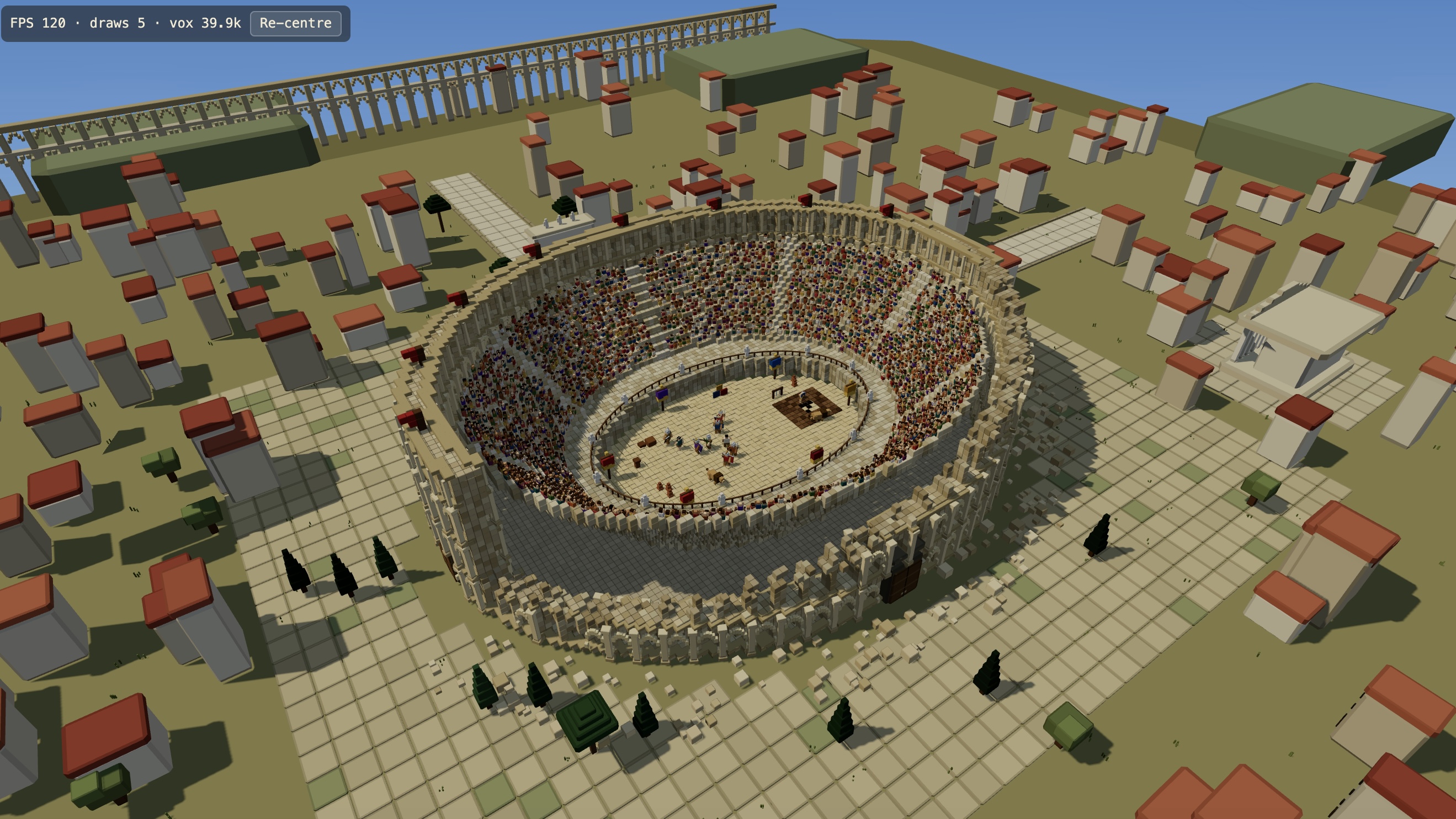
This approach has limits. Ambiguous instructions, missing evidence, tightly dependent steps and outputs that demand expensive expert review can consume the apparent saving. A longer context cannot repair a bad source document. Parallel agents cannot make a false claim true. Kimi becomes useful when its work survives inspection - preferably before the impressive Colosseum distracts everyone from the spreadsheet.
Take a closer look
Try Kimi, explore Kimi Code, or browse the model repositories. Read the K3 product demonstrations, Vendor Verifier announcement, Yang Zhilin interview and report on the early outage.