Being wrong about Bitcoin is an occupational hazard. Saying so, in public, takes a little more effort. On May 9, 2025, Ki Young Ju did exactly that. Two months earlier, the founder and CEO of CryptoQuant had called the end of Bitcoin’s bull cycle. Then Bitcoin climbed back above $100,000. His response was unusually economical for a market commentator: “I was wrong.”
There were explanations to follow, of course. Exchange-traded funds were bringing money into the market. Selling pressure was easing. Institutional buyers were changing the cast of characters that his analysis had been built to understand. But the admission came first. A business that helps people interpret evidence had encountered some inconvenient evidence of its own.
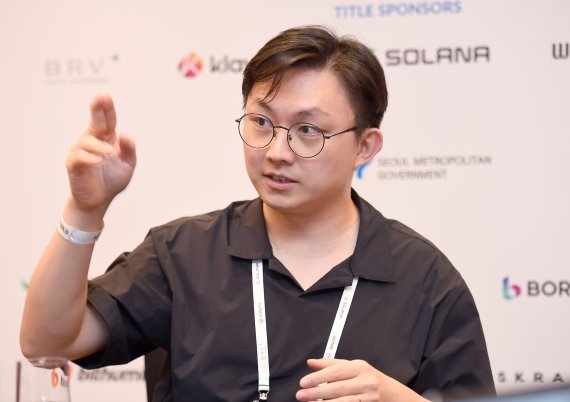
That episode is a useful place to meet Ju. His public life sits between two demanding occupations: building a company that sells information and offering interpretations that can be checked against tomorrow’s price. The first requires dependable machinery. The second invites the market to throw tomatoes. He has chosen to do both.
A career before the charts
Ju’s preparation began well before his Bitcoin audience arrived. He studied at Pohang University of Science and Technology, known as POSTECH. His LinkedIn education record runs from 2011 to 2018; his field was Industrial and Management Engineering. Engineering and management make a practical pairing for someone who would eventually have to explain both a wallet transaction and a business plan.
From 2013 to 2015, he worked in Penta Security Systems’ new technology development team. He also worked with ICON, the Korean blockchain project. These were experiences in the underlying technology, away from the running scoreboard of token prices. Software had to function before anyone could make a persuasive chart about what it meant.
He described entrepreneurship as his ambition, and software engineering and business analysis as skills he wanted before attempting it. There is a pleasing lack of mysticism in that account. A founder needed preparation. Ju went looking for the ingredients, including work inside other people’s organizations.
“My dream was to become an entrepreneur.”
Ki Young Ju · January 2021 interview
The documentary that became a business
CryptoQuant’s origin contains a detour into filmmaking. In Ju’s later telling, he and his co-founders were running a blockchain study group and planning a documentary. They wanted to address misconceptions about cryptocurrency and had contacted a KBS producer. A call to Hashed CEO Seo-Jun Kim, intended to arrange an interview, became a conversation about making a return on investment.
The company followed in late 2018. The detail is almost too neat: people hoping to improve the public explanation of crypto ended up building a way to examine it. Yet the resulting enterprise demanded much less cinematic work. Its early business involved identifying blockchain addresses and tracing funds, including work related to anti-money-laundering analysis.
A blockchain records transactions publicly. It does not arrive with every address helpfully marked “exchange,” “miner,” or “large investor.” Sorting out those identities is consequential, unglamorous work. Without it, a large movement of coins is simply a large movement of coins. With a defensible label, it can become a question worth asking.
Give the money an address
Ju’s subject is the traffic behind the price. CryptoQuant gathers on-chain and network data, then turns it into information that traders and institutions can examine. Bitcoin and Ethereum transactions, exchange deposits and withdrawals, and miner movements all belong to this picture. A price chart supplies the result. These records offer clues about the activity around it.
Consider an exchange deposit. Coins have moved to an address associated with a trading venue. That can matter because exchanges are places where holders can sell. But a deposit does not certify a sale, just as carrying a suitcase into an airport does not tell you where its owner will land. The label, timing and surrounding activity affect the interpretation.
CryptoQuant’s June 2022 dataset description for CME Group set out that work in concrete terms: exchange balances, flows, transaction counts and network measures such as hash rate and active addresses. These are observable categories. Turning them into a forecast requires another step, and another human judgment. Ju’s career lives in that gap.
The educational part matters to him. In a 2021 conversation, he described a mission of making markets work for more people through digestible data and community insights. Publishing numbers alone would leave much of the original problem intact. People also needed a way to understand the numbers, compare them and question the conclusions drawn from them.
From Seoul to the institutional desk
At Korea Blockchain Week in August 2022, Ju explained his approach through an analogy with financial statements. Stock investors examine accounts; crypto investors also needed criteria. He pointed to fundamentals such as transaction activity, fees and protocol revenue. The intention was to give buyers something more substantial to inspect than a persuasive name and a rising price.
His business was already spanning two working environments. At that time, he described a team of 27 developers in South Korea and five researchers and marketers in the United States. The division made sense for a company building data infrastructure in Korea while pursuing institutional customers abroad. Selling the output required people who understood how those customers worked.
In July 2022, CryptoQuant became an on-chain data provider to CME Group’s DataMine service. It was a practical bridge into traditional finance: institutions could obtain the company’s data through an existing distribution channel. A firm born around blockchain addresses was putting its work onto a platform used for financial research.
CryptoQuant’s on-chain data becomes available through CME Group DataMine.
The company’s developer, Team Blackbird, went on to raise 8.5 billion won, roughly $6.5 million, in Series A funding in 2023. Atinum Investment led the round, with other investors including IMM Investment and SK. Funding supplied resources for the business; the harder continuing task was making its information useful enough for customers to keep returning.
When the wallets become the story
The value of examining fund movements became particularly immediate during FTX’s collapse. In November 2022, Ju joined Wintermute founder Evgeny Gaevoy in a discussion hosted by Frank Chaparro. The conversation concerned the relationship between FTX and Alameda, and what their unraveling meant for the wider industry. Ju focused on substantial transfers between wallets associated with the two businesses.
He was looking at connections through transactions while the public was trying to understand connections through corporate names. That is a narrower kind of evidence than a complete set of accounts, but it can pose pointed questions. Money moving between entities deserves an explanation, especially when customers have been told a comforting story about how those entities operate.
He also questions the industry whose activity his company measures. In September 2024, he worried publicly about the separation between builders and traders, criticizing the direction of a market increasingly occupied with gambling products. He later clarified that his criticism concerned Web3 and crypto, rather than Bitcoin. His concern was with what people were making and why anyone would continue to care.
His conference appearances offer another view of the same preoccupation. In 2023, he spoke about investment strategies and valuation models using blockchain data. In 2024, the subject was the financial-data future that blockchain could bring. By 2025, his appearances included a discussion of whether Bitcoin could become a next-generation currency. The questions widened as the business developed.
Across those settings, the audience faces a similar practical problem. A number has to become useful without acquiring more authority than it deserves. An institution can obtain a dataset through a familiar vendor and still have to interrogate it. A retail reader can study the same market through charts and still reach a different conclusion. Selling access to evidence means serving both kinds of reader, including the reader who disagrees with the founder. That makes explanation part of the product, and scrutiny part of the working conditions.
The chart meets its author
Then came the 2025 forecast. In March, Ju argued that Bitcoin’s bull cycle had ended and anticipated six to twelve months of bearish or sideways trading. The call was specific enough to be remembered. By May, the price had recovered above $100,000, and he returned to the argument rather than allowing the next prediction to bury it.
Ju calls the bull cycle over and anticipates bearish or sideways trading.
Bitcoin returns above $100,000.
He retracts the call and points to ETF inflows and easing selling pressure.
His revised explanation placed more emphasis on institutional demand and exchange-traded funds. The market contained buyers whose behavior complicated the older picture of miners, whales and new retail money. A familiar signal could have a different consequence when a different set of participants was there to absorb the supply.
The distinction between measurement and interpretation became personal. A transaction could be recorded correctly while its significance was misread. For a founder selling analysis, that is an awkward sentence to have to demonstrate. It is also a useful one for customers to remember. A dashboard can make a judgment more informed without making its author infallible.
Another forecast, with the record attached
By October 2026, Ju was again describing an early Bitcoin bull phase. In a video interview published that month, he said he expected gains of three to five times from the cycle’s lows, with institutional ETF and custody flows damping volatility. That remained his forecast. It belonged beside the record of earlier forecasts, available for the same scrutiny.
There is something fitting about this arrangement. Ju has spent years making money movements easier to inspect. His own interpretations now travel with a public history of revisions. Readers can examine the method, the claim and the correction together, then decide how much weight to give the next chart. The market will provide its reply at its usual convenience.
Follow the transactions
Explore Ju’s work, conversations and public record.
- CryptoQuant · data and research ↗
- Ki Young Ju on X ↗
- Ki Young Ju on LinkedIn ↗
- The early ambition · 2021 interview ↗
- The documentary detour · 2023 conversation ↗
- Listen · FTX and Alameda, with Evgeny Gaevoy ↗
- Watch · Ju’s October 2026 market interview ↗
- YouTube · Japanese explainer on Ju’s October 2026 outlook ↗
- Read · the May 2025 correction ↗