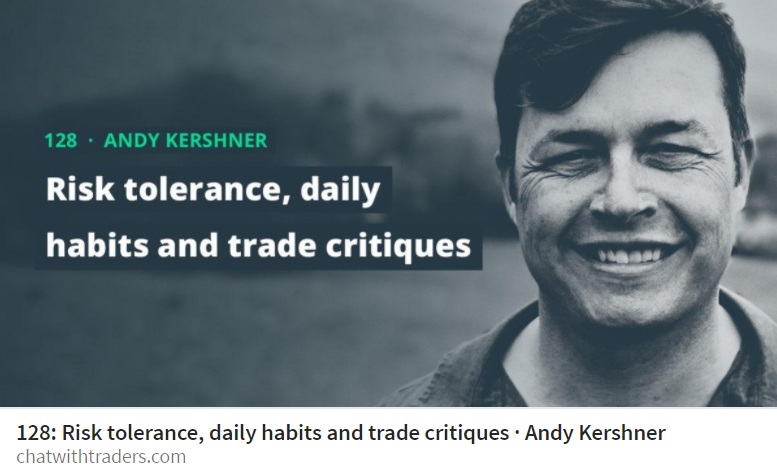
Before Andy Kershner built a trading firm, he and a friend tried trading options with $5,000. By summer’s end, they had $1,500. In a 2017 interview, he recalled a maddening discovery: the prices they could actually get were different from the prices they saw on the screen. Spotting an opportunity and capturing it were separate problems. That gap is a useful place to begin understanding the company he later founded.
- The firm supplies the capital. Traders share the profits.
- The software stays inside. Gr8trade is built for its own traders.
- The apprenticeship is long. Current recruiting describes two years of training and trading.
01 / The business behind the screens
Kershner Trading Group emerged in 2001 after the sale of ProTrader’s retail and technology business to Instinet. The proprietary trading business continued. Today, its central proposition is straightforward: bring trading ability, or the potential to develop it, and the firm supplies an environment in which to put that ability to work.
That environment includes capital, market data, execution technology, compliance, risk management and technical support. Its focus is US equities, with smaller activity in futures and options. Discretionary traders make decisions using judgment; quantitative strategists develop systematic models. Kershner accommodates both, along with the considerable territory between them.
The people using these resources are better understood as participants in the trading business than as ordinary software customers. They trade the firm’s money and share profitability. An experienced trader can seek backing. A quantitative team can seek infrastructure and capital. A newcomer can apply for a demanding apprenticeship.
02 / The platform you cannot buy
Most software businesses want another customer. Kershner says it does not sell or license Gr8trade, its execution platform. The software’s purpose is to help its own traders perform. That gives the company a different reason to improve a feature: someone on its trading floor needs it.
The platform’s lineage reaches back to 1998, before KTG’s founding. Its advertised capabilities connect idea development, execution and review. A script can generate alerts, help analyze information or enforce stops. The same script can be used in backtesting, forward testing and live trading. Post-trade tools let traders examine what happened afterward.
This is the practical meaning of Kershner’s favorite description, the bionic trader. A person need not automate every decision at once. Software can take over a repetitive part of the workflow while the trader retains judgment elsewhere. The firm also advertises a graphical modeling interface for members without developer skills.
- 01ResearchFind a pattern
- 02SimulateTest the model
- 03TradeDeploy with controls
- 04ReviewStudy the result
For established quants, the pitch includes flexibility. Kershner says strategists can keep their intellectual property, retain their existing setup and integrate it with the firm’s infrastructure. Its stated interest is capacity rights rather than ownership of the underlying IP. The arrangement treats the strategist as someone whose work will keep changing.
03 / No deposit does not mean no cost
The economic bargain deserves close attention. Kershner’s FAQ says traders do not have to put up capital. Its experienced Austin equities posting offers full firm backing and performance-based earnings without a base salary. The company’s incentive is tied to what the trader produces.
The beginner’s expense is less obvious. Living costs continue while skill develops. The FAQ describes nine to twelve months as a historical period in which successful traders typically begin making money, while explicitly warning that profitability is not guaranteed. Rookie losses and trading costs must be recovered. The firm recommends another income source during the learning period.
The training-and-trading period described in Kershner’s current developing-trader posting. Progression afterward is selective.
Its current training advertisement sets out two years of practice and playbook building. Selected performers can then trade larger books; further progression can bring collaboration with quants and programmers, followed by additional products. Time is doing real work in this model. More capital arrives alongside evidence of development.
This environment suits someone who can tolerate uncertain earnings, absorb criticism and keep improving. Someone who needs predictable near-term pay faces a different calculation. Automation also depends on having something useful to automate. A weak idea does not acquire an edge merely because a computer repeats it quickly.
04 / Add the classroom. Open the laboratory.
In April 2013, Kershner and SMB Capital announced a Midtown Manhattan joint venture. Kershner brought capital and proprietary technology; SMB brought traders and an infrastructure of education, coaching and mentoring. The combination made the company’s thesis tangible: the tools and the people teaching their use belonged in the same environment.
“We believe that the next wave in trading will be the democratization of automation.”
Andy Kershner · April 2013
CloudQuant extended that logic beyond the trading floor. At its 2017 public launch, the related business licensed a crowd researcher’s algorithm and reportedly allocated $15 million to it. The creator’s arrangement included 10% of monthly net trading profits. This was capital committed to a strategy, not a venture funding round or a guaranteed payment.
The distinction matters. Kershner was finding another way to connect an outside idea with institutional resources. CloudQuant’s present website emphasizes Data Liberator, a data-access platform, so the original crowd-research launch belongs to its history rather than being treated as today’s unchanged offer.
The technical work is substantial, too. Its current quantitative recruiting calls for research skills spanning areas such as machine learning, portfolio construction and time-series prediction. Candidates are expected to take strategies from inception through deployment. Access to data and computers is only the starting point; someone must decide what to test, how to size it and when the evidence has changed.
05 / The part worth borrowing
Kershner’s model offers a useful lesson beyond finance: put tool builders close to practitioners, make feedback specific and expand resources as capability becomes visible. A team can copy that sequence without copying a single trade. It still needs skilled people, patient backing and a way to judge results.
In that 2017 conversation, Kershner described another habit: reviewing the day and tallying his mistakes. It is a modest practice beside the machinery of automated trading. Yet it explains why a shared trading environment might matter. A mistake that becomes visible can become a discussion, a changed routine or a request for a better tool.
The firm continues to recruit across experience levels; its public board includes an Austin internship for summer 2027. The same question runs through those opportunities: what might a person accomplish with better tools, better feedback and enough room to learn? Kershner has built its business around finding out, one trader at a time.