For most of the trading day, spare computing capacity can look like money doing nothing. Then a news event hits. Prices change, messages multiply, and the expensive-looking headroom suddenly has a job. This is the problem oneZero Financial Systems has chosen to sell: the infrastructure beneath the trade, especially when the day stops behaving.
- Customers are brokers, banks and liquidity providers buying trading infrastructure.
- Hub handles pricing and risk; EcoSystem connects participants; Data Source examines the results.
- Its expansion now reaches regional-bank swap pricing and Autochartist-powered trader engagement.
In a 2023 engineering account, quality-assurance executive Tom Long described a peculiar exercise. oneZero subjected its Hub to trade traffic at 100 times a busy production day while making it crash, restart and recover repeatedly. The company reported that core processing recovered without losing data. This was a controlled test, not a promise that financial markets cannot surprise anyone. But it explains the product unusually well.
The bad minute
Andrew Ralich and Jesse Johnson founded oneZero in 2009. Ralich leads the business as CEO; Johnson is CTO. The firm’s customers operate markets-facing businesses, where a price must travel through systems that also understand credit, exposure and execution rules. A pleasant-looking trading screen tells you little about whether those systems will cope.
The engineering choices are specific. oneZero builds its Hub in C++, uses a parallel architecture and gives each customer a dedicated hosted instance. Its published process includes code reviews by multiple engineers and continuous automated tests. Clients can co-locate platforms in New York, London and Tokyo facilities. The commercial proposition includes the less photogenic work: operating infrastructure and supporting it around the clock.
“Our software is mission-critical; our team never forgets that.”
Jesse Johnson · CTO and co-founder
Follow the order
Start with a broker receiving prices from several liquidity providers. It needs to combine those prices, decide what to offer different customers, check risk and route orders. Hub supplies that configurable machinery. Retail Hub connects to front ends including MetaTrader 4 and 5; Institutional Hub adds capabilities such as credit management and programmable pricing.
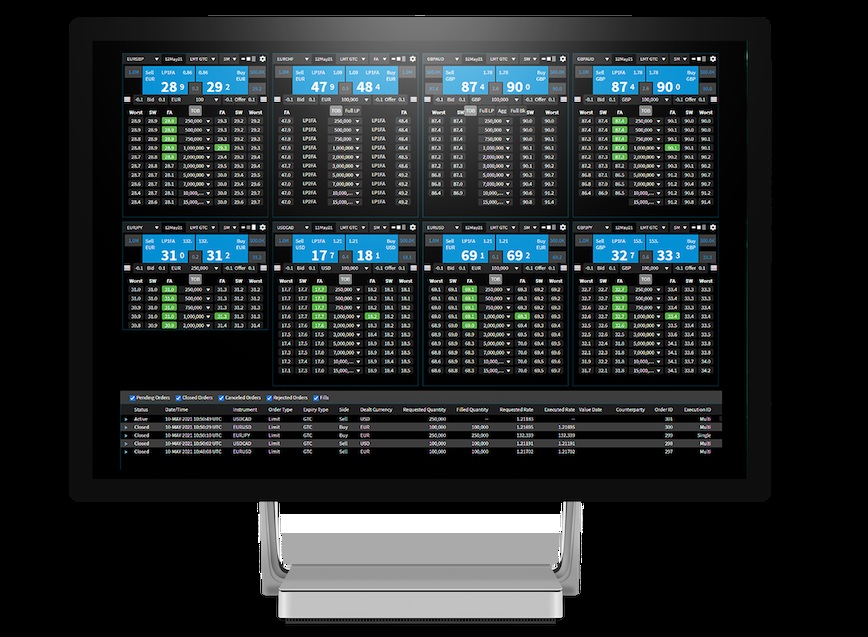
EcoSystem supplies connections among brokers, banks, liquidity providers and service partners. A network connection is useful because it reduces the integration work between firms. It does not decide the commercial terms of their relationship. That distinction matters: oneZero describes itself as liquidity-neutral, and its legal disclosure says it neither acts as a trading counterparty nor holds customer assets.
A 2019 Rakuten deployment makes the arrangement concrete. Rakuten Securities used oneZero’s Liquidity Hub to deliver CFD indices through MetaTrader 4 to customers of Rakuten Securities Australia. oneZero supplied part of the route from the financial product to the customer’s screen, along with Japanese-language support.
The useful part comes afterward
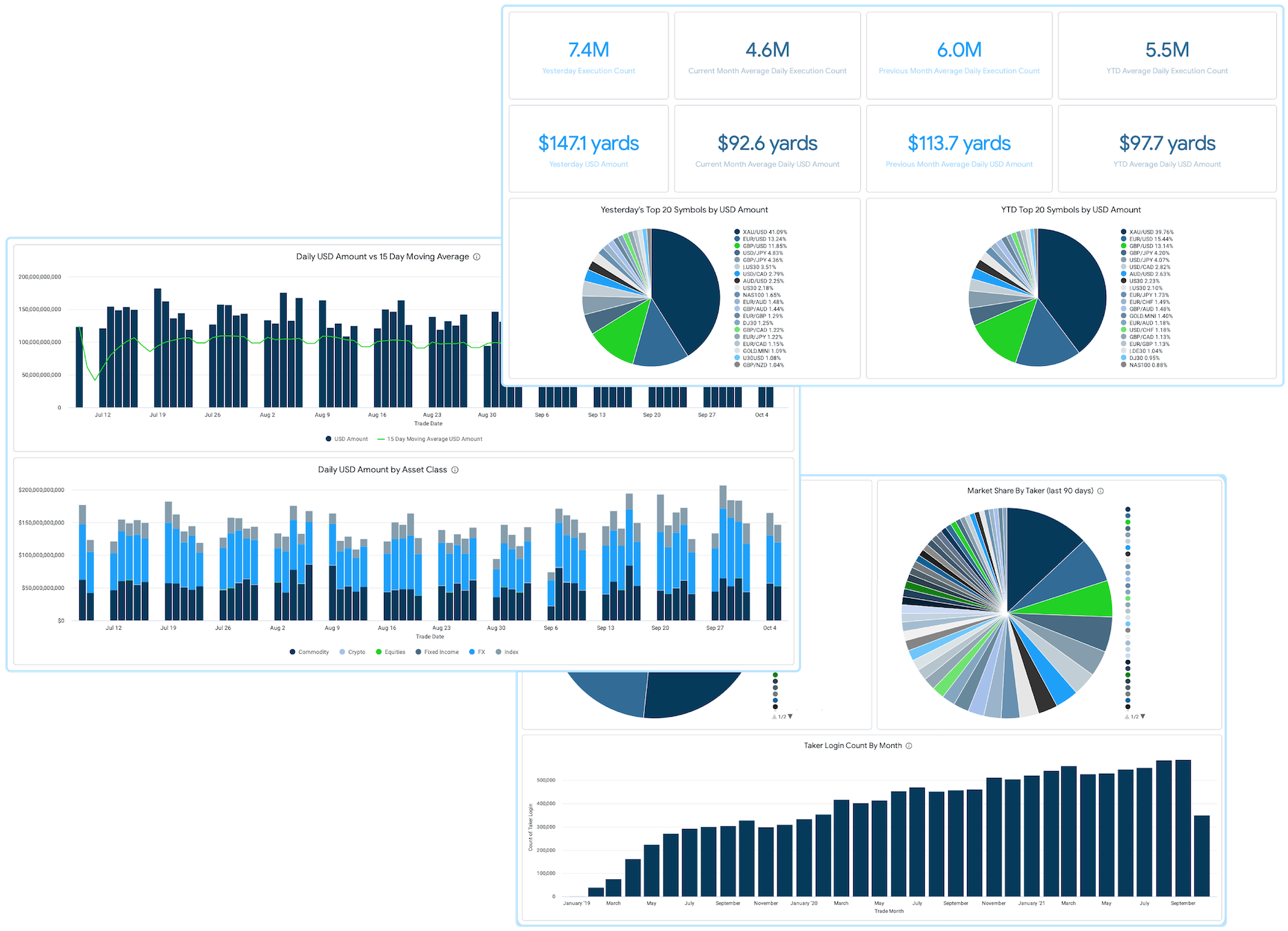
A completed trade leaves questions. Which liquidity relationship worked well? How did a hedge behave? Would another pool of providers have produced a different outcome? Data Source, launched in November 2019, stores quote and trade records and makes them available for analysis. Its DNA offering provides data access; Insights provides interactive reports.
This closes a practical gap between operating a system and understanding its decisions. Institutional clients can simulate orders against alternative liquidity pools. Independent benchmark data from New Change FX, integrated in 2024, adds another reference point. The value is the ability to examine a relationship using evidence beyond the initial displayed price.
Buying the machinery, keeping the decisions
oneZero sells software as a service. Different Hub packages serve different brokerage requirements, with hosted infrastructure and support accompanying the technology. The useful procurement question is the total work involved: integration, configuration, data access and daily operation, alongside the commercial quote.
There are alternatives. PrimeXM’s XCore also offers liquidity aggregation, routing and MetaTrader connectivity. A firm can build more of its own infrastructure. oneZero’s case rests on connecting execution, distribution and analytics while letting customers configure their own pools, risk approaches and pricing algorithms. Those are substantive buying criteria; they do not establish a universal winner.
For a buyer, a sensible demonstration would follow an order from the incoming quote through the risk check and execution record. Then change the conditions: a different customer, a different pool, a busier market. The question is whether the firm can explain its own decisions afterward. That is a more useful evaluation than watching a dashboard on an uneventful afternoon.
Nor does purchasing a Hub produce a trading strategy. A customer still needs suitable liquidity relationships, sensible limits and people who understand the configuration. The broader lesson is portable: keep the evidence of an operational decision close to the machinery making it. Test recovery alongside throughput. The economics are strongest where complicated flows and variable demand justify that investment.
Beyond the trading engine
The expansion has followed two directions. Golden Gate Capital invested in November 2024 alongside existing backer Lovell Minnick Partners. The founders continued overseeing daily operations. In February 2025, oneZero acquired Autochartist, adding market-content and engagement capabilities. Financial terms of both transactions were undisclosed.
That acquisition reaches a different brokerage problem: getting customers to engage with a platform. The current Engagement offering combines market analytics with content automation across channels such as websites, email and messaging. Execution gets an order through; useful analysis and communication can support the customer relationship around it.
September 2025 brought Swap Curve Manager for regional banks. It consolidates FX swap curve controls, client-specific adjustments and analytics, with standalone or integrated deployment. In its launch account, oneZero described banks depending on fragmented external systems and spreadsheets. The product gives traders more direct control over that workflow.
By October 2026, oneZero was announcing another Euromoney FX award. Recognition is welcome, but the more revealing achievement is the widening set of jobs its software performs. From a broker’s quote to a bank’s curve to the analysis sent to a trader, the company keeps finding work around the transaction. Its engineering wager remains the same: build enough capacity, and enough visibility, for the minute when both become indispensable.