Living near the future does not necessarily give you a share of it. Kendrick Nguyen’s family immigrated from Vietnam to the San Francisco Bay Area, where the technology boom was close enough to watch. The innovations of the 1990s and early 2000s excited him. Their financial rewards were another matter. His family were not accredited investors. The companies changing the neighbourhood could remain out of reach as investments.
That distinction gives his career a useful starting point. Geography had brought the family to Silicon Valley; geography could only do so much. You could live among the people building new businesses, buy their products, and admire their work without being able to invest alongside their earliest backers. The distance between customer and owner was measured in something less convenient than miles.
Nguyen eventually built Republic around widening participation in private investments. Today he is its co-founder and co-CEO, with a separate co-founding connection to CoinList. His story runs through legal offices, investment businesses and startup platforms. It also keeps returning to a question that is easy to understand over dinner: who gets a chance to own a little of what comes next?
A lawyer learns where the doors are
Before founding Republic, Nguyen worked as a securities attorney. His career included Goodwin Procter, executive work at Permal and Kanbar Enterprises, and a fellowship at Stanford Law School and Stanford’s corporate governance centre. These are different vantage points on the same business of organising money, authority and responsibility. Each came with its own vocabulary. Finance is generous with vocabulary.
At AngelList, he became general counsel, working on regulatory affairs and international expansion. A platform connecting investors with startups needed someone who understood what could happen when an introduction became a transaction. The legal questions belonged inside the product’s development. An elegant interface could make a complicated decision easier to take; it could not settle the underlying obligations.
His later public work included briefing regulators and legislators about compliant coin offerings. The experience helps explain why his entrepreneurial route looks different from the familiar tale of an engineer building first and sorting out the paperwork later. Nguyen had spent time with the paperwork. He could see both its restrictions and the possibilities that appeared when the rules changed.
A career moving through the legal, operating and product sides of investing.
Republic was a name, then a considerable amount of work
Republic opened in July 2016, after the crowdfunding provisions of the JOBS Act took effect that spring. Nguyen founded it with Paul Menchov and Peter Green. The new framework created a route for ordinary investors to participate in private-company fundraising. A legal opening still needed an operating business around it: people, software, an offering process and entrepreneurs willing to try it.
Menchov supplied the name. Nguyen had considered more functional alternatives, including DealList and OpenDeal. Republic carried a larger idea without requiring a product demonstration. Even so, choosing a name was the pleasant part. Recruiting engineers, preparing a sales plan and applying to FINRA followed. The business also moved to New York, seeking relationships beyond the venture world while keeping its Silicon Valley connections.
Nguyen gave Menchov credit for more than branding. They were friends as well as collaborators, and he described their friendship as having strengthened through working together. A co-founder relationship has to survive decisions far less entertaining than naming a company. Their account contains the ordinary ingredients that founder mythology often leaves out: trust, complementary skills and somebody else having the better suggestion.
An orchid, rather than a victory lap
When Nguyen talks about the pleasure of founding, one of his comparisons involves an orchid. A flowering plant bought from a shop is lovely. A plant you have kept watering, through an unpromising interval, delivers a different satisfaction when it finally produces a flower. He used that small domestic image to explain the daily pleasure of seeing a startup’s vision take form.
The comparison is revealing because it makes room for unimpressive beginnings. A scraggy stem can mean more to its grower than a perfect display means to a recipient. Progress has a history. The person who remembers the bare pot sees something a visitor misses. For Nguyen, the appeal of being a founder lay in that accumulation of effort and visible growth.
He also spoke about building a team with a positive outlook and bringing together people from different professional worlds. A venture background alone would not supply everything Republic needed. Finance, technology, impact and public communication all had a place. The orchid offers a gentler picture of company building than the usual battlefield. It still requires someone to remember the watering.
The crowd has preferences of its own
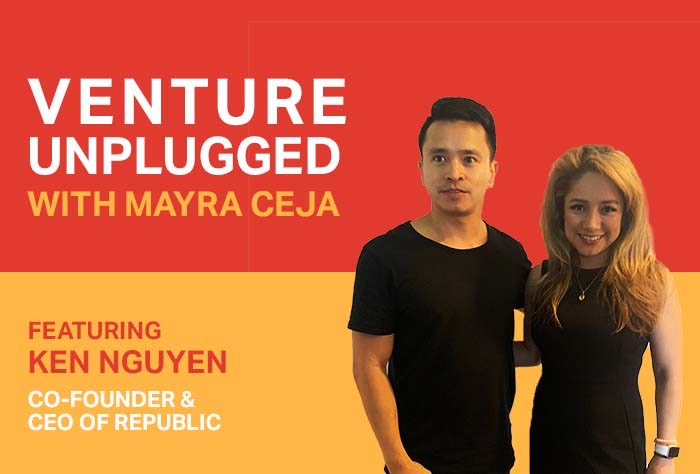
By November 2021, a public interview described more than 700,000 people investing $200 million across over 250 Republic deals. Backstage Capital and Gumroad were among the names on the platform. Those figures belong to that moment in its development. They show that Nguyen’s proposal had found an audience, and that an audience had begun making choices of its own.
Some of those choices surprised him. Investors were willing to examine complicated financial technology, real estate technology and infrastructure businesses. They looked for evidence that a company could succeed. Meanwhile, food and beverage businesses with backing, traction and distribution did not always receive the attention he expected. Opening access does not make every industry equally fashionable. Even a crowd can have an unfashionable shelf.
His advice was brisk: “Do. Your. Research.” He urged people to look closely at founders’ experience and commitment, and to read the filings and financial information behind later-stage offers. That is an instructive companion to his enthusiasm for participation. A smaller entry ticket changes who can enter. The decision still demands attention. More people getting a say also means more people doing the reading.
“Do. Your. Research.”Kendrick Nguyen, 2021
The network he had to build himself
Nguyen has described growing up without a relative or family friend who was a venture capitalist or an established technology founder. Before starting his own company, he had to build a network, a financial safety net and confidence. This is a more specific account of opportunity than the suggestion that a good idea will eventually introduce itself to the right people.
His advice to entrepreneurs returns to execution and accountability. He asks why someone has chosen a particular business from all the things they might do with a life. He counsels founders to treat investors’ money with respect, as if it were the only capital they would have to grow the company. The motive and the handling of money both matter.
The perspective puts a practical edge on his argument for access. A person excluded from an investment network can build connections, as he did. A platform can also change the route available to other people. His career sits at the intersection of those two responses. One requires individual persistence. The other requires an organisation capable of making participation repeatable.
CoinList and the problem of digital ownership
CoinList belongs in Nguyen’s story as another co-founding connection. In a 2020 interview, he said he helped co-found the token-sale investment platform. He also described founding Republic Crypto in 2017 to create a compliant way for everyday investors to gain exposure to the crypto market. His involvement brought the language of securities into a sector fond of inventing its own nouns.
The Republic Note made the relationship between a platform and its community more concrete. In a July 2020 question-and-answer session, he explained a profit-sharing token tied to certain earnings of Republic Core. The proposed relationship depended on underlying positions succeeding and producing proceeds. It was a way to share part of the ecosystem’s economic results, with conditions attached.
Nguyen was direct about its legal status and uncertainty. The Note was a security under US law; future returns and their timing could not be predicted. That candour matters to the personal story. A founder can believe in wider ownership while acknowledging that ownership comes with unresolved outcomes. A digital record can organise a right. It cannot arrange for every business behind that right to prosper.
The Republic Note
Nguyen’s 2020 explanation tied profit sharing to results. The token itself could not guarantee returns.
A wider map, and familiar questions
Republic’s range expanded beyond startup crowdfunding. By 2020, Nguyen was discussing the acquisition of the female-founder community SheWorx, the game-financing platform Fig, and Compound, which supported Republic’s move into real estate. The businesses introduced different kinds of founders and assets. They also widened the task of explaining what someone was investing in and why it might matter to them.
In February 2024, a podcast introduction described a community of more than 2.5 million members, over 2,000 ventures supported and more than $2 billion deployed. The scale had changed considerably from the company’s opening years. Nguyen’s ambition remained participation in the future people wanted to see. Growth added more places and products in which to try that proposition.
On November 10, 2025, Republic completed its acquisition of INX. Nguyen, identified as co-founder and co-CEO, described combining Republic’s platform with INX’s regulatory and trading infrastructure. The ambition included access to, and trading of, real-world and digital assets. For a business that began by helping people invest privately, the next problem included what could happen to an investment after it was made.
Another development followed on March 17, 2026: Hamilton Lane announced a strategic investment in Republic. The announcement focused on broader retail access to private-market funds and further work on distribution, product design, tokenization and investor education. An institutional relationship now formed part of the machinery for serving individuals. The table had acquired more seats, and considerably more engineering underneath it.
Through these changes, the beginning of Nguyen’s story remains useful. His family could see a technological future taking shape around them. He spent years learning how participation was organised, then helped build businesses around a different distribution of opportunity. The compelling detail is still that short distance between watching a company grow and owning a share. He has made a career of working on the crossing.