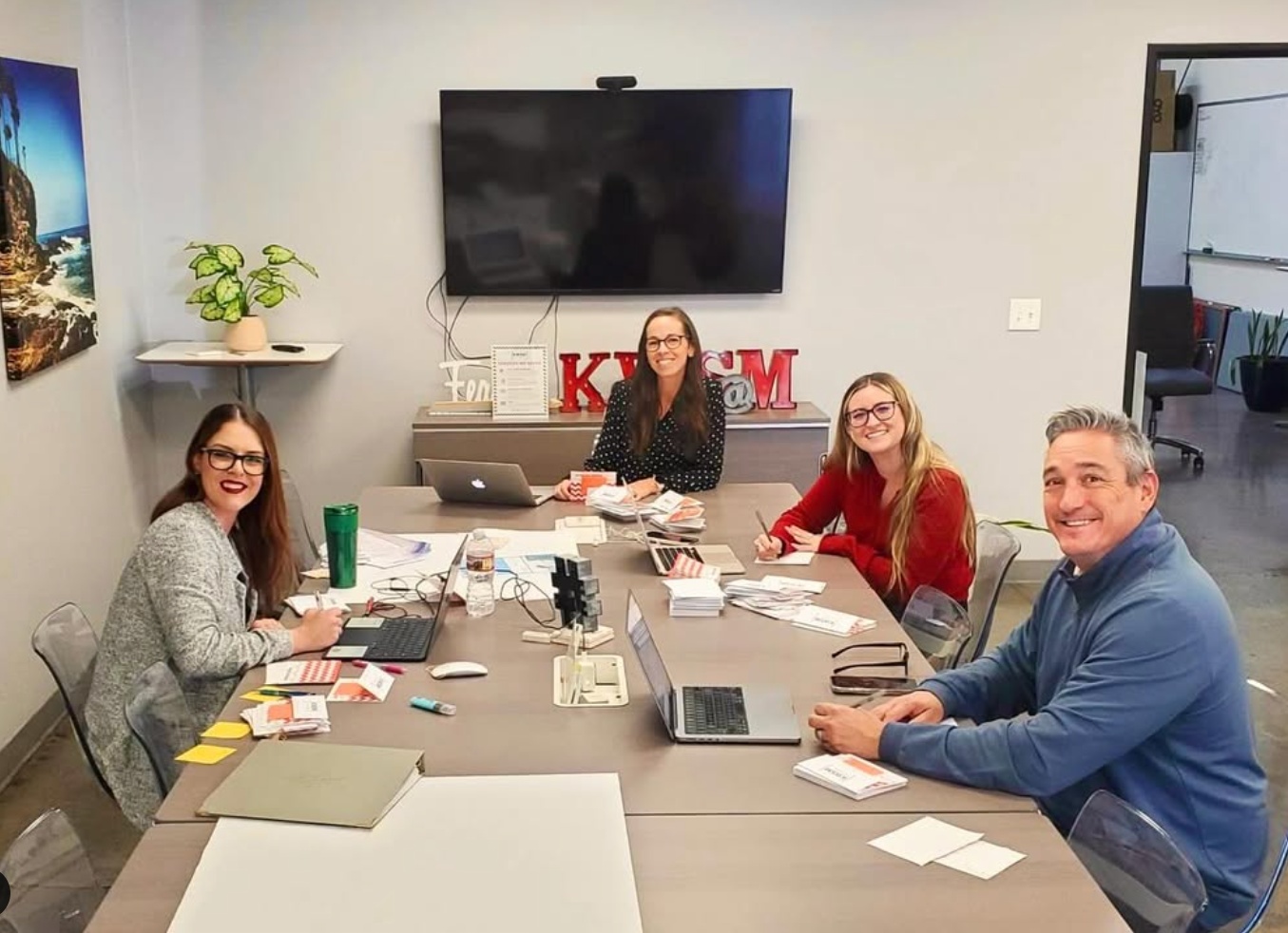
A client once met Katie Wagner without realizing she was the CEO. She had walked past a conference room where her team was bringing him aboard, stepped inside and introduced herself. He looked confused. For someone whose name had once occupied the company’s front door, this was an awkward little encounter. It was also, she came to see, evidence that the business was growing up.
The client had chosen the agency through its work and its people. Wagner’s personal presence had become optional. Many founders say they want that sort of independence for their companies. The test arrives when someone shakes your hand and plainly has no idea how important you are supposed to be. An ego can make a remarkably poor succession plan.
Wagner founded the business in 2010 as Katie Wagner Social Media. In 2018, it became KWSM: a digital marketing agency. The initials survived; the job description expanded. Today, she is its founder, president and CEO, with a working philosophy that joins two concerns often discussed separately: how an organization earns an audience, and how its leader makes room for other people.
The audience had already left the building
Before the agency, there were newsrooms. Wagner graduated magna cum laude from Boston University, with degrees in broadcast journalism and international relations. Her career included investigative reporting and television and radio anchoring, with work for outlets including ABC, CBS, Fox, CNN and National Public Radio. She spent roughly 15 years in journalism before starting the business.
Her account of the move begins with a change in audience habits. People could collect headlines through Facebook and Twitter and watch video on YouTube. The evening bulletin no longer had the same hold over their schedules. For a journalist, that was a professional problem. For a prospective consultant, it suggested that business owners would need help learning to tell stories in those places.
There is something practical about that beginning. Wagner had a set of skills and saw another use for them. Finding an angle, asking questions, making information understandable and meeting a deadline all have a life beyond a newsroom. A new platform might change where a story appears. It does considerably less to change the need for someone to make the story worth attending to.
A spare bedroom outgrows its name
The early operation was modest: Wagner, a laptop and a spare bedroom. By the July 2018 rebrand, the agency reported more than 20 digital marketers and three offices. Atlanta had opened in 2016; Las Vegas was the third location. Website development, search optimization, advertising and content creation had expanded the offering beyond the social media work advertised in the original name.
A company name can behave like an old school photograph. It records something true while becoming steadily less representative of the person standing in front of you. Katie Wagner Social Media described the starting point quite well. It became a less comfortable description of a team delivering several kinds of work. Shortening it made space for that team to be recognized.
The business now explains KWSM as “Know Why Stories Matter.” That gives four surviving initials a useful second assignment. The rebrand also changes the emphasis of the founder’s own story: the achievement becomes building something shared. The conference-room encounter makes sense in that light. A client could recognize the agency’s value before recognizing the person who had started it.
- 2010Katie Wagner
Social Media begins - 2016Atlanta
office opens - 2018A new name:
KWSM
Reporting, with a commercial assignment
Wagner calls the approach brand journalism. It starts with the people who use a company’s products and services, and the people who deliver them. Interviews supply the material. The resulting stories concentrate on experiences, consequences and changes in someone’s working life. A business gets to explain what it does through the people who have actually encountered it.
There is an important commercial purpose here. KWSM specializes in lead generation, and Wagner describes a conversion in everyday terms: someone calls, completes a form or takes another step toward the business. A reader enjoying an article is welcome. A reader understanding enough to begin a useful conversation is closer to the assignment. The story has a job to do.
That is why her journalism background matters beyond the appealing career transition. An interview can turn a broad claim into a specific example. It can uncover the part of an experience that a company’s own description has smoothed away. Wagner’s approach asks marketers to go looking for that material rather than assume the most persuasive sentence is already sitting in a service brochure.
“Every company has a story, our job is to tell it.”
Katie Wagner’s LinkedIn banner, discussed in March 2025
The company is being interviewed, too
Her recent writing applies the same method to recruiting. In an August 2026 article, Wagner describes brand journalism for recruitment as documenting employees’ actual experiences. Employee case studies become a way for candidates to understand a workplace before joining it. The people already doing the work become evidence of what the organization offers.
The appeal is easy to see. Almost any careers page can promise opportunity, teamwork and a lively culture. A specific employee can explain what changed after taking a role, how colleagues work together and what a newcomer might experience. Details give an applicant something to consider. They also give the employer a promise it will have to live up to.
In her May 2026 CEO’s guide to employer branding, Wagner argues that recruitment deserves the sustained attention businesses give to generating customer leads. Waiting until a chair is empty leaves the company starting the conversation late. Her proposed shift places recruitment within a longer effort to make a business understandable and attractive to the people it hopes to hire.
This is where the two halves of her work meet. The story told to a potential customer and the story told to a potential colleague both depend on what happens inside the company. A polished description can secure a first look. The next conversation is likely to contain questions. Wagner has built a marketing practice around taking those questions seriously.
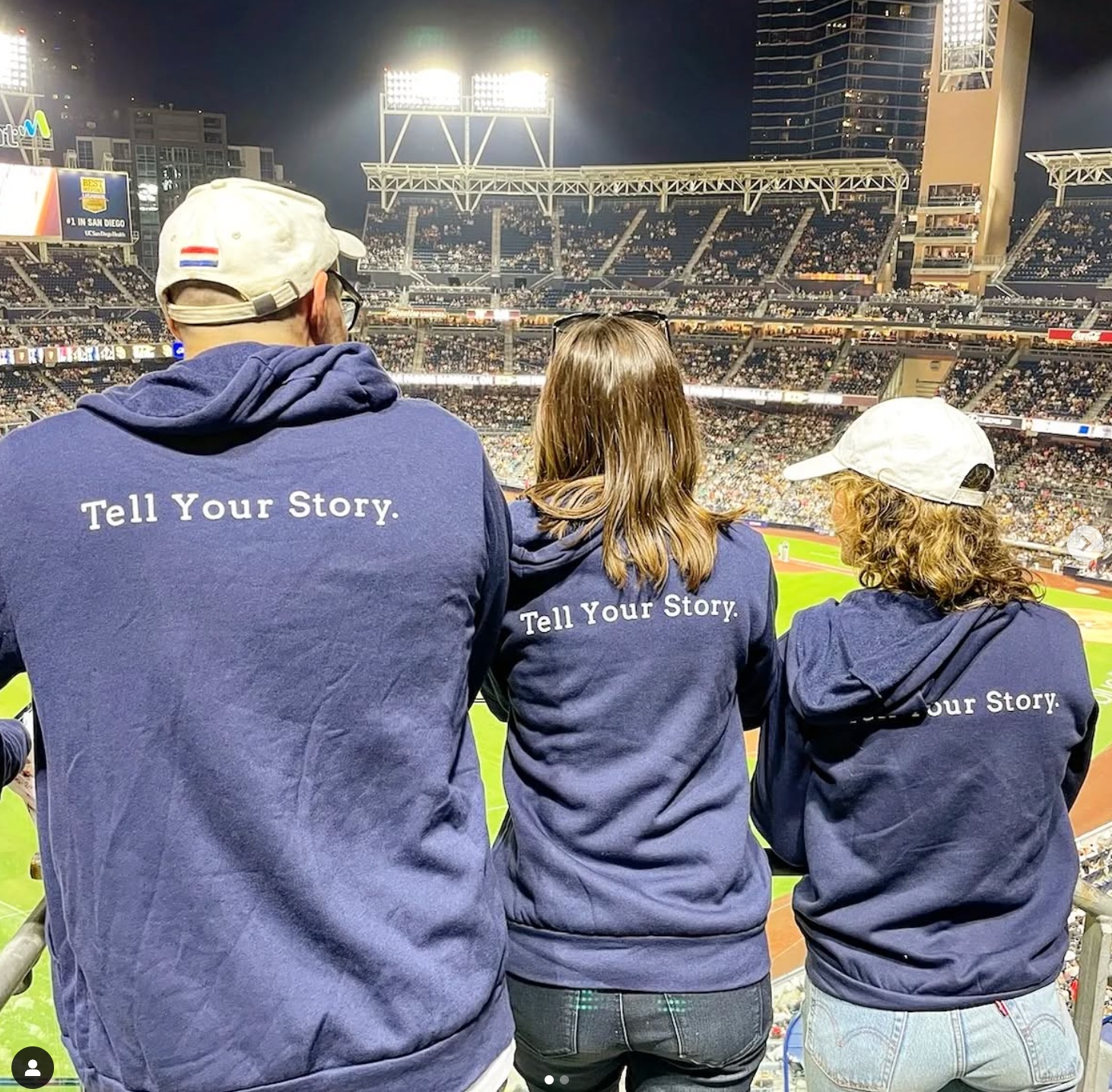
Giving people enough room to lead
Wagner’s husband, Stephen, joined the agency after encouraging her to start it. In her telling, she offered him a partnership; he chose to join as an employee, believing there should be one chief decision-maker. His operations role brought a deliberately clear working arrangement to a relationship that already extended well beyond office hours.
The more revealing management habit involves Wagner leaving the daily operation to others. In 2020, she described taking three weeks away twice a year for strategic planning. The point was to examine services, hiring, delivery and future direction while the team carried on. She returned with a State of the Company address, bringing the larger questions back into the office.
By a June 2025 interview, those planning periods occupied January and July. She explained the length with a useful observation: people can postpone a decision for two weeks; four weeks makes waiting less practical. Giving colleagues authority means allowing them to use it. Otherwise, delegation can become an elaborate system for collecting questions until the boss returns.
There is a quieter counterpart to those absences. In a 2020 contribution about employee feedback, Wagner described rotating one-to-one coffee meetings away from the office. These conversations included feedback on employees’ work and on her own leadership. Getting acquainted as people was part of the purpose. Distance for perspective, followed by a table small enough for two: both have a place in the arrangement.
Those coffee meetings suggest a useful discipline for a founder accustomed to making the introduction. Listening puts another person’s account into the room. It allows someone closer to the daily work to describe a problem the leader may experience differently. The same curiosity that makes a customer interview productive can make a management conversation more useful. Both require leaving time for an answer that complicates the original question. In Wagner’s account of those meetings, feedback travels in both directions. That gives the person across the table a role beyond receiving instructions, and gives the founder something more demanding to do than deliver them.
The next story needs other people
The public-facing work has continued to evolve. A December 2025 podcast episode presented Wagner’s Brighter Web conference talk on nearbound marketing, which centers on strategic relationships. In August 2026, she appeared on North Fulton Business Radio to discuss lead generation and content grounded in real client experiences amid the growth of AI-generated material. The platforms keep changing; her interest in human testimony remains recognizable.
Her ambition also extends to who gets to lead. In 2025, she described empowering the next generation of women leaders as a personal priority. There is a practical connection between that aspiration and the planning absences. A future leader needs more than encouragement. She needs decisions to make, consequences to weigh and enough room to discover that her judgment can carry the work.
Away from the agency, Wagner’s public biography includes animal rescue volunteering and horseback riding. Asked about childhood ambitions in 2025, she answered president. Asked about breakfast, oatmeal. The combination has its charms: a large office of state, followed by a sensible bowl. A profile can tolerate a little ordinary life alongside all the talk of positioning.
The agency’s name still contains her initials. Its daily life, by her own design, contains considerably more than its founder. That confused client supplied a compact measure of the distance traveled from the spare bedroom: someone else had earned his confidence. For a former broadcaster who knows the value of being recognized, there is a pleasing twist in learning to welcome the moment when you are not.