Breaking
Katherine J. Wu wins inaugural Kovler Prize for Trust in Life Science Journalism (2024) Staff writer at The Atlantic - covering science, pandemics, and the deeply weird Harvard PhD in Microbiology and Immunobiology 44,900+ followers on X (Twitter) @KatherineJWu Schmidt Award for Excellence in Science Communication (2022) Author of The Pivot newsletter on science and health Reported COVID-19 for The New York Times and The Atlantic Two cats. Named Calvin. And Hobbes. Katherine J. Wu wins inaugural Kovler Prize for Trust in Life Science Journalism (2024) Staff writer at The Atlantic - covering science, pandemics, and the deeply weird Harvard PhD in Microbiology and Immunobiology 44,900+ followers on X (Twitter) @KatherineJWu Schmidt Award for Excellence in Science Communication (2022) Author of The Pivot newsletter on science and health Reported COVID-19 for The New York Times and The Atlantic Two cats. Named Calvin. And Hobbes.
Katherine J. Wu, science journalist and Atlantic staff writer
Science & Health  /  The Atlantic  /  The Pivot Newsletter

Katherine
J. Wu

The bacteriologist who learned to write, then made everyone else want to read.

Staff writer at The Atlantic. Harvard PhD. Four major journalism awards. Two cats named after comic strip characters. Katherine Wu makes the machinery of biology legible to anyone with a pulse - and occasionally makes you glad you have one.

The Atlantic Harvard PhD Kovler Prize 2024 The Pivot Science Journalist
4
Major Awards
44.9K
Twitter Followers
$25K
Kovler Prize (2024)
7+
Major Publications
2
Cats (Calvin & Hobbes)

The scientist who stayed curious after the lab

Katherine Wu finished her PhD at Harvard and did something most scientists don't: she walked into a newsroom. Not as a source. As a reporter. The lab gave her a rigorous mind. The newsroom gave her readers.

Today she is a staff writer at The Atlantic, where she covers science the way a surgeon might perform surgery - with total precision, quiet confidence, and the occasional moment that makes everyone in the room say "I did not know that." Her reporting has shaped how millions of people understood COVID-19, vaccine science, viral evolution, and the stranger corners of animal biology.

But the resume doesn't quite capture what makes her interesting. It's the combination: she can read a preprint and catch a methodological flaw by lunchtime, then translate the entire mess into a 2,000-word story that your grandmother would finish. That's not a common skill. That's a superpower.

Before The Atlantic, she covered the pandemic for The New York Times. Before that, NOVA, Smithsonian, Undark. Before all of it, a bacteriologist studying how microbes divide and grow under stress at one of the world's most demanding research universities. She knows the subject from the inside - which means she also knows when a press release is exaggerating.

She writes the newsletter The Pivot, where she applies this same lens to science and health: what's actually changing, what it means, and why you should care. Subscribers get the Katherine Wu treatment - rigor without jargon, honesty without alarm.

2021
Joined The Atlantic as Staff Writer
Harvard
PhD in Microbiology & Immunobiology
2018
AAAS Mass Media Fellow - Smithsonian
2020
NYT pandemic reporter - COVID-19 coverage
Being a scientist first gave me a superpower: I can read a paper and know when something smells wrong.
- Katherine J. Wu

English major. Then bacteriologist. Then journalist.

She started college as an English major. Which means she has always been interested in how words work. Then she discovered science - and the discipline of really knowing something, rigorously, before you say it. Most people choose one or the other. Wu chose both, and the combination produced something unusual: a journalist who is fluent in the language of research, and a former scientist who can explain it without condescension.

The AAAS Mass Media Fellowship in 2018 was the hinge point. That program places scientists in newsrooms to learn reporting firsthand. Wu landed at Smithsonian Magazine and never fully returned to the bench. Not because the science stopped being interesting, but because the storytelling became the more urgent work.

The pandemic proved why. When COVID-19 arrived in early 2020, Wu was at The New York Times. For the next year, she was one of the most important translators between the scientific community and the reading public - explaining viral evolution, vaccine mechanisms, variant risk, and the constant uncertainty of emerging data. She did it without oversimplifying. She did it without panicking. She did it clearly, every time.

When she joined The Atlantic in 2021, she brought that credibility with her. Her beat expanded: from infectious disease to evolution, ecology, reproductive biology, and the genuinely bizarre biology of creatures that challenge our assumptions about bodies, sex, and existence. She has described her personal fascination as being drawn to anything with "an unusual number or type of mates, appendages, or orifices." This is not a PR line. She means it. The resulting stories are among the most memorable science writing published anywhere.

In October 2024, the Foundation for the NIH awarded her the inaugural Kovler Prize for Trust in Life Science Journalism - a $25,000 honorarium recognizing her commitment to trustworthy, rigorous reporting. It was a fitting tribute for someone who has made a career of earning, rather than assuming, reader confidence.
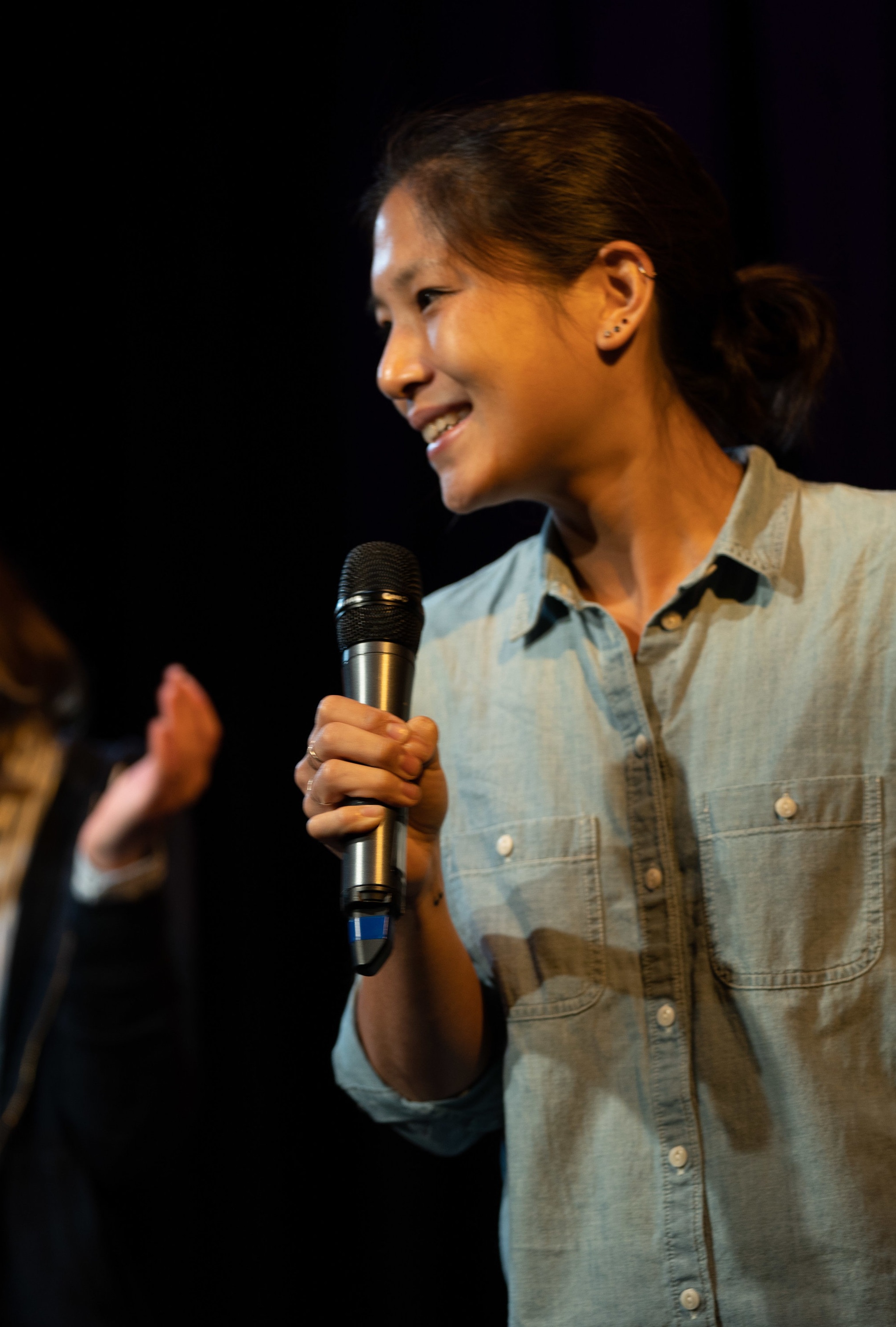
Career Highlights

  • Staff Writer, The Atlantic (2021-present)
  • Science/Health Reporter, The New York Times (2020-21)
  • AAAS Mass Media Fellow, Smithsonian (2018)
  • Contributor: NOVA (PBS), Undark, Nat Geo, Sci Am, Popular Science
  • Senior Editor, The Open Notebook
  • Senior Producer, Story Collider
  • PhD Researcher, Harvard (Microbiology & Immunobiology)

What She Covers

  • Infectious disease and viral evolution
  • Vaccines and public health policy
  • Animal reproduction and strange biology
  • Ecology and evolutionary science
  • Research funding and scientific institutions
  • Science trust and public understanding
Recognition

Four awards. One through-line.

2024  /  Inaugural
Kovler Prize for Trust in Life Science Journalism
Foundation for NIH. $25,000 honorarium. Awarded October 29, 2024 at the 12th FNIH Awards Ceremony. The first recipient of this prize.
2022
Eric and Wendy Schmidt Award for Excellence in Science Communication
National Academy of Sciences. Recognizes outstanding reporting that advances public understanding of science.
2021
Science in Society Journalism Award
National Association of Science Writers. Among the most prestigious prizes in science journalism.
2020
Evert Clark / Seth Payne Award
Young Science Journalists Award. Won in the same year she was covering COVID-19 for The New York Times.
2018
AAAS Mass Media Fellowship
Placed at Smithsonian Magazine. The program that launched her journalism career from the laboratory.
Ongoing
Best American Science and Nature Writing
Selected for inclusion in anthology editions - reserved for the year's most distinguished science journalism.
Timeline

From petri dish to press pass

Pre-2013
Starts college as an English major - an origin story she still describes with affection
2013-2018
PhD in Microbiology and Immunobiology at Harvard University - studying how bacteria grow, divide, and respond to stress
2018
AAAS Mass Media Fellow at Smithsonian Magazine - the program that puts scientists in newsrooms. She never left journalism.
2018-2020
Builds her byline writing for NOVA (PBS), Undark, National Geographic, Scientific American and more
2020
Joins The New York Times as COVID-19 arrives - becomes one of the paper's primary science and health reporters during the pandemic. Wins the Evert Clark/Seth Payne Award.
2021
Moves to The Atlantic as a staff writer covering science. Wins the Science in Society Journalism Award. Expands beat to evolutionary and reproductive biology.
2022
Wins Schmidt Award for Excellence in Science Communication. Publishes landmark Atlantic piece on the animal origins of COVID-19.
2024
Wins the inaugural Kovler Prize for Trust in Life Science Journalism - $25,000 honorarium from the Foundation for the NIH.
2025
Continues at The Atlantic, reporting on measles outbreaks, federal research funding threats, CDC restructuring, and writing The Pivot newsletter
What She Writes

The beats that define her

🦠
Infectious Disease
Her COVID-19 coverage set a standard for pandemic journalism: technically accurate, never alarmist, never dismissive. She explains what the data says - and what it doesn't.
💉
Vaccines and Public Health
From mRNA mechanisms to CDC panel decisions and measles outbreaks, she covers vaccines as a complex policy and science story, not a culture war talking point.
🐙
Weird Biology
Creatures with baffling reproductive strategies, unusual anatomies, or biology that defies intuition. She is drawn to organisms that make you reconsider what a "normal" body even is.
🧬
Evolution and Ecology
The deep time processes that produced the living world. She writes about evolutionary biology with the same precision she brings to molecular biology - and equal fascination.
🔬
Research and Science Policy
Who funds science, who controls it, and what happens when institutions change direction. In 2024-25, she has covered federal research cuts and CDC restructuring closely.
📰
Science Communication
Through The Open Notebook and Story Collider, she mentors other science writers and advocates for the craft - not just producing journalism but strengthening the field.
I am deeply, deeply interested in anything with an unusual number or type of mates, appendages, or orifices.
- Katherine J. Wu, on her biological beat
The Person

Beyond the byline

  • Rigorously scientific - she doesn't simplify; she clarifies. There's a difference.
  • Warmly accessible - the complexity doesn't become a barrier. Her writing invites people in.
  • Genuinely funny - her quotes about weird animal biology are not performance. She means them.
  • Cat-obsessed - two cats named Calvin and Hobbes, who serve primarily as thermal units.
  • Honest about uncertainty - she treats "we don't know" as information, not failure.
  • Taco seeker - on a permanent quest for authentic tacos east of the Mississippi.

She started college as an English major. She ended up studying bacterial cell division at Harvard. The career that followed isn't a pivot - it's a synthesis. The prose style of a literary mind applied to the precision of a trained scientist.

Her two cats are named Calvin and Hobbes. She describes their primary function as providing heat while she works. They have appeared, indirectly, in her reporting on feline behavior - a piece on why some cats fetch is among her more charming Atlantic stories.

During the pandemic, when misinformation moved at viral speed, she was one of the journalists who showed that accuracy doesn't require slowness. She was fast and right, which in 2020 was harder than it sounds.

Quick Facts

Katherine Wu in brief

Has a Harvard PhD in microbiology - uses it to write about sea creatures.
Cats named Calvin and Hobbes. Zero further explanation needed.
Started as an English major. Ended up with a science PhD. Then went back to writing.
44,900+ followers on X (Twitter) @KatherineJWu
Won four major journalism awards. All in a five-year span.
Was a Mass Media Fellow - a program that embeds scientists in newsrooms.
Appears on TWiV (This Week in Virology) podcast to talk science writing.
Describes her niche as creatures with 'unusual numbers or types of mates, appendages, or orifices.'
Perpetually searching for authentic tacos east of the Mississippi.
Senior Editor at The Open Notebook - mentors other science journalists.

Her newsletter, her rules

What's Happening Now

Latest from Katherine Wu

October 2024
Won the inaugural Kovler Prize for Trust in Life Science Journalism from the Foundation for the NIH - a $25,000 honorarium presented at the 12th FNIH Awards Ceremony.
2024-2025
Covering the Trump administration's research funding reductions and the restructuring of CDC vaccine advisory panels - a major ongoing story for science and public health.
2025
Reporting on a measles outbreak spreading across 30+ U.S. states, one of the largest domestic outbreaks in recent years.
Ongoing
Continues writing The Pivot newsletter alongside her Atlantic work, covering science and health with her signature clarity.