Breaking
PULITZER PRIZE 2021 - EXPLANATORY REPORTING AN IMMENSE WORLD - #1 BESTSELLER - OBAMA'S BOOK OF THE YEAR GUGGENHEIM FELLOW 2024 750+ STORIES AT THE ATLANTIC ROYAL SOCIETY SCIENCE BOOK PRIZE 2023 ANDREW CARNEGIE MEDAL FOR EXCELLENCE IN NONFICTION 2023 I CONTAIN MULTITUDES - ON BILL GATES' BOOKSHELF TED TALK - 1.9 MILLION VIEWS PULITZER PRIZE 2021 - EXPLANATORY REPORTING AN IMMENSE WORLD - #1 BESTSELLER - OBAMA'S BOOK OF THE YEAR GUGGENHEIM FELLOW 2024 750+ STORIES AT THE ATLANTIC ROYAL SOCIETY SCIENCE BOOK PRIZE 2023 ANDREW CARNEGIE MEDAL FOR EXCELLENCE IN NONFICTION 2023 I CONTAIN MULTITUDES - ON BILL GATES' BOOKSHELF TED TALK - 1.9 MILLION VIEWS
Ed Yong - science journalist and Pulitzer Prize winner

Science Journalist - Author - Pulitzer Laureate

Ed
Yong

He looked at microbes, parasites, and a pandemic - and somehow made you fall in love with all of them.

Science Writing Pulitzer Prize Bestselling Author The Atlantic COVID Reporting Guggenheim Fellow
750+
Atlantic Stories
2
NYT Bestsellers
12+
Major Awards
1.9M
TED Talk Views

Ed Yong is the journalist who convinced millions of people to care about creatures they cannot see. Through eight years and over 750 stories at The Atlantic, he became the rare writer who could stand between science and the public and translate without losing anything in translation - not the wonder, not the complexity, not the stakes.

His method is deceptively simple: go wide, stay curious, and never stop asking what something looks like from inside the animal's skin - or inside the microbe's protein coat. That approach produced two New York Times bestsellers, a Pulitzer Prize for his COVID-19 pandemic coverage, and a body of work that has been cited in courtrooms, hospital waiting rooms, and presidential reading lists. Barack Obama put An Immense World on his 2022 Best Books list. Bill Gates put I Contain Multitudes on his. The Nobel laureates and the general public have been, for once, in agreement.

Born Edmund Soon-Weng Yong in Malaysia in 1981, he studied Zoology at Cambridge before an MPhil in Biochemistry at University College London confirmed what he already suspected: he was too curious to be a scientist. The laboratory's narrowing spotlight did not suit him. Journalism's wide aperture did. He launched the blog Not Exactly Rocket Science in 2007 and spent eight years proving that "science blogger" could be a legitimate career before anyone agreed it was.

He joined The Atlantic in 2015 and promptly redefined what a staff science writer does. By 2020, when a novel coronavirus reshaped every institution on earth, Yong was already at his desk. He wrote more than two dozen features on COVID-19 that year - on immunology, masking, vaccine hesitancy, Long COVID (which he was among the first to report on, in June 2020), and the psychological toll of living through a mass death event. The 2021 Pulitzer Prize for Explanatory Reporting recognized that coverage. The Poynter Institute called him "the most important and impactful journalist of 2020." He called it the worst year of his life.

He left The Atlantic in July 2023, having given everything the job asked for and having noticed what that cost. "I was doing my best work at severe cost to all of the other parts of myself," he said. The admission was characteristically honest, and it landed differently from the usual burnout discourse because this was a man who had just won the highest prize in his field while doing the work. The cost was real precisely because the work was real.

Now he writes independently, publishes the newsletter The Ed's Up, holds a 2024 Guggenheim Fellowship, and continues to find the hidden architecture of the world - from the electroreception of sharks to the magnetic compass of migratory birds - and make it feel immediate. His corgi is named Typo. The irony is not lost on him.
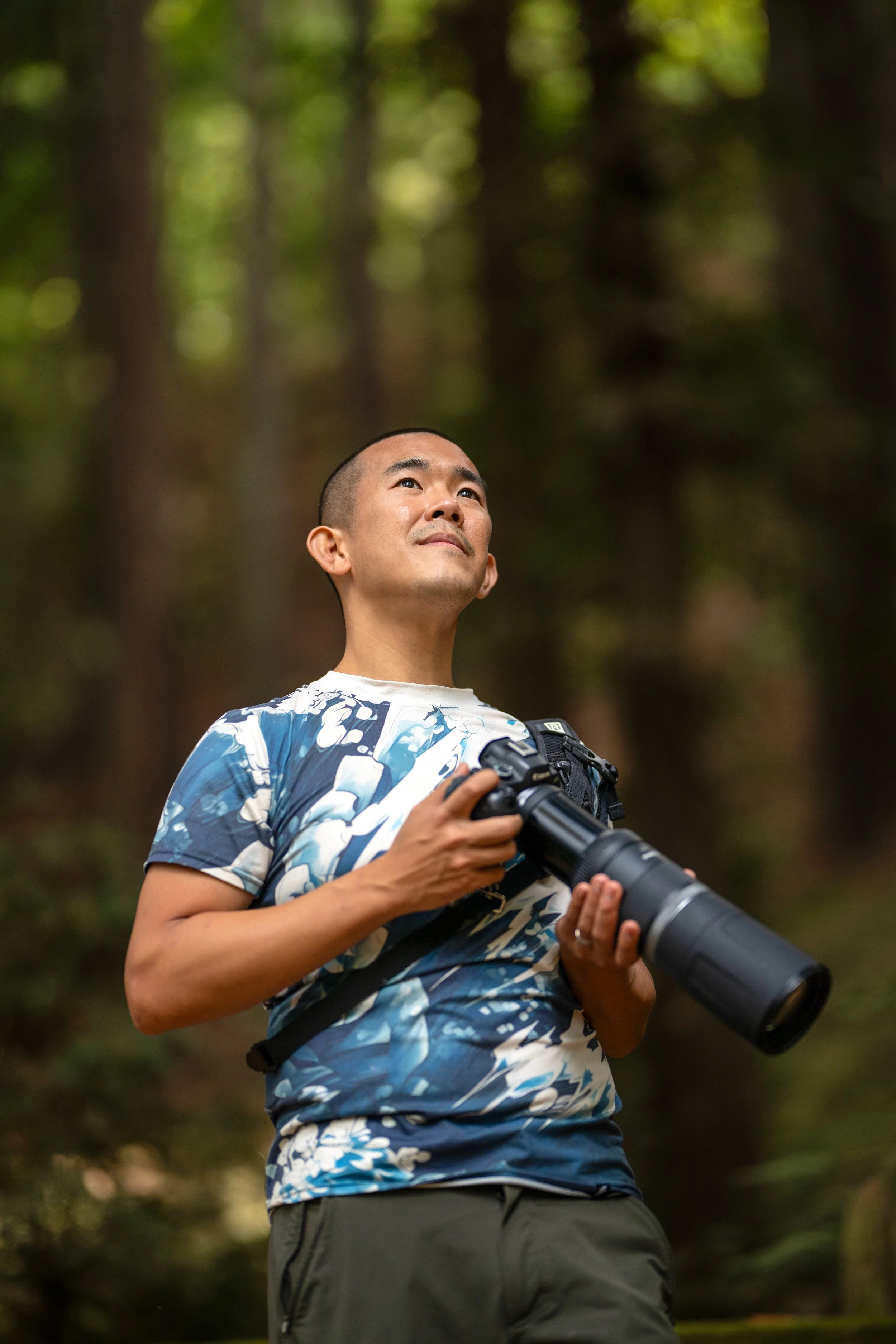
I don't have the capacity to narrow my attentional spotlight too far. I like to have broad scopes, to look at a wide variety of things, and I love constantly learning about new areas.
- Ed Yong, on why he left science for journalism

A Trophy Case
for the Curious

2021
Pulitzer Prize
Explanatory Reporting - COVID-19 pandemic coverage for The Atlantic
2024
Guggenheim Fellowship
Awarded for trailblazing science journalism
2023
Andrew Carnegie Medal
Excellence in Nonfiction for An Immense World
2023
Royal Society Trivedi Prize
Science Book Prize for An Immense World
2025
Science + Literature Award
National Book Foundation and Alfred P. Sloan Foundation
2021
George Polk Award
Science Reporting
2021
Victor Cohn Prize
Medical Science Reporting
2021
Neil & Susan Sheehan Award
Investigative Journalism in Public Interest
2010
National Academies Award
Communication Award from the National Academy of Sciences

Two Books.
Both Needed.

2016
I Contain Multitudes: The Microbes Within Us and a Grander View of Life

The book that turned the hidden world of microbiomes into a cultural phenomenon. Yong shows how bacteria, fungi, and viruses are not enemies of life but architects of it - shaping immune systems, behaviors, and the very possibility of complex animal existence. Corals, squid, beetles: all characters in a story that turns out to be about you.

NYT Bestseller Bill Gates Pick Mark Zuckerberg Pick Wellcome Prize Shortlist Jeopardy! Clue
2022
An Immense World: How Animal Senses Reveal the Hidden Realms Around Us

Every animal lives inside its own sensory bubble - its Umwelt. Crocodiles whose scales are as sensitive as fingertips. Giant squid with eyes tuned to detect bioluminescent sperm whales. Bees that see ultraviolet patterns we cannot imagine. Yong's second book is an act of radical expansion: he gives readers a brief, vertiginous experience of all the worlds that coexist with ours, unseen.

NYT Bestseller Obama's Best Books 2022 Carnegie Medal Royal Society Prize The Economist Best Books The Guardian Best Books Time Best Books
24+
COVID Features Written in 2020
8
Long COVID Articles (starting June 2020)
#1
Most Important Journalist of 2020 (Poynter)
2021
Pulitzer Prize Year

The Journalist
Who Covered Everything

When COVID-19 arrived, every publication scrambled. Yong had been covering biology for fifteen years. He wrote about immunology when it was unfashionable. He understood how viruses spread, how immune systems fail, how scientific uncertainty propagates through institutions. He was ready in a way that was almost unfair to everyone else.

His COVID coverage was not just rapid. It was ahead. He reported on Long COVID in June 2020 - months before the condition had a name, before most clinicians believed it was real. He wrote about the psychological toll of healthcare workers. He explained masking. He covered vaccine hesitancy without condescension. He tracked the evolving science without pretending the science wasn't evolving.

What made the coverage extraordinary was not the volume but the empathy. Yong described his process as "spending days listening to the worst moments of dozens of people's lives" - an act of witness that journalism requires and that most of us would find unbearable.

"When journalists do their job correctly, they extend empathy to their subjects. That means spending days listening to the worst moments of dozens of people's lives to convey their experiences to the world."

Five Senses.
Infinite Worlds.

The Umwelt - the perceptual universe of any given animal - is one of Yong's central obsessions. Here are five windows into the hidden realms he maps in his second book.

🦈
Electroreception

Sharks detect the faint electrical fields of prey hiding under sand. A field as weak as one billionth of a volt per centimeter triggers their hunting response.

🐝
Ultraviolet Vision

Bees see ultraviolet patterns on flowers that guide them to nectar - landing strips invisible to human eyes. Every garden is a different place to them.

🐊
Hyper-Tactile Skin

A crocodile's face bristles with tiny pressure-sensing bumps so sensitive that the scaly snout rivals a human fingertip in tactile acuity.

🐦
Magnetic Compass

Migratory songbirds may perceive the Earth's magnetic field as a visual overlay - a kind of internal GPS that activates with the changing of seasons.

🦑
Deep-Sea Vision

Giant squid evolved enormous eyes - the size of soccer balls - specifically to detect the bioluminescent glow of sperm whales approaching from below.

When used properly, comedy in science writing is crucial. If done badly, it's worse than not doing it at all. The secret is to almost not try.
- Ed Yong, on humor in science journalism

How a Zoologist
Becomes Essential

1999-2002
Studies Natural Sciences (Zoology) at Pembroke College, Cambridge. Earns BA promoted to MA by tradition.
2002-2005
MPhil in Biochemistry at University College London. Discovers he is too curious to stay in the lab.
2007
Launches "Not Exactly Rocket Science" blog. Begins freelance science journalism career. Spends eight years proving the model works.
2010
Wins National Academies Communication Award from the National Academy of Sciences.
2014
TED Talk "Zombie Roaches and Other Parasite Tales" delivers - now has 1.9 million views.
2015
Joins The Atlantic as staff science writer. The eight-year run begins.
2016
Publishes I Contain Multitudes - NYT bestseller. Bill Gates reads it. Mark Zuckerberg reads it. Jeopardy! notices.
2020
Writes 24+ COVID features for The Atlantic. First to report on Long COVID in June. Named most important journalist of the year by Poynter.
2021
Wins Pulitzer Prize for Explanatory Reporting. Also wins George Polk Award, Victor Cohn Prize, Neil & Susan Sheehan Award.
2022
Publishes An Immense World - immediately named best book of 2022 by Barack Obama, The Economist, The Guardian, Time, and a dozen others.
2023
Wins Andrew Carnegie Medal and Royal Society Trivedi Prize. Leaves The Atlantic after 750+ stories. Goes independent.
2024
Awarded Guggenheim Fellowship. Launches newsletter The Ed's Up. Continues speaking, writing, and expanding his Umwelt.
2025
An Immense World Young Readers Edition published. Wins Science + Literature award from National Book Foundation. Continues speaking internationally.

Four Lines That
Explain Everything

When used properly, comedy in science writing is crucial. If done badly, it's worse than not doing it at all. The secret is to almost not try.

I don't have the capacity to narrow my attentional spotlight too far, which is why I wasn't a very good practicing scientist. I like to have broad scopes, to look at a wide variety of things.

I was doing my best work at severe cost to all of the other parts of myself.

Hope is a discipline - a practice that you cultivate through active effort. Not optimism. Not wishful thinking. Work.

Traits, Quirks,
and Typo

Intellectually Insatiable Deeply Empathetic Humorous Without Trying Honest About Limits Collaborative Wide-Aperture Curious Committed to Sense-Making
Anecdote 01

During the pandemic he adopted a corgi named Typo. Watching the dog navigate the world by smell, sound, and touch directly fed the research and intuition behind An Immense World. A pandemic puppy became a philosophy tutor. The name Typo was a deliberate choice by a man who has spent his career making sure words are exactly right.

Anecdote 02

He first reported on Long COVID in June 2020, when most clinicians were still dismissing it. He went on to write eight substantial pieces about the condition - covering the disbelief patients faced, the emerging science of brain fog, and the politics of recognition. Months ahead of the medical establishment, he treated patient experience as data.

Anecdote 03

I Contain Multitudes appeared as a clue on Jeopardy! - which is the exact kind of cultural crossover that science writers dream about without expecting. The book was simultaneously on Bill Gates' and Mark Zuckerberg's reading lists, which is either an endorsement or a warning depending on your politics, but either way the microbes don't care.

Anecdote 04

His 2014 TED Talk on zombie-making parasites - specifically the fungus Ophiocordyceps that hijacks carpenter ants and forces them to climb before killing them - has been viewed 1.9 million times. The reason is simple: he tells the story the way a thriller writer would, then stops and says, "this is real."

Eight Facts About
Ed Yong

His full name is Edmund Soon-Weng Yong. Most people have no idea.
He was born in Malaysia and became a British citizen in 2005. He now lives in Washington, D.C. - a three-country trajectory that runs on curiosity.
He studied Zoology at Cambridge, which means his journalism career is essentially a PhD that never ended and never got boring.
His corgi is named Typo - a choice that is either very self-aware or proof that journalists should not be allowed to name animals.
He was named "the most important and impactful journalist of 2020" by Poynter - for coverage of a virus that none of us wanted to read about and all of us needed to.
An Immense World made Barack Obama's Best Books of 2022 list. Obama also chose it as his top science read of the year. This is now on Yong's Wikipedia page forever.
His TED Talk on zombie ants and mind-controlling parasites has 1.9 million views. Viewers have reportedly checked under their beds.
He publishes a newsletter called The Ed's Up - a pun that absolutely works and proves the comedy-in-science-writing rule applies to newsletter titles too.