Karine Mellata runs a company that succeeds whenever almost nobody notices it. A fundraiser is checked before it goes live. A marketplace seller is verified. A suspicious account produces a case file instead of another item in a crowded queue. The user sees a screen and carries on. Behind it, Variance has been assembling evidence, interpreting policy and making the sort of gray-area judgment that software once passed to a person with ten tabs open.
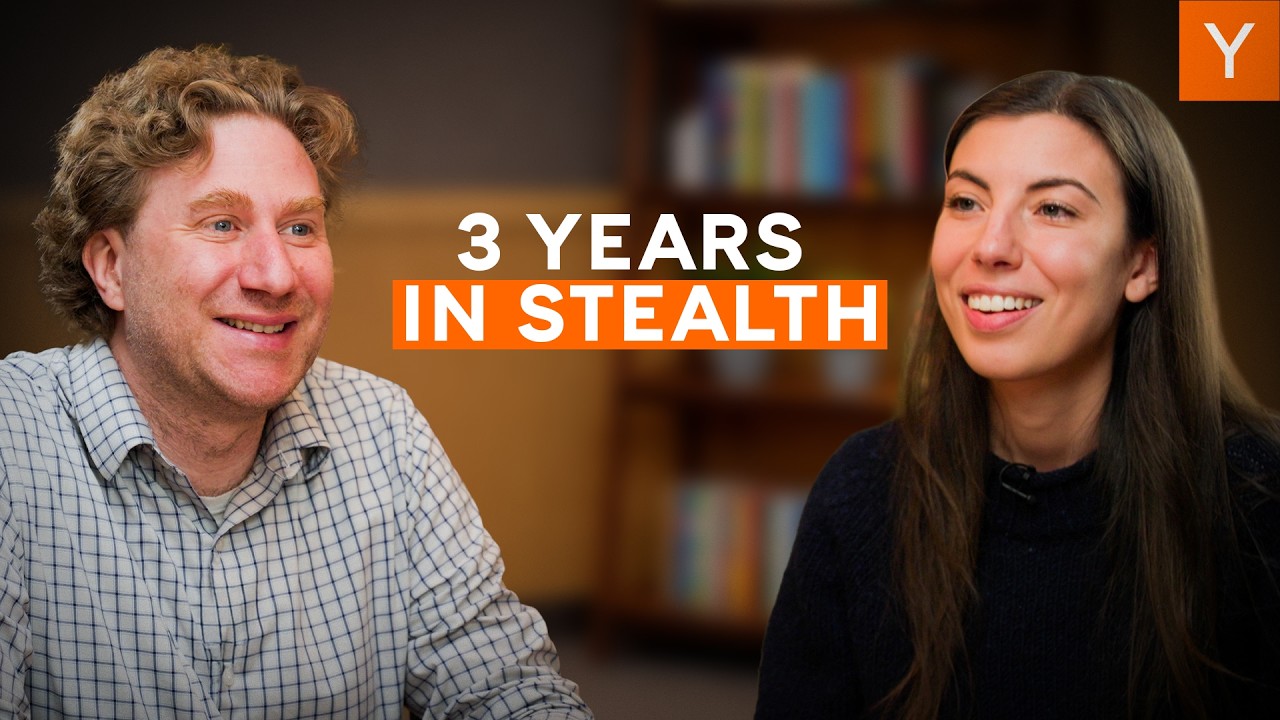
This is an odd bargain for a founder. Silicon Valley usually rewards a bright sign over the shop. Mellata has built closer to the boiler room. Her customers handle sensitive data and adaptive adversaries; saying too much about the machinery can help the people trying to evade it. Variance spent three years building quietly, then paired its public emergence in March 2026 with a $21.5 million Series A.
The quiet was not a marketing stunt. It was part of the product’s social contract. Mellata calls the company a secret weapon for customers locked in a cat-and-mouse game. A useful secret weapon is discreet, dependable and much better at paperwork than the name suggests.
We’re building the systems that are often used by the bad guys, but we’re building them for the good guys.Karine Mellata, Y Combinator Founder Fireside
01 / The apprenticeshipThe problem before the company
Mellata and co-founder Michael Lin met in 2021 on Apple’s Fraud Engineering team. They were engineers working across services including the App Store, iMessage, iCloud and Find My, where spam, botting, account security and developer fraud arrive at a scale that makes improvisation expensive. The job taught them a durable fact: abuse changes its costume faster than a rigid rules engine changes its mind.
The systems available then were a mix of narrow classifiers, rules and large analyst teams. They could flag something suspicious. The harder task began after the flag: collect the relevant evidence, trace connected behavior, interpret incomplete context, consult a policy and explain why the case deserved action. Analysts became the layer that absorbed every ambiguity the software could not.
That distinction shaped Mellata’s career. She had already written publicly about algorithmic bias, warning in 2020 that social prejudice can travel into training data and then into automated decisions. At Apple, the abstract question met operations. A model’s output was only one part of a system that had to behave sensibly around millions of people and determined adversaries.
The work hiding behind one alert
02 / IntrinsicStarting with the bad post
In 2022, Mellata and Lin started the business that would become Variance. Its first name was Intrinsic, and its first market was trust and safety. The pitch brought policy management, data engineering, content understanding and moderator workflows into one platform. The founders entered Y Combinator’s Winter 2023 batch with a company made for teams dealing with fake accounts, illegal listings, coordinated behavior and content that changes meaning with context.
Their timing had a comic edge. They started just before ChatGPT made large language models a dinner-table topic. GPT-4 arrived during their YC batch. While they were running an early enterprise pilot, new models changed product performance and cost structure beneath them. For some companies that would have scrambled the thesis. For Intrinsic, the new technology improved the available machinery for a problem the founders had chosen earlier.
The first substantial enterprise customer took roughly eight months to land. Mellata and Lin had selected enterprise sales on hard mode: a small technical team, a sensitive workflow, a buyer with compliance requirements and a product category still finding its vocabulary. Yet the customer’s problem was specific. A large volume of marketing material had to be checked against nuanced guidelines. Regular expressions were no match for a sentence whose legal meaning depended on context. Human review worked, but it restricted how much material the company could publish.
Intrinsic’s answer was to treat moderation as an investigation rather than a binary classification. By mid-2024, Mellata said the platform was analyzing more than 130 million events each day across text, images and video. The number is useful because it reveals the tension she kept chasing: human-level context, internet-level volume.
03 / The turnFrom bad posts to bad money
The company’s move into financial crime looks like a pivot from a distance. Up close, it is a change of setting. Content moderation and compliance share the same awkward grammar: policies written for people, fragmented evidence, adversaries testing the edges and decisions serious enough to require an explanation. The artifact changes from a listing or comment to a business filing or transaction. The investigative loop remains.
Mellata’s description is precise. Variance did not begin as a financial-crime company. It began with the conviction that consequential operational decisions were poorly served by existing software. As the platform improved at long, messy investigations across unstructured data, the founders realized they had built something broader than conventional workflow automation.
The name changed from Intrinsic to Variance. The product expanded into identity verification, KYC, KYB, fraud review and compliance investigations. The company’s public language shifted from helping moderators manage abuse to helping regulated institutions gather context across internal systems, registries, documents and the open web.
04 / The product lessonSpeed needs receipts
In ordinary software, a faster answer can be enough. In regulated work, an answer without a trail creates a fresh problem. A compliance team needs to know what the system found, which policy it applied and how it moved from evidence to recommendation. An auditor may arrive later and ask the same questions with less patience.
Variance therefore puts auditability beside intelligence. Its agents are designed to persist across long tasks, call tools, interpret documents, search for context and preserve the evidence chain. Mellata describes the goal as extending the reach of high-quality investigative judgment. The choice of verb matters. Expertise remains in the system as policy, procedure, escalation and review. Automation carries more of its weight.
We do not see the future as replacing expertise with automation for its own sake. We see it as building systems that can extend the reach of high-quality investigative judgment.Karine Mellata, announcing Variance’s Series A
This is also why her earlier concern with bias belongs in the same story. Decisions become more consequential as their scale grows. Explainability is not decorative when software can affect whether an account is frozen, a seller is removed or a case is escalated. A useful investigator must show its work and make room for scrutiny.
05 / The founderConviction with moving parts
Mellata describes the decision to found the company as a sense of duty. She and Lin had a rare pairing of skills, had seen the industry’s limitations and wanted to apply that experience to the same problem. They were not searching for any available startup idea. The object of interest stayed remarkably stable even as the product, models, market and company name evolved.
That is the stealable part of her story. Conviction does not require preserving every early choice. Intrinsic could become Variance. Moderation could open into financial crime. A classifier-heavy world could turn agentic. The constant was the expensive gap between an alert and a defensible decision.
Her operating style is visible in the company she describes: technical, patient with complexity and comfortable outside the spotlight. Even the sales education became systematic. Mellata has spoken about learning to turn deep product knowledge into a repeatable enterprise process, with documented playbooks and live feedback. The engineer did not pretend selling was intuition. She treated it as another system to build.
Mellata and Lin meet on Apple’s Fraud Engineering team.
Intrinsic joins Y Combinator W23 and launches trust-and-safety infrastructure.
A $3.1 million seed round supports the company’s enterprise moderation work.
Intrinsic becomes Variance as investigative AI moves deeper into risk and compliance.
Variance emerges publicly with a $21.5 million Series A led by Ten Eleven Ventures.
06 / NextA clearinghouse for judgment
Mellata’s ambition reaches beyond making one institution’s queue shorter. The first stage is to encode an organization’s own policies, procedures and internal context so agents can reason consistently. The second is more collective: a coordinated defense in which agentic systems across regulated industries share intelligence against actors who already collaborate, automate and adapt.
It is a large institutional idea disguised as enterprise plumbing. Fraud has always exploited the seams between databases, companies and jurisdictions. Mellata wants the defensive reasoning layer to cross some of those seams too, with the governance and evidence that regulated organizations require.
The company may remain slightly in the shadows even after coming out of stealth. That seems fitting. Variance is built for the part of the internet where certainty is scarce, context is scattered and the useful outcome is often an ordinary transaction proceeding without drama. Mellata’s work sits behind that quiet result. If it does its job, you may never know it was there.