A few days after a new Vercel user opened v0 and got stuck, an email arrived from Kailey Conry. The message was short. What was she working on? The user explained the idea and asked whether it could even be built. Minutes later, Conry sent back a working example.
Only after something useful existed did a meeting enter the picture. Conry brought in a sales engineer, and together they could discuss how to take the project further. The sequence had the economy of a well-made play: notice the opening, place the ball where it can do some good, let the next person move.
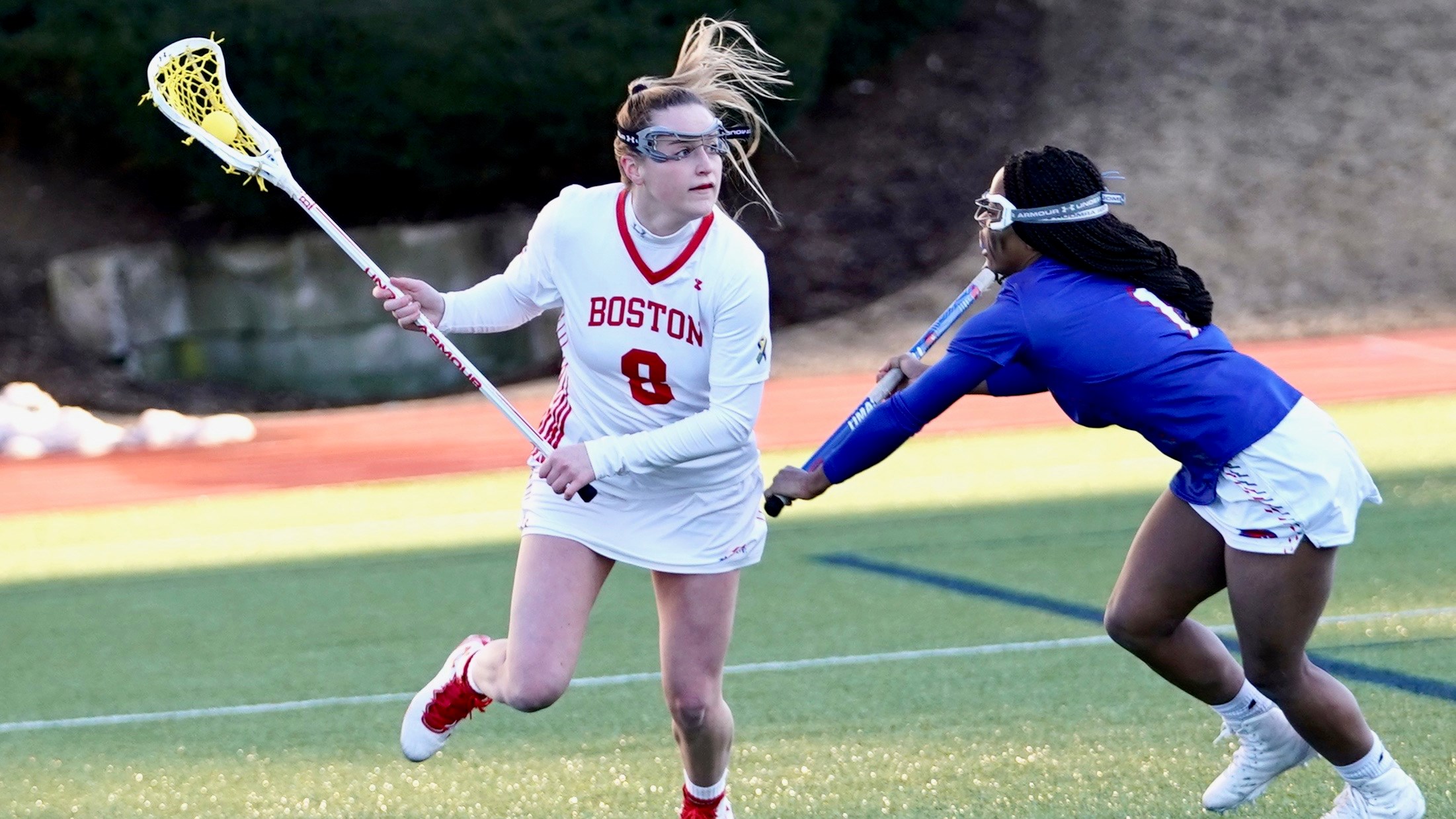
For anyone familiar with Conry's first public career, the method has a familiar geometry. Before commercial go-to-market work at Vercel, before conference floors and software demos, she was a lacrosse attacker whose defining statistic belonged to other people's goals. Across five Division I seasons at Boston University and the University of Denver, Conry recorded 200 assists. She finished with 291 points in 75 games. The arithmetic is revealing. More than two-thirds of those points arrived because she created the final pass.
The jacket in the basement
Conry grew up in Needham, Massachusetts, in a family with enough sporting history to make a lesser household insufferable. Her mother, Kate Connelly Conry, played soccer and lacrosse at Boston College and spent time with the United States women's lacrosse team. Her father, Joe, played both sports at Westfield State. Yet the family did not turn its past into wallpaper.
As a 17-year-old packing for a move, Conry found an old national-team jacket in the basement and called upstairs to ask her mother where it had come from. Until then, she had not known that part of the story. It is a lovely family detail: significant achievement, stored among the boxes, awaiting discovery rather than announcement.
Her own route into lacrosse was similarly free of mythology. She played hockey first, tried soccer and basketball, and did not settle on lacrosse until near the end of fifth grade. Asked later about children who seemed born with a stick in hand, she supplied the right amount of mischief.
I wish I could say that, because those kids are cool.Kailey Conry
Once the sport clicked, progress came quickly. At Needham High, Conry amassed 473 career points: 229 goals and 244 assists. She helped the lacrosse team win four straight Bay State Conference championships. She also started four years in field hockey, where Needham won three conference titles. By graduation, she had become a US Lacrosse All-American and the Bay State League MVP. The old family jacket had acquired competition.
A record book written in passes
Boston University put a number on Conry's instinct almost immediately. As a freshman in 2017, she set the program's single-season assists record with 54 and ranked second in the country at three assists per game. She also scored the overtime winner against Fairfield with 1:18 remaining, a useful reminder that a committed passer may still keep the final shot when the clock insists.
The honors accumulated: Inside Lacrosse All-Rookie Team, All-Patriot League Second Team, then consecutive first-team selections. She earned all-region recognition in each of her first three full seasons. Yet the clearest portrait remains the distribution. Her annual assist totals at BU were 54, 43, 55 and 14, with the final number coming from a 2020 season stopped after six games.
The road to 200
Assists by collegiate season
In 2019, she made the national lead her own. Conry averaged 3.67 assists per game, first in Division I, while posting 55 assists and 80 points. At Holy Cross in April, she delivered 10 assists and 13 total points, setting one BU single-game record and matching another. Ten assists in one afternoon requires technical control, certainly, but also a repeated decision to look up.
The word "vision" is used so often in business that it can lose its edges. On a lacrosse field, it is concrete. Twelve players move through a small, crowded area. Passing lanes open and close. A feeder must read defenders, anticipate a cutter and release the ball before certainty arrives. The assist records describe Conry's aptitude. They also describe her preference.
On April 17, 2019, Conry recorded 10 assists and 13 points against Holy Cross. Both figures reached the top of Boston University's single-game record book.
One more season, one round number
After four years at BU, Conry went west for a graduate season at Denver. The uniform changed from scarlet to crimson and gold; the role stayed legible. She appeared in all 18 games in 2021, scored 17 goals and supplied 34 assists. Denver won 16 consecutive games between its only two losses and reached the NCAA quarterfinals. Conry earned All-BIG EAST Second Team honors.
During Denver's first-round NCAA tournament win over Stanford, she handed out four assists, tied for the most by a Pioneer in an NCAA tournament game. One of them was the 200th of her college career. Round numbers can be arbitrary, but this one fit. Her final season closed the account with 200 acts of creation, exactly.
Leaves Needham as the school's career points leader.
Sets BU's season assists record and makes the national all-rookie team.
Leads Division I in assists per game.
Reaches 200 career assists during Denver's NCAA tournament run.
Works in commercial GTM for Vercel's installed customer base.
The work beyond the stat sheet
Records make a life look orderly. Conry's 55 assists in 2019 line up neatly beside 43 in 2018 and 34 at Denver in 2021. The less tidy work happened between the numbers. During her four years at Boston University, she took part in the Bloom Family Leadership Academy, a program for student-athletes. Over the same period, she volunteered as a coach and mentor with Harlem Lacrosse. Those commitments sat alongside practices, travel, classes and a psychology course of study.
Coaching asks a playmaker to slow down what once happened by instinct. A lane that appears obvious to an experienced player must be named, demonstrated and tried again. Mentoring adds another demand: attention without the convenience of a scoreboard. Conry's public record does not preserve those conversations, but it does establish that she returned to the work for four years.
There is also an appealing contradiction in her sporting profile. Conry was left-handed when she wrote and right-handed when she competed. She arrived at lacrosse after sampling hockey, soccer and basketball, then played field hockey throughout high school as well. Specialization came late enough to leave traces of other games: the spacing of basketball, the pace of hockey, the movement off the ball in soccer. Her own explanation was simpler. When lacrosse arrived, she said, "everything was just there."
The results could be dramatic, but her public voice tends toward the teammate. When colleagues move into new roles, her comments celebrate them. When her Vercel interaction drew praise, she redirected attention toward the customer's thoughtfulness. The pattern echoes the scorebook without needing to borrow its language: notice the contribution around you, and make it easier for good work to continue.
The useful thing comes first
Conry's move into technology did not arrive with the tidy narration that biographies sometimes impose after the fact. Public traces show her representing recruiting-technology company SourceWhale at a 2023 conference in Dallas. Her current public profile centers on Vercel's Frontend Cloud, AI Gateway, AI SDK, Sandbox, Workflows and v0. The vocabulary is technical; the job remains human. Someone is trying to accomplish something, and another person must understand the attempt well enough to help.
That is why the account of the stalled v0 user matters. Sales stories are usually polished until every edge shines. This one works because its central act is small and testable. Conry asked about the project. She returned with a functioning example. She then invited the right colleague into the conversation. There was no need for a fog of claims because the customer could see the idea working.
Always grateful when someone takes the time to share what they're working on - makes it so much easier to jump in and be helpful.Kailey Conry, responding to the customer story
The comment is revealing in its allocation of credit. Conry thanked the user for explaining the project thoughtfully. The exchange becomes collaborative rather than theatrical. In sport, the assister needs the scorer to complete the statistic. In good commercial work, the person asking for help also brings essential knowledge: the problem, the context, the reason the thing matters.
There is a temptation to turn every athlete's second career into a locker-room lesson about grit. Conry's record suggests a more particular inheritance. She spent years practicing attention at speed. She learned to value the move before the visible result. She developed a game in which her success appeared, quite literally, beside a teammate's name.
The continuity is modest enough to trust. A lacrosse assist and a customer solution are different things. Yet both begin with observation and end with another person better positioned than before. Conry's career has changed surfaces, cities and scoreboards. The question at its center has held steady: where can the next useful pass go?