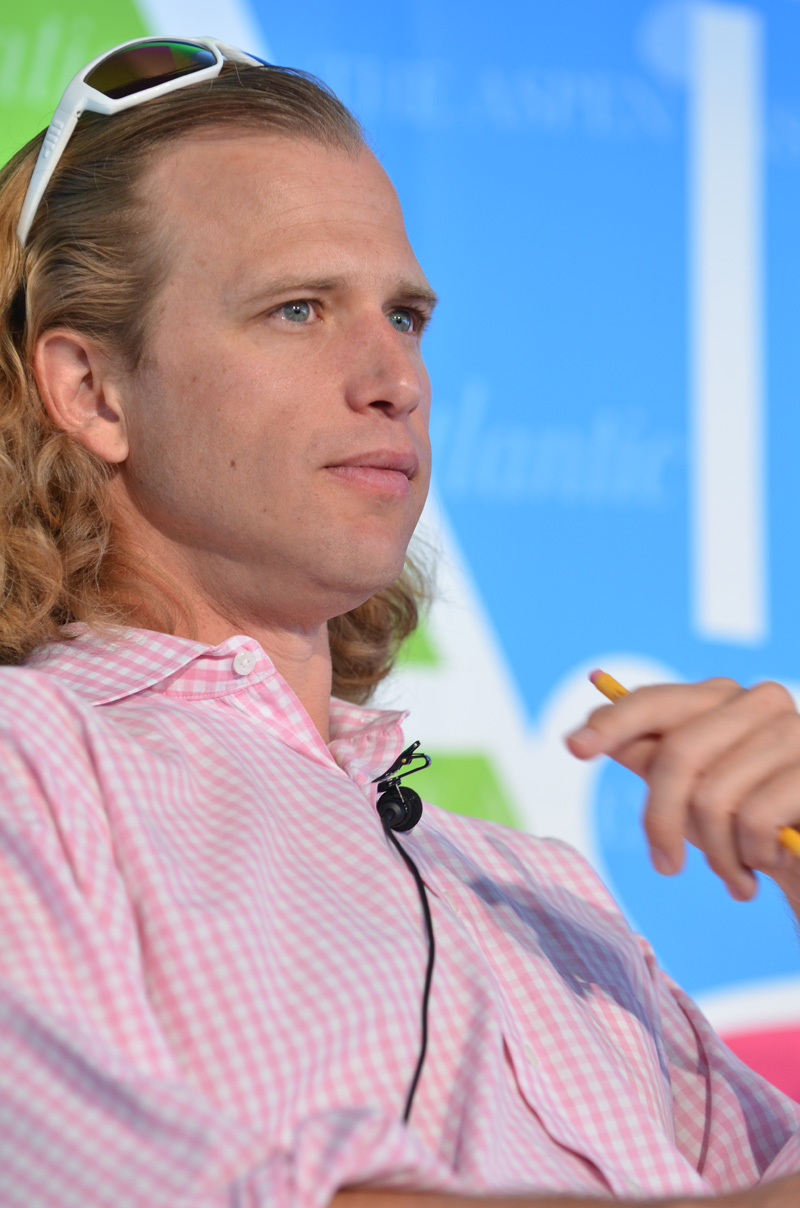
Most mornings, Justin Wolfers is doing the same thing: taking a number almost nobody understands and turning it into a sentence almost anybody can. The number might be a jobs report, an inflation print, or a betting-market odds line on the next election. The sentence usually ends up on the front of the New York Times, in a podcast feed, or fired across four social platforms at once.
He teaches economics and public policy at the University of Michigan's Gerald R. Ford School, and he is a senior fellow at the Peterson Institute for International Economics. But the titles undersell the job. Wolfers is, more than anything, a translator - someone who decided that the rich experience of our lives gets flattened into a single digit like GDP or the unemployment rate, and that someone ought to unflatten it for the public.
The translating runs through everything. With his partner, the economist Betsey Stevenson, he co-hosts Think Like an Economist, a podcast built on a simple promise: the same tools economists use to model markets can untangle a career dilemma, a financial knot, or a fight about who does the dishes. The two of them also wrote the textbooks - Principles of Microeconomics and Principles of Macroeconomics - that now teach the next round of students how to think the way he does.
And in 2026 he launched Platypus Economics, a Substack named, only half-jokingly, after the Australian creature that looks too strange to be real and turns out to be exactly that. It is a fitting mascot. Wolfers built a career on the idea that the strangest-looking claims in the data are often the true ones - if you bother to check.
He checks. His most famous fight is with the Easterlin Paradox, the comfortable old idea that beyond some point, money stops buying happiness. Wolfers and Stevenson went back to the data and found the opposite: a ten percent boost in income gives roughly the same bump in happiness everywhere, at every rung of the ladder, in rich countries and poor ones alike. His rallying cry through the whole argument: never confuse absence of evidence with evidence of absence.
That is the posture. Optimistic, but with footnotes. He describes himself, on Bluesky, as an economist willing to admit that the glass really is half full - a small act of rebellion in a profession that built its reputation on being called the dismal science.