An armored truck is an extravagant accessory for dinner. Justin Roberts and Brian Hassan were eating at a San Francisco restaurant when they noticed one delivering cash. The obvious question was what the restaurant needed it for. Customers were paying with cards. Why was money arriving in a vehicle designed to withstand an attack?
They asked the people working there: the server, the bartender, the manager. The cash was for tips. Diners could pay electronically, but the staff still expected to leave with their earnings at the end of the shift. Somewhere between the card reader and the restaurant door, modern payments had acquired a detour through an armored vehicle.
That exchange became the starting point for Kickfin, which Roberts co-founded with Hassan in 2017. Its premise was wonderfully specific: help hospitality employers send tip earnings directly to the bank accounts their employees already use. A worker could finish the shift and receive the money without a manager first having to assemble a small cash distribution operation.
The story suits Roberts because it begins with a question about somebody else’s working day. His public appearances return to the same practical concerns: how quickly a manager can get started, whether employees can see what they earned, and how much administrative work software actually removes. The truck attracted his attention. The people inside the restaurant supplied the business.
Card payment → Cash delivery → Count & divide → Staff
Calculate tips → Digital payout → Existing bank account
Before the restaurant, the payroll world
Roberts came to that table with experience in the machinery of employment. His career included KBC Bank Ireland and ADP before he co-founded BayPoint Benefits in 2007 and DoubleDesk Technologies in 2013. After DoubleDesk’s acquisition and renaming as Decisely in 2015, he served as executive vice president of operations and strategy. His education included organizational communication and human resources at California State University, Chico.
There is a family resemblance between those earlier businesses and Kickfin. They concern the ordinary arrangements that make a job function: administration, payment, the exchange between an employer and an employee. These are subjects that become fascinating very quickly when something goes wrong. A restaurant guest can admire the lighting indefinitely. The person serving the table has a more immediate interest in the closeout.
Hassan is both a longstanding business partner and a friend. In a public celebration of Kickfin’s Visa relationship in 2022, he described Roberts as his best friend and referred to building together after an earlier exit. That history gives the shared chief executive title some context. Their partnership predates the company now associated with their names; Kickfin was another business they chose to build together.
The bank account already belongs to the worker
Cash has a persuasive quality at the end of a shift: it is available. Replacing it with a promise to pay later can remove the very feature employees value. Roberts’s product had to preserve the timing while changing the delivery. Simply putting everything into a later payroll cycle would answer the restaurant’s administrative question while leaving the worker with a different problem.
Kickfin’s collaboration with Visa, announced in May 2022, made the payment route explicit. Employers could send payouts to existing bank accounts through eligible debit cards using Visa Direct. Availability depends on the receiving institution and region, a useful detail when discussing anything described as instant. The objective remained access after work, including outside conventional banking hours.
For Roberts, the destination matters along with the speed. His description of employee choice emphasizes receiving money in a preferred account without being tied to a third-party pay card. That is a modest sounding design choice with a human consequence: people can keep using the banking arrangements they have already chosen. Receiving a tip need not become an invitation to reorganize one’s financial life.
By 2019, Roberts and Hassan were already discussing cash management and digital disbursements publicly. The early proposition included hardware as well as software. That detail makes the later company more interesting: its history contains product development and revision, rather than a perfectly formed application appearing in one moment of inspiration beside the dinner table.
A founder with a one-day test
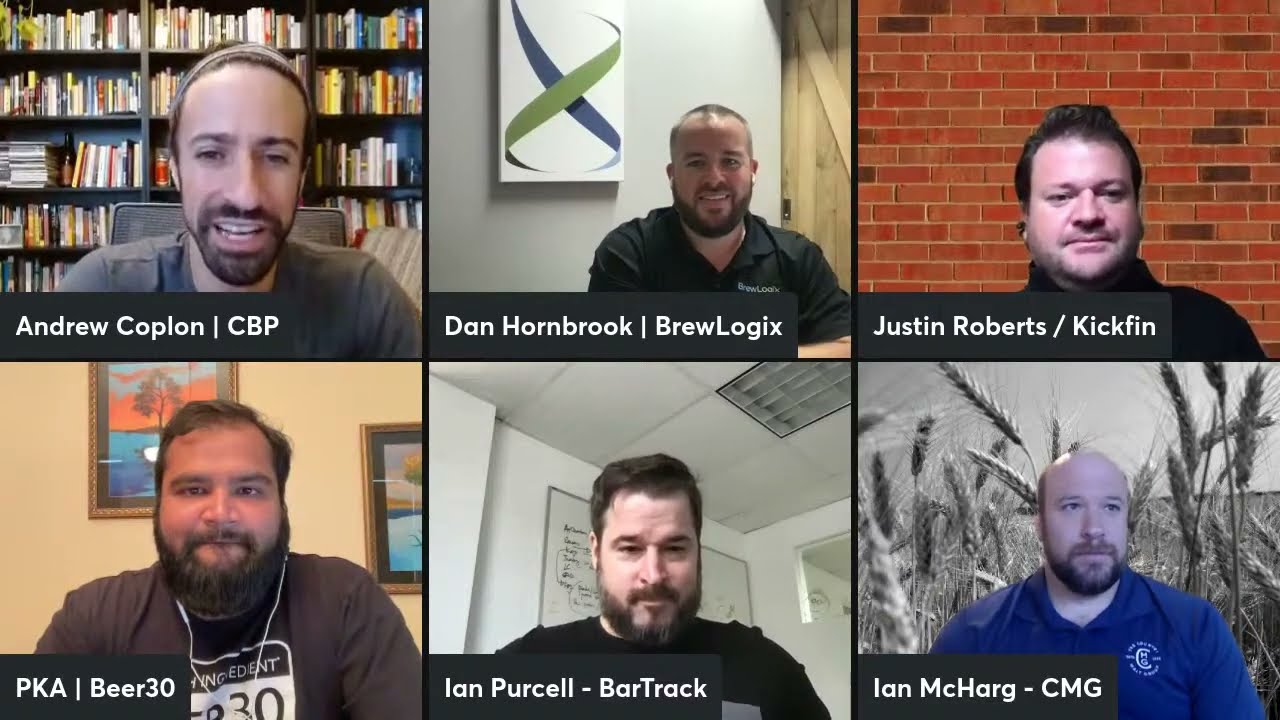
In a 2022 discussion with Craft Brew Professionals, Roberts gave his commercial ambitions a short deadline: a return on investment within 24 hours. He wanted operators to recognize savings in time, money and accounting work quickly. The standard was immediate usefulness, measured against the tasks a customer was already doing.
That is a bracing way to sell technology to a business with a shift to finish. Software demonstrations tend to occur in agreeable daylight, when every screen has a plausible answer. Restaurants also operate late, loudly and under pressure. A product intended for them has to survive the less photogenic part of the day, when somebody would quite reasonably like to go home.
The brewery discussion also showed Roberts’s interest in what payment data could do for employees. He talked about giving staff visibility into the relationship between service and tips. His point was that records of earnings could become useful feedback. A payment system, in that account, helps an operator explain a result as well as deliver it.
“We are always focused on a 24-hour ROI.”
Justin Roberts · Craft Brew Professionals panel, 2022
Then customers asked for the arithmetic
Roberts has described Kickfin’s original setup as deliberately minimal. The early goal was rapid deployment, sometimes in minutes, focused on removing physical cash payments. He later explained that customers wanted deeper connections to their existing systems and calculations built into the product. The request moved Kickfin further into the work that happens before a payout.
The distinction is easy to miss from outside a restaurant. Sending a sum of money and deciding how that sum should be divided are separate jobs. A pool may involve different roles, hours and sharing rules. If the payment becomes digital but the calculation remains a spreadsheet exercise, a considerable portion of the manager’s evening survives intact.
CRS Hospitality provides a concrete example. The Illinois group used Kickfin for payouts, then adopted its Toast integration for automated tip calculations. Chief operating officer Kevin Hildebrand described a business with approximately 500 employees and 15 concepts, where a centralized administrative team had to accommodate expansion. Its experience put the calculator, and the time it could return to managers, at the center of the case.
The company’s 2025 regional growth update listed direct integrations including Toast, SkyTab, Square, Heartland, RPOWER, PAR POS and Oracle MICROS. Each connection represents a practical constraint: the restaurant already runs on something. Roberts’s business has to fit into that working arrangement, with all its accumulated habits, rather than assume that an operator is waiting to start again.
His public work also includes a tip pooling webinar with operations executive Larisa Thomas, attorney Beth Schroeder and host Chip Klose. The discussion covered structures, communication and implementation. It is a revealing set of colleagues for a payments founder: the operational and human questions sit alongside the technical ones. A policy still needs to be understood by the people whose earnings it divides.
Growth, with the figures kept in their place
In June 2022, Kickfin announced a $6 million Series A led by Silverton Partners, with Acronym Venture Capital participating. Following a Loomis U.S.-led seed round, the announcement put total funding at $11 million at that point. The money supported the company’s expansion across hospitality. Roberts connected the growth to operators’ desire to take cash out of tip distribution.
Recognition followed in several forms. Kickfin received a Top 10 Payments Independent Software Vendor award from the Electronic Transactions Association in 2023. In 2024, it placed 65th in Deloitte’s Technology Fast 500, which recorded revenue growth of 2,144 percent for the ranking period. These are company milestones achieved under Roberts and Hassan’s joint leadership.
Inc.’s profile records appearances on the Inc. 5000 in 2024, 2025 and 2026. The sequence supplies evidence of sustained inclusion in a growth ranking, rather than a reason to confuse a company’s numbers with its founder’s personal fortune. The more useful question for this story is what happened inside the restaurants while that business grew.
Kickfin’s August 2026 update offers a specific direction of travel: payroll and human capital management platforms are embedding its API for restaurant customers. It also signals a further announcement planned for early 2027, without detailing it. The work is extending into the systems other businesses use to pay people. For Roberts, the original problem now reaches beyond a standalone tip payout screen.
Who gets to leave when the shift is over?
Roberts continues to frame his work around the restaurant employee experience. In April 2022, he joined a National Restaurant Association webinar with representatives from Visa, Earnin and Heartland to discuss faster payments and staff retention. The setting placed his particular product inside a larger operating question: what makes a restaurant a workable place to earn a living?
He has also emphasized the payments partnerships behind Kickfin. In a public endorsement of Ingo Payments, he credits that relationship with helping the company grow. That acknowledgment matters in a business where the visible product is a screen but the result depends on money actually arriving. The payment is the part an employee can check.
The armored truck makes a good opening because it is so disproportionate to the task. Paying a bartender should not require an automotive security specification. Yet the more durable part of Roberts’s story is the follow-through: asking why cash was arriving, keeping the end-of-shift timing, then adapting the product when customers wanted help with the calculations too.
There is plenty of spectacle available in restaurants already. A payment system has a different opportunity. It can make one part of the evening uneventful: the amount is clear, the account is familiar, the money arrives. Roberts’s founding question has grown into years of work on those details. The shift ends. The people who worked it should be able to leave.