Cybersecurity products tend to disappear when they work. The certificate renews. The right device connects. The wrong one does not. A policy engine makes a decision in the time it takes a person to blink, then returns to its natural habitat: somewhere behind the screen. This is excellent for the customer and awkward for the marketer. Jonathan Skinner has made a career of solving that awkwardness.
His subject is trust, but his craft is translation. Across channel roles at Symantec and Dropbox, then C-suite assignments at Sectigo, LogicGate, and now Portnox, Skinner has worked on products whose value is often easiest to appreciate after something goes wrong. His job has been to make the consequence legible before the incident, the failed audit, or the frantic password reset.
The public record offers little theater about his private life, and quite a lot about his operating life. It shows an executive who likes a measurable pipeline, a repeatable process, and language that a partner can carry into a customer conversation. He describes himself as commercially focused. Former colleagues describe an idea generator who connects big-picture strategy to daily execution and who is willing to challenge a familiar process. Both descriptions fit a career spent changing the packaging around complicated things.
Skinner graduated from Marymount University in 1999 with a bachelor's degree in communications. The choice of study looks almost too tidy in retrospect. His later resume crosses MCI WorldCom, Celestix Networks, Dropbox, and Symantec before reaching Comodo's certificate business. These were different corners of technology, but each demanded that a marketer understand not only the end customer but also the people between product and purchase. By 2014, he was running channel marketing programs at Symantec and serving on an industry advisory board. The channel teaches a bracing lesson: a message is only useful when somebody else can repeat it accurately.
Senior Manager of Channel Marketing Programs at Symantec and a member of the Channel Partners advisory board.
Director of Global Channel Marketing in Comodo's newly assembled channel and business development group.
CMO of the carved-out certificate authority business and leader of the global Sectigo brand launch.
Appointed CMO of LogicGate, with responsibility for global brand, growth, and pipeline.
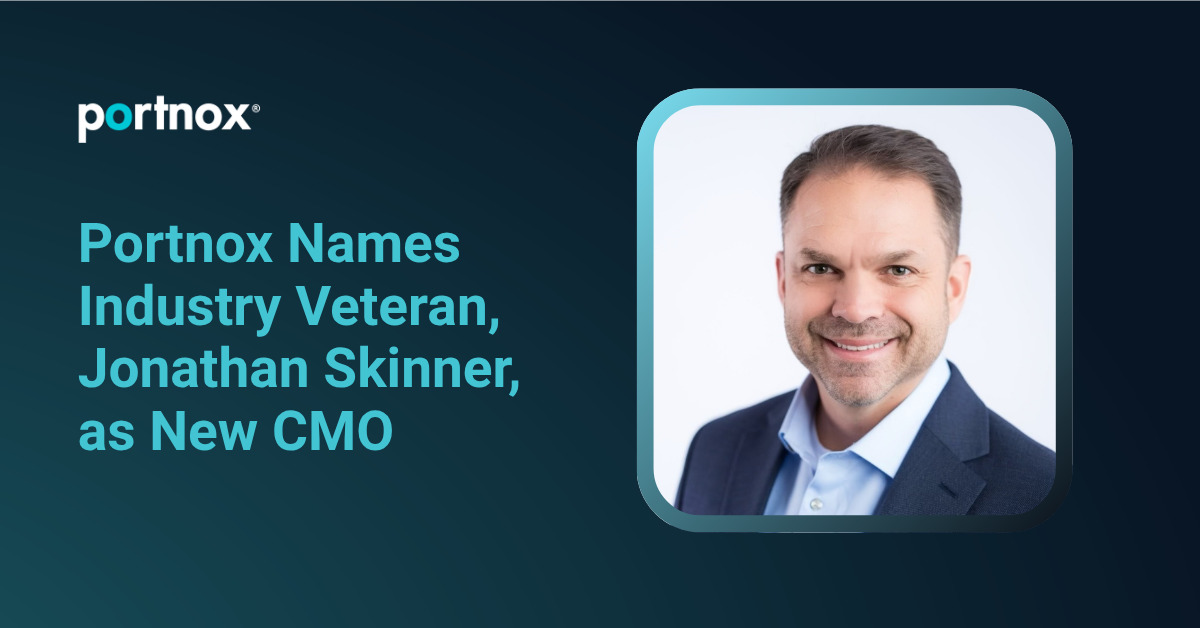
Joined Portnox to lead global marketing, positioning, and go-to-market execution.
A certificate authority needed an identity
The defining case study arrived after Comodo CA was carved out of the wider Comodo Group. A separation on paper did not instantly create a company in the minds of buyers. The certificate authority needed a name, a visual identity, its own systems, its own commerce experience, and a story broad enough to extend beyond the familiar SSL certificate.
Skinner became chief marketing officer during that transition. His initial marketing organization numbered two people. It grew to seven, supporting enterprise, small-business, and partner channels while Skinner also had responsibility for B2B e-commerce and inside sales. The work list was less a rebrand checklist than a small municipal budget: disentangle marketing technology and ordering systems from the former parent, build a corporate site and four commerce sites, remake sales material, hire agencies, launch campaigns, and give an international partner network something coherent to say.
Then the plan acquired company. An acquisition landed. An IoT security platform launched. The certificate business was trying to preserve a two-decade legacy while claiming a larger future in web security and digital identity. On November 1, 2018, the new name went public: Sectigo.
The clever part of a name is not the syllables. It is whether salespeople, partners, journalists, and customers can use it without a footnote. Skinner's team built the materials and demand engine around the launch. A 2019 award nomination credited the operation with more than 3,300 qualified leads after he became CMO. The number is useful because it pulls the work out of the mood-board realm. Here was a brand project with a sales queue attached.
Industry recognition followed twice in 2019: gold for Cybersecurity Marketer of the Year and gold for Marketing Professional of the Year. A second Cybersecurity Marketer of the Year gold arrived in 2022 after another repositioning, this time presenting Sectigo as certificate-authority agnostic and broadening its claim in certificate lifecycle management. Awards are tidy. The underlying work was untidy in the useful way: systems, staffing, language, and pipeline had to agree.
The GDPR war room changes the marketer
One of Skinner's more revealing stories begins with a task he first regarded as narrow. Legal needed marketing to review email practices for the arrival of the European Union's General Data Protection Regulation. Avoid unwanted messages, adjust a few rules, continue with the day. Except data has a habit of connecting rooms that an org chart keeps apart.
The assignment widened into how information was collected, processed, protected, and documented. Skinner spent weeks in what he called a GDPR “war room,” working across legal, corporate operations, and sales operations. The experience corrected his assumption that the larger issues belonged to somebody else. Marketing possessed data. Marketing made vendor and investment choices. Marketing therefore owned a piece of corporate risk.
This became more than a compliance lesson. Skinner began describing risk management as a team sport, closer to football than tennis: coordinated plays rather than requests lobbed across a net. The analogy is plain enough to survive an executive meeting, which may be the point. He argued that business leaders should know who owns risk management, learn how their team's work maps to it, and follow through as partners.
There is a fine symmetry in what happened next. In August 2023, LogicGate appointed him CMO. The company's product, Risk Cloud, was built to help enterprises organize governance, risk, and compliance. The marketer who had learned the worldview in a compliance scramble now had to take that worldview to market.
At LogicGate, Skinner's remit covered global presence, customer-focused campaigns, and data-driven growth. Portnox later described his tenure in firmer commercial terms: he repositioned LogicGate as an enterprise GRC provider and turned marketing into the primary driver of net-new pipeline. He also joined the company's public conversation about responsible AI, risk, and collaboration. At a 2025 customer event, he praised a keynote about film crews because the metaphor traveled: visible stars do their best work when the whole cast and crew align around one story.
Skinner permits one tiny rebellion against the stern executive portrait. In an essay about leadership routines and showing up for a team, he allowed that cereal for dinner is acceptable once in a while. His preference is Multi Grain Cheerios. Cybersecurity marketing contains multitudes, some of them in a bowl.
Now every machine wants a badge
Skinner arrived at Portnox in April 2026, at a moment when the noun “identity” was escaping its old boundaries. An employee has an identity. So does a laptop. Increasingly, so does a service account, workload, bot, and AI agent. Each can request access, handle information, and continue acting after the person who configured it has gone home.
Portnox sells cloud-delivered access control spanning network access control, zero trust network access, RADIUS, and TACACS+. This is a buffet of acronyms that explains the marketing problem rather well. Skinner's version begins with continuous, identity-driven trust and removes what he calls the “appliance tax” of legacy hardware. The promise is not a more decorative acronym. It is control that follows the identity across networks, applications, and infrastructure.
Those are Portnox metrics reported in July 2026, not a personal scorecard. They define the scale around Skinner's assignment. The company also said it blocks more than one million unauthorized access attempts daily. His task is to connect that operational volume to a category story that expands beyond a single login decision.
“The next phase of access security,” Skinner said, “will be defined by an organization's ability to continuously govern access across every identity and environment, not simply authenticate more connections.” The distinction is the current center of gravity. Authentication asks whether the credential works at the door. Continuous governance keeps asking whether the guest, device, or agent should remain inside as circumstances change.
His LinkedIn activity in late summer 2026 sharpened the AI version of the argument: give agents verifiable identities, limit privilege, verify continuously, and revoke access quickly when behavior drifts. It is recognizably the same translation job he has been doing since the channel-marketing years. A technical system needs a commercial sentence. A partner needs language that travels. A buyer needs to see the cost of leaving the machinery invisible.
The career line is unusually neat without being simple. At Symantec, Skinner worked where security products met the channel. At Sectigo, he helped a certificate authority acquire a distinct identity. At LogicGate, he marketed the discipline of seeing risk across a company. At Portnox, he is working on whether identities of every kind deserve access from one moment to the next.
Invisible infrastructure will remain a difficult protagonist. It has no smile, no origin story, and a regrettable fondness for capital letters. Skinner's record suggests a patient response: build the team, wire the systems, measure the pipeline, and find the sentence that lets everyone else understand the stakes. Trust may be invisible. The work required to explain it is not.