Three months is a short time in retail. It is barely enough to change the window display, sell through a seasonal color and discover that the seasonal color was, in fact, a mistake. For Jonathan Czaja, it was enough time to leave three chief executive jobs and return as the owner of all three companies.
In September 2025, Czaja announced that he was no longer running The Pro's Closet, Freebird and Jane.com. He and owner Yasser Elshair disagreed about the way forward, he said. The separation sounded final, even gracious. In December, Czaja launched Freewheel Capital and bought the businesses from Elshair Companies. The hired operator had become the person carrying the capital risk.
The bundle was charmingly improbable. The Pro's Closet sells inspected pre-owned bicycles. Freebird makes Western boots. Jane.com is an online marketplace for women's fashion and lifestyle goods. One imagines a cyclist arriving at a rodeo in a very nicely curated blouse. Czaja saw a less theatrical connection: strong brands, large customer bases and loyal audiences. The products were different; the operating questions rhymed.
“Bikes and boots are very different, but the similarities are strong brand followings, big customers and loyal audiences.”Jonathan Czaja
A career behind the buy button
Czaja's résumé reads like a guided tour of American commerce as it moved online. After earning an economics degree from Dartmouth in 2001, he worked in Merrill Lynch's private equity group. Harvard Business School followed. Then came Walmart.com, eBay and another Walmart e-commerce role. He was chief operating officer at Bonobos when selling trousers online still required a little evangelism, and he led North American small-business advertising at Facebook before the company took the name Meta.
At Stitch Fix, he moved from the screen to the physical choreography behind it. As vice president of operations, he oversaw more than 1,000 employees across five US facilities. Personal styling might begin with an algorithm, but it ends with inventory being picked, folded, boxed, shipped and sometimes returned. The romance of e-commerce has always depended on someone being exceptionally serious about cardboard.
Later roles widened the lens. Czaja became chief operating officer at Nurx, then COO and CFO at Skupos, a data platform serving convenience retailers. At Skupos he described the mission without ornamental language: help small store owners make more money. That plainness has carried into his public voice. He likes a metric, a practical verb and the occasional joke at his own expense. His LinkedIn biography begins by explaining that Czaja sounds like “China without the n.” It is a useful courtesy from someone whose surname may otherwise cause a conference host to discover religion.
The company that stopped
Czaja joined The Pro's Closet as chief executive in 2023. The company itself had begun in 2006 and grown into a prominent marketplace for higher-end used bicycles and gear. It also raised close to $100 million, much of it during the pandemic bicycle boom. When that extraordinary market cooled, a large cost structure remained. The original business closed in October 2024, and its assets were assigned for the benefit of creditors.
Elshair Companies bought the digital assets, including the trademarks, software, website and customer database. The reboot traded a roughly 130,000-square-foot former headquarters for a far smaller operation in Thornton. Czaja returned as CEO alongside experienced TPC hands: JP Gage in operations, Justin England in revenue and Jay Bargayo in marketing. The point was not to reconstruct the old machine. It was to preserve the useful parts and stop feeding the expensive ones.
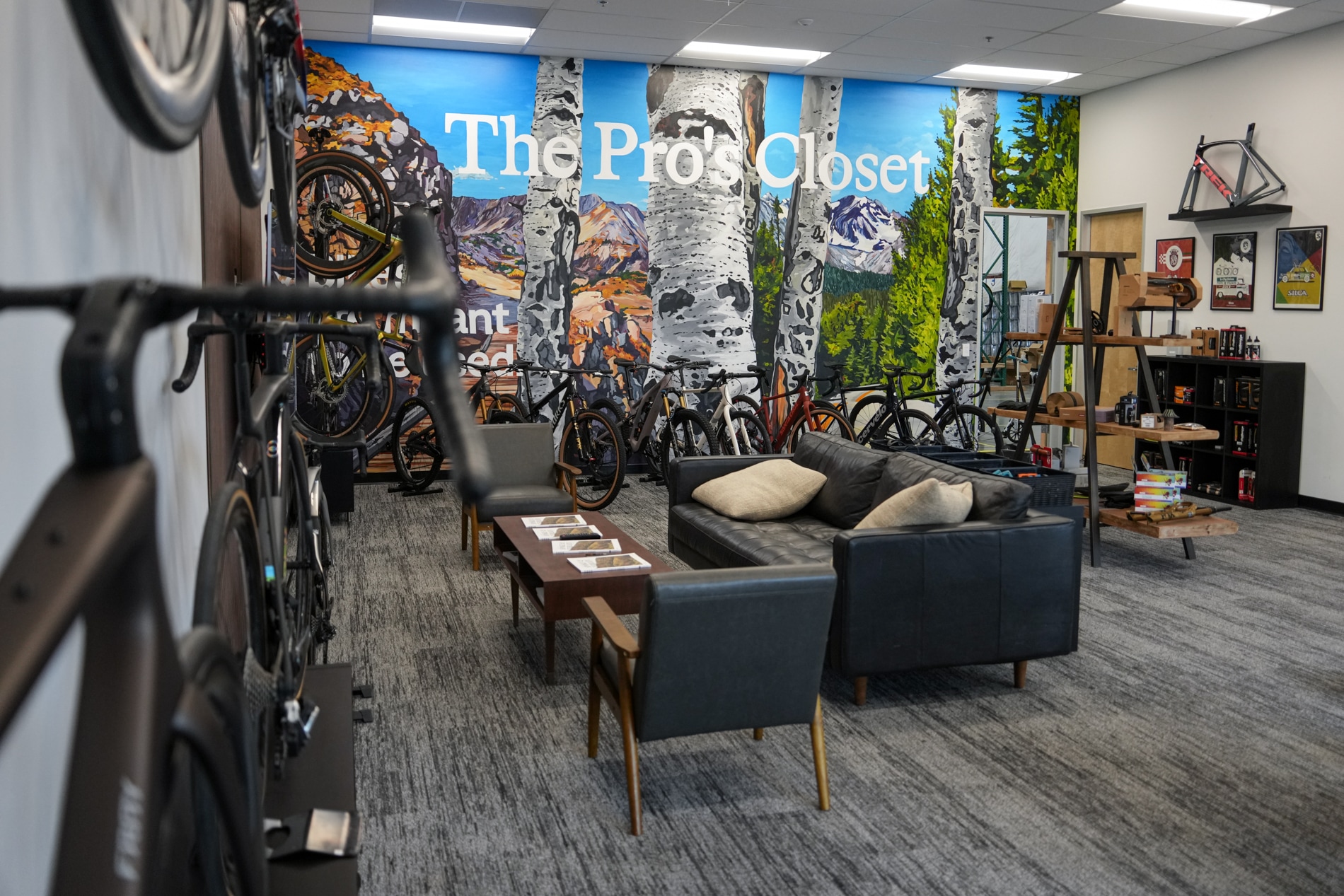
The new offer expanded beyond outright purchases. Sellers could consign bicycles for a potentially larger payout. Local shops could again use a dealer trade-in program. Every consigned bicycle would still be inspected, refurbished and certified. These details sound procedural because they are. They also solve the central problem of buying an expensive used machine online: strangers must agree about its condition without standing beside it.
On February 1, 2025, Czaja posted a single-day milestone: average sales of $55,000 meant profitability. It was the sort of disclosure most private-company lawyers prefer to meet only after it has escaped. His immediate reply supplied the adult supervision: “Now we just have to do it for 364 more days.” In that sentence lives the entire turnaround business. A good day is encouraging. Repetition pays the invoices.
Leaving, then buying the map
The Pro's Closet was only one part of Elshair's emerging retail collection. Jane.com had been acquired out of receivership. Freebird, the Denver boot brand, came later. Czaja was asked to lead all three. By September, that arrangement had broken on a question of direction. He did not publicly describe the disagreement in detail. He simply said that he and Elshair had parted ways and praised the teams he was leaving.
Then came the purchase. Freewheel Capital acquired all three brands on December 4, 2025, for undisclosed terms. Czaja framed the return as a homecoming. He already knew the cultures, the customers and the people. The first phase, under Elshair, had been about stabilization. Ownership would begin a slower movement toward growth.
The thesis is a balancing act. Finance, human resources, marketing and technology can sit under one umbrella, saving each small company from rebuilding the same backstage departments. Product judgment stays with specialists inside the brands. A shared spreadsheet can tell you the cost of a bicycle derailleur or a purple suede boot, but it cannot tell you why a devoted customer wants either one. Centralization works only if it knows where to stop.
Czaja has said the companies' earlier financial difficulties were separate from the health of their brands. That distinction is the wager, not a proven conclusion. The Pro's Closet produced $12 million in sales during 2025, according to its revenue chief, with an ambition to double that in 2026. Freebird brought a base of more than 850,000 customers, by Czaja's account. Jane brought its own marketplace community. Affection is present. The job is to turn it into durable economics.
Scrappy, with giant scissors
Turnaround executives are often portrayed as severe people carrying binders. Czaja's public persona is lighter on ceremony. At TPC's Thornton ribbon cutting, he celebrated the giant scissors as a completed life goal. He shared a team portrait of “bike nerds with matching mechanic shirts.” When The Pro's Closet and Freebird invented a Western-inspired clipless cowboy boot for April Fools' Day, he solemnly praised the performance advantage of python leather. A portfolio synergy had finally found its natural form, provided nobody tried to pedal in it.
The jokes matter because retail brands live partly in tone. So does the credit he gives colleagues. His acquisition announcement thanked Elshair for the stabilization period and addressed the teams directly. The language was not conquest. It was continuity: back to work, rebuild patiently, do the next useful thing.
“We’ve been given a rare opportunity to reboot this iconic brand, and we look forward to preserving and enhancing this business for everyone who shares our passion for cycling.”Jonathan Czaja on The Pro's Closet 2.0
His stated acquisition preference also narrows the map. Ideally, he wants brands with a Denver presence. Local proximity makes the operating model tangible: leaders can visit warehouses, stores and teams rather than observing everything through a dashboard. The Pro's Closet's Thornton floor, where bicycles stand in orderly ranks, is more than scenery. It is where a theory about trust, inventory and cost either works or squeaks.
There is no tidy ending yet. Freewheel Capital is young. Three companies with difficult recent histories remain three difficult companies, even when their customers care. Czaja's story is compelling because it has crossed from advice to consequence. He can no longer merely recommend patience, discipline or a smaller footprint. He owns the result.
That may be the cleanest expression of an operator's ambition. After a career spent improving somebody else's machinery, Czaja has bought the workshop. The signs over the doors say bicycles, boots and fashion. Behind them, the work is familiar: protect the trust, mind the cash, listen to the people who know the product, and make one good day repeat itself 364 more times.