Jon Foss asked four boys to put their faces in the water. All four declined. A competitive coach had reached the edge of his expertise, and the children had barely got wet. They were beginners; the instruction assumed a comfort they had yet to acquire. The future of his swim school depended on what he did with their answer.
It is a pleasingly awkward beginning for a business devoted to teaching. The teacher arrives with knowledge. The pupils supply the problem. In the Fosses’ recollection of that first class, the refusal required a different collection of tricks and techniques. Knowing how to swim well had brought Jon to the pool. Learning how to persuade a beginner to try would keep him there.
In March 1993, Jon and his wife, Susan, started Foss Swim School with twelve students in an apartment pool. The arrangement was modest enough to make the eventual purpose-built schools seem improbable. Yet the problem contained the larger project: take something an accomplished swimmer does with apparent ease, and find a beginning a child can actually use.
What a coach carries forward
Foss had spent years inside competitive swimming. At St. Olaf College, where he belonged to the class of 1987, he swam under Dave Hauck from 1983 to 1987. He described himself as an All-American and captain of the men’s swim team. After college, he worked in Minneapolis and coached in the evenings, applying his science background to a training system he called KADS.
His recollection of Hauck gives the technical story a human dimension. Foss remembered a coach whose attention made an athlete feel important. He described the motivation that came from being treated with such commitment. The detail is revealing because swimming instruction involves an uneven exchange: one person already knows what the movement should feel like; the other is still trying to imagine it.
The coach has to cross that distance. A diagram can show an arm position. A patient teacher has to help someone attempt it, then attempt it again. Hauck’s example offers a way to read Foss’s later interest in the relationship between teacher and learner, alongside his appetite for breaking technique into parts.
“The goal is to teach swimming as a life skill.”
Jon Foss
The curriculum Foss developed began with the finished stroke in mind. He worked backward, separating accomplished swimming into smaller motions and skills. That is an exacting task. An expert’s fluency can conceal the number of decisions a beginner must make. The teacher has to slow the action down enough to see its components without making the lesson feel like an inventory.
At Foss, those components became a progression. The school groups students by age as well as ability, keeps teachers and students together through a quarter, and requires repeated command of a skill before advancement. A successful attempt is welcome; a dependable skill takes more work. For a child, that can mean returning to the same level while the movements become familiar.
- 01Laughter
- 02Learning
- 03Confidence
- 04Mastery
Susan puts laughter first
Susan supplied the school’s credo, placing laughter before learning, confidence and mastery. The order gives the business a useful discipline. Play has a job to do. A child who enjoys the encounter has a reason to participate; a child who participates has more opportunities to practice. The seriousness of the aim does not require a solemn face at the pool’s edge.
Her early responsibilities were on the dry side: marketing, registration and enrollment, handled with paper forms and an answering machine. Jon’s teaching and Susan’s organization belonged to the same enterprise from the start. A lesson needs a learner, but it also needs the family to know where to come and when. The paperwork rarely gets applause. It still has to work.
Over time, the school made the setting more comfortable for families as well as students. Private changing areas, places to watch and warm teaching pools became part of the offering. In Susan’s account, parents have a place in the learning process. They can see the work, offer encouragement and talk with teachers. Progress becomes something a family can observe rather than a promise made at registration.
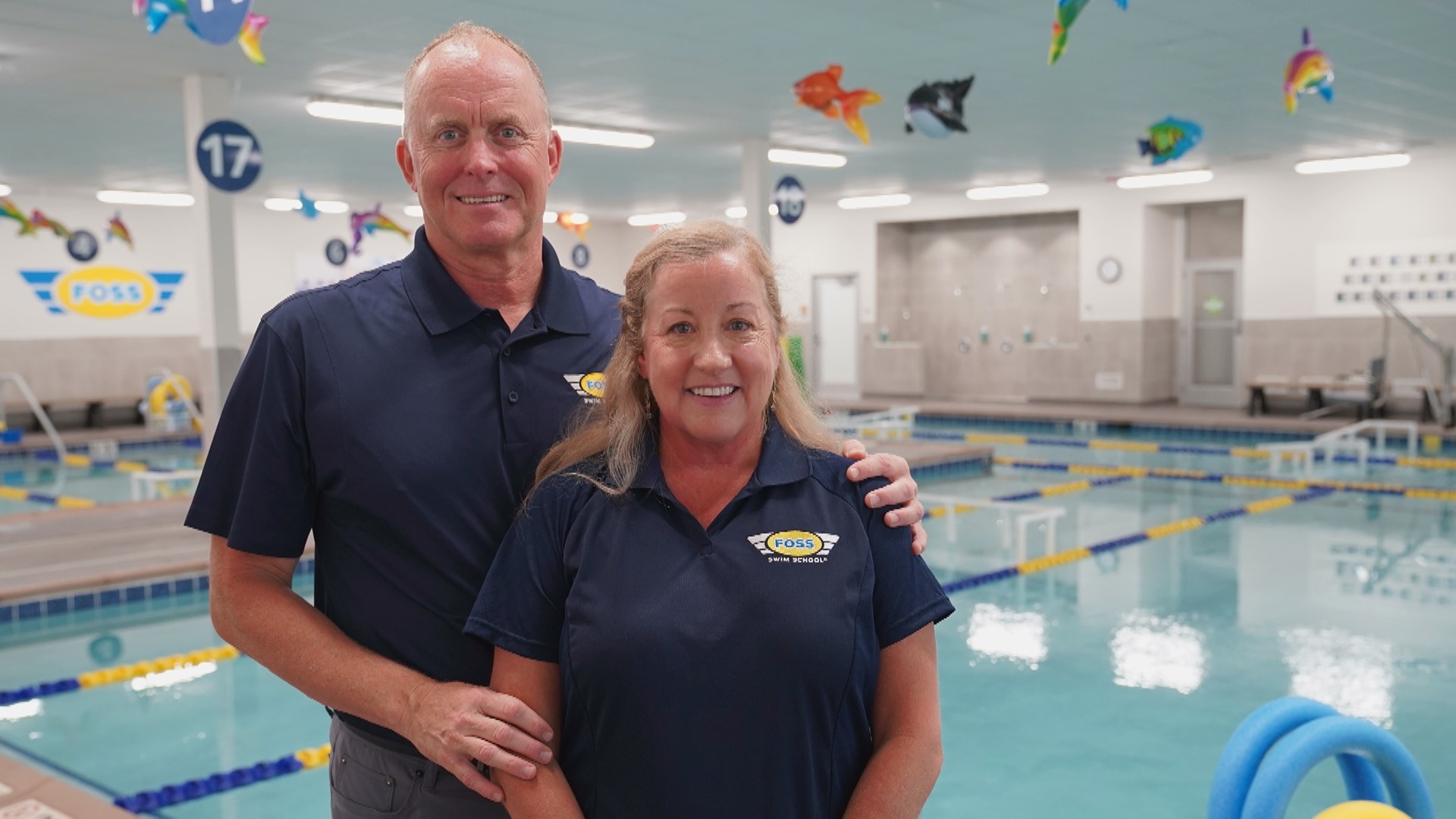
The pool becomes part of the lesson
Jon’s attention eventually extended from the swimmer to the building. He began designing pools in 1994. Teaching stations, adjustable lane arrangements and places where young swimmers can pause all became practical questions. The water was the workplace; its dimensions could help determine how much of a lesson a student spent moving.
He wanted pools that supported continuing practice and close contact between teacher and student. A lane suited to one age or skill level might be a poor fit for another. The task was to arrange the space so that children could work on the intended distance and movement, with appropriate support nearby. Architecture acquired a place in the curriculum.
For a coach trained to scrutinize technique, this was an enlargement of the same habit. Follow the awkwardness back to its cause. Is the swimmer being asked to cover the wrong distance? Does the setup create unnecessary waiting? The building carries some of the teaching burden before an instructor gives the next direction.
The financial side required its own inventions. In 2014, a sale-leaseback of the Maple Grove center released money for further expansion. The transaction involved a property the school could continue occupying while capital moved into the next stage of the business. Teaching expertise had led Foss into a set of decisions few people associate with a swimming lesson: property ownership, leases and the cost of another location.
“We’re not going to grow past our quality.”
Jon Foss, 2014
The method has to travel
A growing school raises a stubborn question for a founder who loves teaching. Other people will deliver most of the lessons. Foss’s observations have to become instructions another teacher can understand, practice and use with a different child. The method needs enough structure to hold together and enough room for a human encounter.
Susan’s account of the staff culture makes that balance explicit. Training and cross training prepare people for the work. An ability to engage children matters in hiring. Teachers can keep learning themselves. Her description leaves room for schools to develop their own culture within a shared organization, with common systems supporting the effort.
The company has chosen to operate its schools rather than franchise them. That choice fits a concern running through Foss’s career: how to keep the experience consistent when the founder is elsewhere. Teacher preparation, parent feedback and a shared curriculum become the means by which an idea travels. The familiar name above a pool has to correspond to something recognizable inside it.
Foss has also considered what customers carry away emotionally. In a 2016 statement, he described an unseen exchange within a purchase: people remember how they were treated alongside what they received. Applied to a swim school, the observation reaches beyond the measurable skill. A family remembers the way the lesson felt, including the attention given to its child.
An Olympian remembers the beginning
One former pupil gave that early instruction an unusually visible afterlife. Regan Smith attended Foss Swim School with her older sister, Brenna, between the ages of five and seven. In 2022, the Olympic swimmer entered a three-year spokesperson partnership with the school. Jon had been one of her earliest instructors.
The connection offered the pleasure of a teacher seeing what came later. It also drew attention back to a stage of athletic development that usually lacks an audience. Before the international competition come the first lessons, the small corrections and the experience of learning to enjoy the water. Smith’s return connected those beginnings with a later career without making them the whole explanation for it.
There are other destinations for the curriculum. The school’s Swim Stronger program develops the four competitive strokes and works toward continuous freestyle swimming over 300 yards. It can prepare students for a team or support their recreational swimming. Foss’s competitive background remains present, but the work has room for people whose ambitions extend to enjoying a swim.
He has pursued the beginner’s experience on the page, too. His children’s book, The Oxenforders Begin to Swim, introduced in 2021, follows a family’s first encounters with swimming. Jeremy Wells supplied the illustrations. A storybook lets the subject arrive before the lesson does, in a setting where a child can turn back a page as often as needed.
More people at the starting line
In 2021, Jon and Susan promoted Craig O’Halloran to CEO. They later included the handoff among their memorable moments from thirty years of running the school. Jon continued as chairman. The transition extended a process already familiar from teaching: prepare other people to carry responsibility, then let them do the work.
Access became another part of the expanding operation. In January 2025, Foss spoke for the school as it announced a partnership with Every Child A Swimmer to offer discounted lessons. The school’s year-end account recorded four new Colorado locations and Learn to Swim scholarships for 880 families through its scholarship partners. More locations and more accessible lessons address different obstacles to the same first visit.
Foss’s career keeps returning to that visit. An accomplished swimmer has a stroke to analyze. A founder has a school to organize. A beginner has the next small thing to try. The work begins when the teacher takes that small thing seriously enough to make it possible.
Keep swimming
More from Jon, Susan and the school.