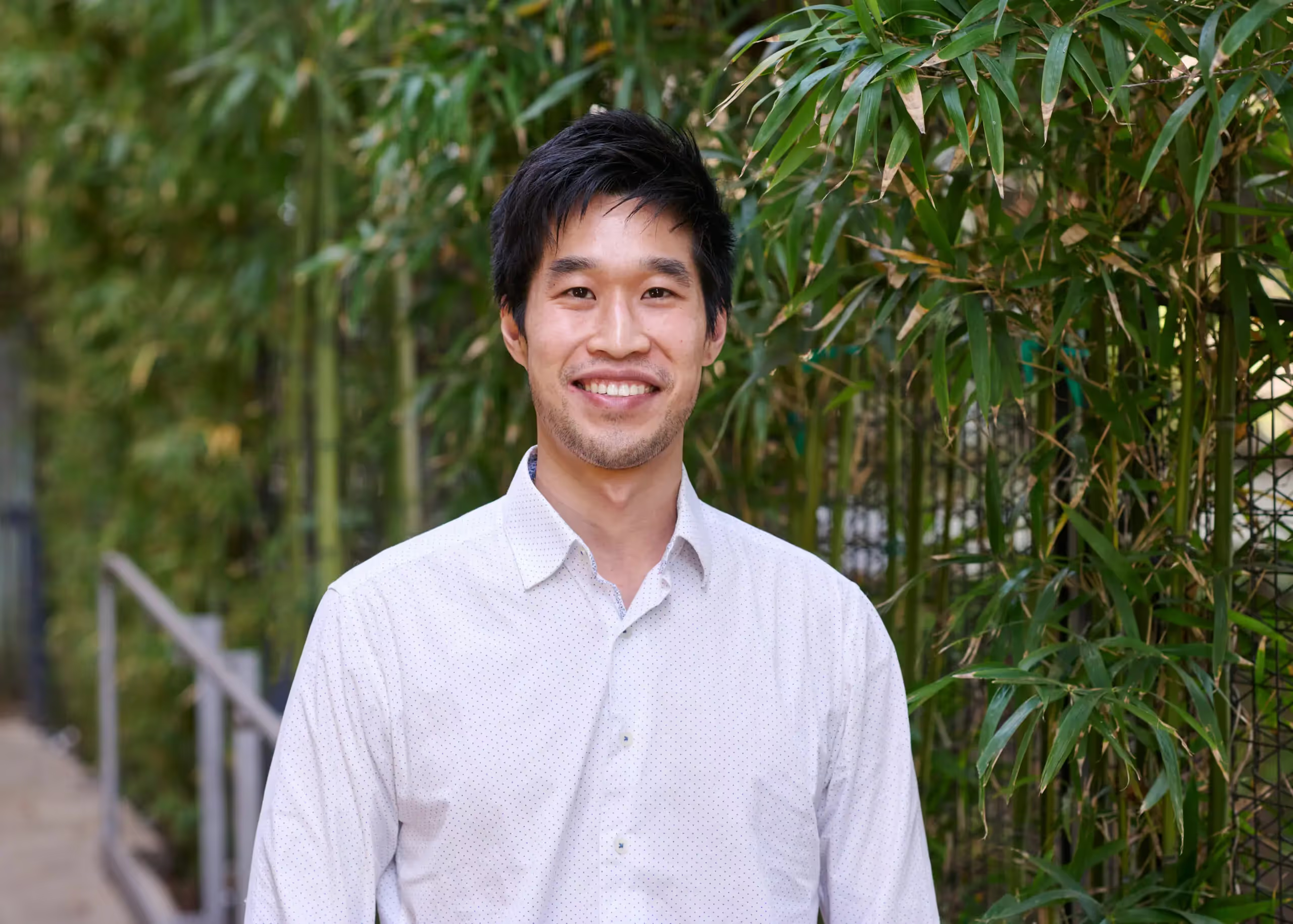
Jon Chu shows up before the party starts. He was at Palantir when the company had 200 people and watched it balloon to 1,800. He built Docker's enterprise division before most enterprises knew they needed containers. He ran Core Machine Learning at Opendoor before the company went public. Now he writes checks at Khosla Ventures before the companies are obvious.
The pattern isn't luck. It's a specific kind of taste - the kind that comes from having actually built the thing at every layer of the stack. Chu graduated from Carnegie Mellon with a computer science degree and honors, then went straight into Palantir's early engineering team. He wasn't there for the prestige. He was there because Palantir was, at the time, genuinely weird - a company trying to do something with data that nobody had quite figured out yet.
Jon Chu's official Khosla Ventures bio lists "2 international speeding tickets" among his professional achievements. Right there alongside Palantir, Docker, and two IPOs. It's either the best joke in venture capital or the most honest self-assessment in the industry. Probably both.
After Palantir came a brief stop at Microsoft, then in 2012 he did what many engineers say they'll do and never do: he started a company. Koality (KoalityCode) was a software testing platform. By 2014, he had sold it to Docker. Not a quiet acqui-hire - he stayed and built Docker's entire enterprise business from scratch. Principal Product Manager. Enterprise Group Lead. He turned a developer tool beloved by engineers into a product that Fortune 500 companies would actually pay for. That is a different skill entirely.
Machine learning infrastructure is boring to most people. That's precisely where the $10B companies hide.
- Jon Chu, investment thesis in practiceIn 2017, Chu moved to Opendoor - a company reimagining how houses are bought and sold using data. He wasn't there to write landing page copy. He ran Head of Engineering for Core Machine Learning, then pivoted to Head of Product for Growth. By 2020, Opendoor was public on NASDAQ. That's two IPOs now, both from the inside, both in functions that actually move the needle.
From Opendoor, he went to Facebook - which had just become Meta and was spending billions on VR and ML. Chu led international engineering organizations across both. Then in May 2023, he made the move that everyone who has spent a decade at the frontier of tech eventually considers: he went to the other side of the table. Khosla Ventures made him a Partner.
What He Actually Bets On
Chu's investment thesis isn't complicated to state and is very hard to execute: back machine learning infrastructure, enterprise applications, and developer tools at the earliest possible moment. The investment range runs from $200K to $30M, with a sweet spot at $4M - the size where a company is real but not yet obvious to the consensus.
Look at the portfolio. Sakana.ai - a research lab building foundation models using nature-inspired intelligence, backed at seed. Loft Labs - virtual Kubernetes clusters, a $24M Series A where Chu took a board seat. Ollama - the tool that made running local AI models accessible to developers everywhere. Cluely. Runlayer. And Bun - the JavaScript runtime he backed in a Series A that Anthropic eventually acquired.
Chu led Bun's Series A. Bun is a JavaScript runtime built for speed - not a glamorous category, not a consumer app, not an obvious billion-dollar story. Then Anthropic acquired it. That's what it looks like when an engineer-investor reads the infrastructure roadmap correctly.
How He Works With Founders
Chu is described as deeply hands-on with portfolio companies - the kind of investor who will help with go-to-market strategy, recruiting, and team scaling rather than just attending board meetings and sending emails. That's not a sales pitch. It's what happens when someone has actually done every job they're advising on.
He also runs an AngelList syndicate - a vehicle that lets other investors co-invest alongside him. He writes for TechCrunch. He judged TechCrunch Disrupt in 2025. He held an AMA on Luma for founders wanting direct access. The pattern is someone who thinks about information flow and founder access as seriously as he thinks about deal flow.
The Career in Full
The conventional reading of Jon Chu's career is: engineer becomes founder, founder gets acquired, operator goes big company, big company executive becomes VC. That narrative exists and it's accurate. But the more interesting thread is the consistent choice to be at the place where something new is being figured out - before the playbook exists. Palantir before data analytics was a category. Docker before containers were mainstream. Opendoor before algorithmic real estate was a thing. Khosla before the current AI infrastructure wave fully crested.
In 2024, Business Insider named him one of 45 rising stars of the venture capital industry. The timing makes sense. The AI infrastructure investments he started making in 2023 are beginning to prove out. But Chu has been positioning for this moment since he wrote his first line of code at Palantir.
Very involved with portfolio companies - helps with GTM, recruiting, and team scaling.
- Jon Chu, Khosla VenturesJon Chu talks about why he led Loft Labs' $24M Series A and what he looks for in infrastructure bets.
Watch on YouTube