John Kao went looking for a business lesson in a movie about sneakers. In a 2023 post about Air, the film about Nike's pursuit of Michael Jordan, he picked out the willingness to make a consequential bet. Then he brought the subject back to his own job: helping people imagine what might be possible, and keeping the company's purpose close to its decisions. A founder watching a film about another company's gamble is hardly unusual. The interesting part is what Kao chose to take home.
He described his responsibility as helping colleagues “think differently.” There was no claim that a cinema ticket had supplied a strategy. His attention was on the people who would have to carry one out. For an executive whose working life includes investment banking, acquisitions, software and a public listing, that emphasis is revealing. Kao knows the financial machinery. He keeps returning to the question of what makes the people inside it want to do the work.
Today he is founder, chairman and CEO of Alignment Health, based in Orange, California. His career has reached the stage at which a biography can become an inventory of titles. Yet the more engaging account runs through the smaller things: the executives he chooses to interview, the customer comments he reads to employees, a cycling trip he still remembers, and the partners he names when someone hands him an award.
The finance graduate who kept changing seats
Kao graduated from Santa Clara University in 1983 and earned his MBA at UCLA Anderson in 1987. At Anderson, he was recognized as a Venture Capital Fellow. Those credentials established a financial foundation for a career that would move repeatedly between transactions and operations. The progression matters because founding Alignment in 2013 came after years spent inside other organizations. He arrived with experience of how companies are financed, bought, combined and managed.
His earlier work included investment banking at BancAmerica Securities and mergers and acquisitions at FHP International. At PacifiCare, he served as chief financial officer of Secure Horizons USA and as president and CEO of the Ventures Division. Later came an executive vice president role at the TriZetto Group. The job titles crossed several kinds of responsibility: finding capital, assessing businesses, overseeing established operations and working in technology.
There is a particular education in moving between those seats. A deal has a closing date; running the resulting organization has a calendar that keeps going. Kao's résumé places him on both sides of that divide. It also helps explain why his later public remarks move comfortably between company purpose and execution. The language of values sits alongside an acquaintance with budgets, corporate development and the unglamorous work of keeping departments moving together.
Five years inside the machinery
In 2006, Kao and his partners acquired CareMore with CCMP Capital Partners. He became president of CareMore Medical Enterprises, the management company overseeing the group. His responsibilities included corporate finance, corporate development, new markets, information technology, real estate and human resources. It is a list with very little room for ceremonial leadership. Someone has to work out where the next office goes, how it operates and who gets hired to run it.
WellPoint acquired CareMore in August 2011. Two years later, Kao founded Alignment. That sequence gives the founding date some weight. By then, he had worked through an acquisition as a buyer, managed a business with multiple functions, and seen it acquired again. His next venture emerged from an established operating career. The familiar founder photograph, standing alone beside a company name, leaves quite a lot of other desks out of the picture.
He would later be explicit about the people beside him. Accepting recognition as Founder of the Year in 2025, he named Don Furman, Ken Kim, Joseph Konowiecki and Dawn Maroney as his partners in starting the company. An award offers an easy opportunity to edit a collective undertaking into a solo performance. Kao put the other names back in. It was a compact way to tell the company's beginning without assigning himself every part.
- 1983Santa Clara graduate
- 1987UCLA Anderson MBA
- 2006CareMore acquisition
- 2013Alignment founded
- 2021Nasdaq listing
- 2026Chairman and CEO
The chief executive asks the questions
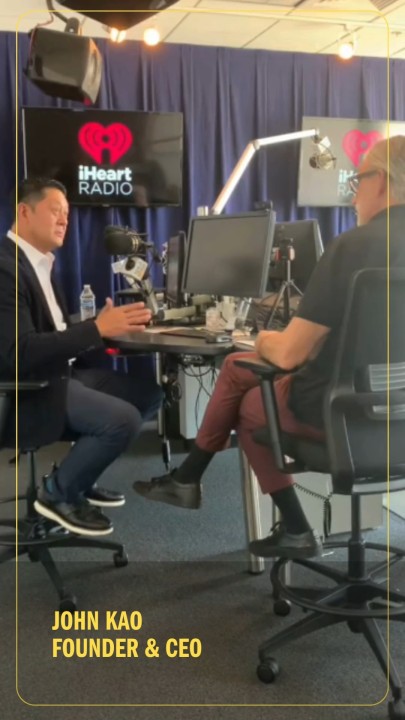
In October 2022, Kao began publishing a series called Servant Leadership at Work. The first guest was Andrew Parker, founder and CEO of Papa. Kao framed the series around what leading an organization with a mission means in practical terms. He asked about the meaning of servant leadership, how it changes over time and how it appears outside the office. The format gave another executive room to explain his own working habits.
Later conversations included Cheryl Dorsey of Echoing Green, Fidji Simo, then CEO and chair of Instacart, and Sheila Lirio Marcelo, founder of Care.com and co-founder of Ohai.ai. The range is interesting. Kao's guests brought experience from consumer businesses, entrepreneurship and social enterprise. He was taking a recurring management question beyond his own company's walls. A chief executive can spend a great deal of time being asked what he thinks. Here he took the other seat.
His August 2024 exchange with Marcelo made that choice particularly useful. He asked about her career, the experience of being underestimated, and the relationship between professional purpose and life outside work. She discussed learning to combine demanding expectations with greater empathy for colleagues. These were her experiences, offered in response to his questions. The distinction matters: Kao's contribution was to choose a subject and make space for an answer that could complicate a tidy leadership slogan.
“Integrity is central to who we are.”
John Kao, message to employees in Alignment's code of conduct
Culture, with the microphone switched on
The public interview series has a counterpart inside the company. Alignment's 2022 reporting described monthly CEO Connection meetings with smaller groups of leaders, along with employee surveys and regular company meetings. These are ordinary organizational devices, which is part of their interest. A philosophy has a better chance of affecting daily work when there is a recurring appointment attached to it. The calendar can be a surprisingly stern editor of executive intentions.
In a Thanksgiving post in 2023, Kao described sharing customer feedback at an all-employee meeting. The comments he selected praised being able to reach a real person and get answers. He paired that feedback with thanks to a workforce of more than 1,400 employees at the time. That was a historical snapshot, rather than a present headcount. It showed what he wanted the room to hear: the experience of the person on the other end of a call.
His message introducing the company's code of conduct supplies a firmer register. He ties the organization's reputation to employees' judgment, transparency and willingness to speak up. The emphasis makes service a matter of behavior and accountability. Friendly language has its uses, but the practical question is whether people can raise a concern and keep a promise. Kao's stated expectations put those obligations into the same discussion as purpose.
A bell, and the morning after
Alignment went public on March 26, 2021, and marked the occasion with a Nasdaq closing-bell ceremony. The offering raised approximately $490 million. Its shares fell on their first trading day, then rebounded the following week. It was an efficient introduction to the public market's capacity to offer several opinions in quick succession. The bell makes a pleasing photograph; the changing price supplies a less cooperative caption.
Kao's response at the time was measured. He cautioned against treating a company's share price at any single moment as an adequate judgment of the business. It was a useful statement of his preferred time horizon. Going public added outside scrutiny and a continually updated market verdict to an organization he had founded eight years earlier. His argument asked observers to consider the business across time, even as the ticker invited them to look again immediately.
Recognition followed along a different timetable. The Orange County Business Journal honored him as Innovator of the Year in 2019 and as a sector Businessperson of the Year in 2021. In August 2025, LA Times Studios named him Founder of the Year at its Orange County executive awards, selecting him from a field of more than 120 nominees across nine categories. The honors mark different stages: building something, taking it public, and remaining responsible for it afterward.
The trip that ended on September 10
One of Kao's more personal public recollections starts far from a boardroom. In 2001, he and a friend set out on a long-distance bicycle ride from the Golden Gate Bridge to Southern California. They arrived on the evening of September 10. His friend planned to fly home the next day. Instead, they woke to the news of the September 11 attacks.
When Kao recalled the trip years later, he dwelt on the country's response and his hope for a return to greater common ground. The memory holds two scales together: a journey shared by two friends and a national event that changed the meaning of its final morning. He expressed optimism about people finding their way through periods of change. It is a more personal expression of cooperation than the word usually receives in a corporate presentation.
There are lighter details, too. In a 2016 profile, he listed golf and community and church service among his interests, and put Hawaii and Bora Bora level as favorite travel destinations. He also named Mariners Church pastor Kenton Beshore as a hero. His commitments have included serving as chairman of that church's Board of Elders and advising UCLA Anderson. Work, education and community recur across his public biography, with the occasional welcome interruption by a bicycle or a beach.
Another chair, the same daily job
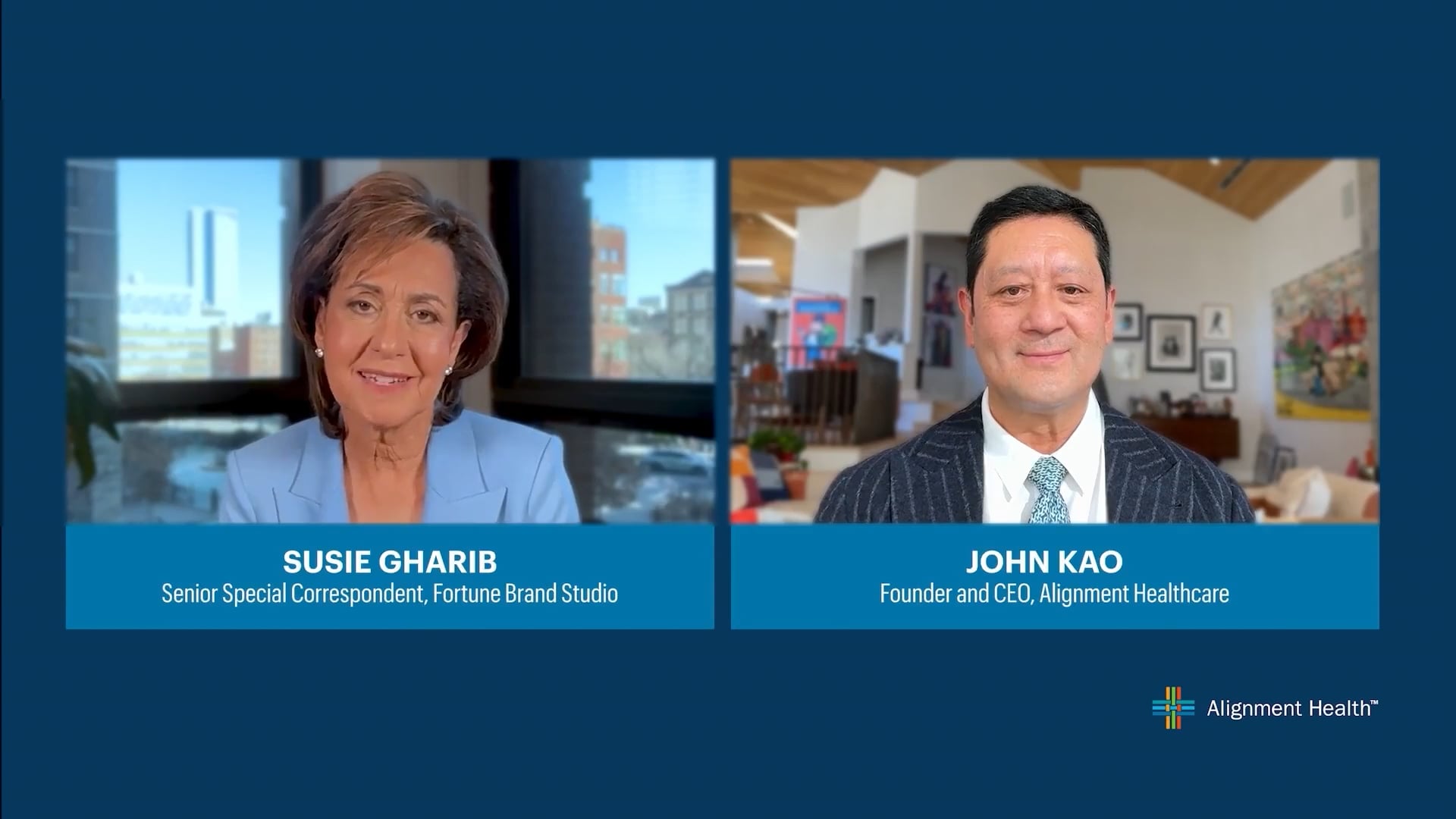
On May 12, 2026, Kao added chairman of the board to his CEO responsibilities. Konowiecki moved to vice chairman and executive vice president of corporate affairs. Shane Hochradel was announced as chief operating officer, and Mark Kent joined to lead the management services organization. Kao continued running the company day to day. The changes placed more defined responsibilities around a founder who was taking on an additional office.
He described the priorities as “disciplined execution” and “long-term value creation.” Those phrases are familiar boardroom currency. Their interest here lies in the career behind them: the banker, the divisional executive, the acquisition partner, the founder, and the interviewer asking other leaders how they treat people. Kao has accumulated authority while continuing to make service part of his public account of the job. The question now is how that account holds up as the organization grows more complex.
Return to his post about Air, and the emphasis is still on what colleagues might imagine and attempt together. It is a modestly unusual lesson to bring back from a film full of negotiations over a future sports icon. Kao chose the responsibility of helping a team think. The finance graduate who went on to ring a Nasdaq bell still appears interested in the conversation before the decision.