The first thing to know about John Authers is that Britain remembers his buzzer work. In 1987, he captained University College, Oxford on University Challenge. The team scored 520 points in one round, smashing the previous record, and then lost the season final. Decades later, Authers can laugh at the imbalance. Those 25 minutes, he has said, still count for more with many people in Britain than anything he did afterward. This is inconvenient, because afterward includes 29 years at the Financial Times, the editorship of Lex, three books, the financial crisis and a second act at Bloomberg.
The quiz story survives because it contains the shape of a market parable. A tremendous score is not the same as the final result. A record can be both real and temporary. Confidence helps at the buzzer, but it does not abolish the next round. Authers has spent his working life watching investors relearn those distinctions with considerably more money at stake.
Curiosity found a Bloomberg terminal
Authers did not begin as a boy entranced by price-to-earnings ratios. At Oxford he read philosophy, politics and economics, with the politics doing most of the seducing. A summer at Congressional Quarterly put him deep in the weeds of American caucuses and primaries. Then, with what he later called the arrogance of youth, he asked the Daily Telegraph if he could help with its American political coverage. It said yes.
The Financial Times also took a chance, hiring him in 1990. He has described financial journalism as a glove that steadily fit better. The phrasing matters. Markets were not his original tribe; reporting was. He still defines himself as a journalist trying to understand what is happening and explain it, not as a market seer promising to make readers richer than everyone else.
“If you’re going to explain something, you have to explain it in your own words.”John Authers
That distinction gives his work its useful skepticism. A hot take can be borrowed. Understanding cannot. When a source presents an elegant market story, Authers tests it against the data. If he can recreate the picture and explain why it matters, the idea may live. If the chart refuses to resemble the pitch, the story is too ornate, too convenient or simply beyond his present understanding. He leaves it alone.
It is an admirably unfashionable workflow. It replaces the performance of certainty with a sequence anyone can audit. It also leaves room for correction. Authers freely says he gets predictions wrong. Factual mistakes arrive faster: an informed newsletter audience is not shy about spotting a confused yield or price. The point is not to become unerring. The point is to make error findable.
The detour that explained the crisis
His FT career moved through education, local government, personal finance, banking and US markets. Columbia added a Knight-Bagehot fellowship, a journalism master’s and an MBA. The prestigious-looking path then took an unorthodox turn. After covering Wall Street through the dot-com bubble, Authers moved to Mexico City, learned Spanish, led the bureau, married there and welcomed his first child there.
1985-89
1990
1990s
2001-05
2018-now
Mexico supplied the conversation that later helped him make sense of 2008. The country was still rebuilding from a banking crisis and wanted to revive mortgage lending. A young technocrat went to the United States to study the machinery. He returned convinced that the last thing Mexico needed was its own Fannie Mae. He calmly laid out the weaknesses. He also explained the dependence of mortgage securitization on highly rated monoline insurers. Both warnings became painfully legible when the American system cracked.
The experience became Authers’ case for sending young financial reporters away from the obvious centers. In a place where institutions are missing, fragile or distrusted, their function stops being invisible. You learn what the guardrails do by watching traffic where some guardrails are absent. He now mentors younger journalists and counsels patience: spend real years in an emerging market; do not treat it as a stamp collected on the express route back to headquarters.
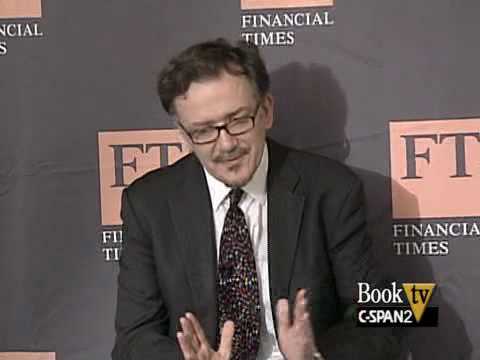
The lessons that survived the charts
Authers covered the global financial crisis from New York, an assignment he compared to playing guitar in the Beatles: if you are going to be an investment editor, that was the place and time to be tested. In 2010 he published The Fearful Rise of Markets, a study of bubbles, synchronized meltdowns and the influence central banks exert over asset prices. He also became global editor of Lex, the FT’s compact and formidable business column, before serving as senior investment columnist and chief markets commentator.
His personal investing conclusions are pointedly less cinematic than the crises he covered. Diversify. Rebalance. Treat perfect timing as a fantasy. Put passive investments at the core while remaining alert to the distortions they can create. He once revisited a UK fund bought with the proceeds of a journalism prize. Compounding had treated it well, but home bias had cost him: a more global allocation would have done much better.
The last point is the quiet hinge. Finance matters because few people are free not to worry about it. But structure can reduce the worry. An investment system should eventually release attention back to life. This is not standard financial-page swagger. It is an adult view from someone who has watched whole industries confuse price movements with moral verdicts.
“Timing is ultimately close to impossible.”John Authers
He also makes a candid correction to his own record: over a long career, he believes he has been too bearish. Skepticism can protect readers from salesmanship, but it can also carry an opportunity cost. Stocks tend to reward participation over time. Even a gloomy column is not necessarily an instruction to flee the market. This capacity to add a warning label to his own warning labels may be the most trustworthy thing about him.
A columnist who wants the chorus
In 2018, Authers left the FT after 29 years and joined Bloomberg as senior editor for markets. He now writes Bloomberg Opinion and Points of Return, his regular dispatch across equities, bonds, currencies, central banks and politics. The newsletter is recognizable for its charts and its willingness to place a day’s movement inside a much longer argument.
He found the two newsrooms more alike than outsiders might expect: both global, both dependent on trust, both anxious to be accurate. Bloomberg offered scale. Its vast reporting network included more people able to look a senior columnist in the eye and say he was wrong. Authers considers that useful. Authority is dangerous when it gradually empties the room of contradiction.
His list of trusted voices makes the social architecture plain. He has praised the calm repetition of the Wall Street Journal’s Jason Zweig, cited Philip Coggan as a central FT mentor and described the privilege of watching Martin Wolf change his mind openly. He works with colleagues from different generations and backgrounds partly to prevent the same contacts from producing the same groupthink. A byline may be singular; a sound argument is usually crowded.
There is a pleasing parallel in Authers’ life away from the screen. He is a classical singer who has performed at Carnegie Hall and in choirs supporting Cecilia Bartoli and Luciano Pavarotti. Singing, he says, supplies the thrill of many people making something greater than their separate parts. It is physical, expressive and far from the intellectual labor of a column. He is also cheerfully precise about his limits: “I’m a terrible dancer and a pretty good singer.”
The joke lands because it has the same architecture as his market writing. Separate what the evidence supports from what vanity would prefer. Say the plain thing. Keep enough humor to survive being wrong. Then return tomorrow, when the market will once again present a number that looks suspiciously like an answer.