The useful part of a search engine is not always the result. Sometimes it is the uncomfortable question that arrives one second later. In 2008, professional photographer Ted VanCleave brought his longtime friend Joe Naylor a problem: photographs were moving around the web without permission or payment, and the people who made them had few practical ways to respond. Naylor had spent his career building communications and internet services. He began researching. The mismatch was obvious. Copying had become effortless. Enforcement still demanded time, money, legal knowledge and a stubborn tolerance for paperwork.
Naylor and VanCleave started working on a system for commercial photographers, agencies and publishers. They founded ImageRights International and launched an image-search service in 2009. It could help a creator see where a picture had surfaced. That solved the surface layer of the problem. Then customers supplied the product roadmap in plain English: you found someone using my images, now what do I do?
The question pushed ImageRights downstream. By the summer of 2010, the company had added a recovery service. Naylor personally called alleged infringers and tried to negotiate fees for unauthorized uses. Search had become evidence; evidence had become a conversation about value. Over time, the workflow expanded to include automated U.S. copyright registration, claim management, an internal compliance team and legal partners across multiple jurisdictions.
“Photographers simply do not have the time or the means to track down infringers and then attempt to negotiate and collect fees from them.”Joe Naylor
The overlooked half of discovery
The web is excellent at revealing things and poor at resolving them. A photographer can run a reverse-image search and collect a page of visual matches. Each one opens a small investigation. Was the use licensed by an agency? Did a client pass the file to a partner? Is the image covered by a registration? Which country’s rules apply? Is the possible recovery worth the effort? Who should write the first letter?
Naylor’s contribution was to treat these questions as a connected operating system. He was trained as an electrical engineer at the University of Texas at Austin, then spent more than three decades across the design, development, operations, sales and marketing of communications and internet-based services. His earlier career included eFax.com, j2 Global Communications and WebMessenger. He later completed Harvard Business School’s Program for Leadership Development. The résumé reads less like a straight line than a toolkit: networks, product, process, distribution and the commercial realities that sit around software.
The visual-rights handoff
That range matters because image enforcement is not purely a computer-vision problem or purely a legal problem. It is a handoff problem. Software can surface a likely match. People must decide whether the match is meaningful. Records must connect a work to its owner and registration. Claims must move through negotiation, and some move into court. The service becomes useful when those transitions are less expensive than abandoning the claim.
A company built from the follow-up question
ImageRights came to serve individual photographers alongside agencies, archives, publishers, media companies and brands. Its services settled into three practical categories: discovery, registration and recovery. For large libraries, automation is essential. For a disputed use, judgment remains essential. Naylor’s approach has kept both in the frame.
A 2019 agreement with Andrews McMeel Universal made the range of the problem easy to see. The publisher and syndicate manages familiar comics and cartoons, including work associated with Peanuts, Garfield and Calvin and Hobbes. ImageRights was hired to track and protect licensed visual assets. Naylor said he had enjoyed the company’s comics personally. The emotional reaction and the operating task met in one sentence: “Image misuse is damaging and devalues creativity.”
The phrase is a compact statement of the company’s economics. Unauthorized use can deny a specific license fee. Widespread unlicensed use can also change what buyers think an image is worth. For a working photographer, infringement is not an abstract violation of authorship. It can become a slow leak in a small business.
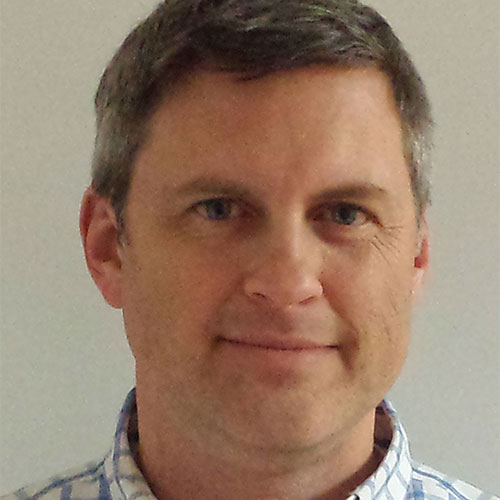
This practical emphasis also explains why registration became part of the product. In the United States, timely registration can affect the remedies available when a dispute escalates. Yet the process asks visual creators to leave their creative workflow and enter an administrative one. ImageRights built automated registration and integrations intended to reduce that interruption. By May 2026, Naylor said the service had registered almost two million images on behalf of photographers, illustrators and digital artists.
From operator to industry advocate
As ImageRights matured, Naylor’s work widened from company operations to industry institutions. In 2018, he was appointed chair of the Digital Media Licensing Association’s Technology Committee. In 2022, members elected him treasurer and returned him to the board. He became DMLA president in 2024 and was re-elected in 2026 for another two-year term.
The association represents businesses involved in producing, licensing and distributing digital media. Its agenda has expanded as generative AI, content provenance and new search interfaces complicate the basic question of where an image came from. Naylor has chaired copyright-and-AI work, moderated industry conversations and led drafting on federal policy. He has also argued that blockchain records should not be confused with legal proof of copyright ownership, a characteristically operational distinction between what a technology can record and what a rights system can establish.
In 2024, the U.S. Copyright Office appointed him to its Copyright Public Modernization Committee, which gives stakeholders a channel into development of the Enterprise Copyright System. The appointment put Naylor close to the administrative machinery that his company’s registration product has spent years navigating. In 2026, he submitted ImageRights comments opposing proposed Copyright Office fee increases, asking the office to wait for system modernization, consider the economics of each registration and study how higher prices could change creator behavior.
“The creators we serve produced the visual record that AI systems are now built on.”Joe Naylor
AI makes the old problem larger
Generative AI has given Naylor’s original problem a new scale. A copied photograph was once likely to reappear as a recognizable copy or crop. Training, synthesis and AI search produce murkier chains of influence and attribution. Metadata can disappear. A model’s output may not preserve an obvious trail back to a source image. Meanwhile, search itself is moving away from lists of links toward answers assembled by models.
Naylor’s public position is that creator rights and technical progress do not have to be enemies. He has pushed for policy that keeps copyright intact while the market develops licensing, provenance and compensation systems. In a 2025 response on AI regulatory reform, his formulation was direct: “Copyright is not the hindrance. Undermining it would be.” The aim is not to freeze distribution. It is to keep authorship and payment legible as distribution changes form.
His recent work follows that thread. ImageRights joined IMATAG’s partner program in July 2026, connecting invisible watermarking and visual traceability with an enforcement network. At the DMLA, Naylor has supported conversations about metadata, authenticity and the future of search. The tools evolve, but the sequence remains familiar: identify a work, connect it to a rights holder, understand how it was used and create a credible path toward resolution.
The work after the match
Naylor’s story is ultimately about following a problem past its photogenic first act. Image recognition makes for a clean demo. Copyright registration, evidence review and claim handling are harder to display on a stage. They are also where information becomes leverage. His company was shaped when customers refused to treat discovery as an ending.
Colleagues describe him as a translator between technical, operational and policy worlds. One early ImageRights team member recalled his mix of business understanding and technical skill; a DMLA colleague emphasized his ability to turn complex requirements into usable, scalable action. Those are fitting descriptions for a founder whose product sits between code and law.
The internet still makes copying easy. No platform can find every use, and no workflow removes every judgment call. Naylor’s wager is narrower and more durable: creators should not have to improvise the entire response alone. That means keeping records before a dispute, preserving context when a match appears, and giving each claim a path that does not begin with an unaffordable hour of legal advice. A match can lead somewhere. A registration can be part of the normal workflow. A right written into law can become a tool a working artist can actually use.