In 2021, the people responsible for cloud security at EBANX asked João Del Valle to give up access to the company’s code repositories. He had not used them for years. It was a reasonable request with an entertaining complication: Del Valle had written the platform’s first code. A founder had become sufficiently occupied with running the business that his old account now looked like housekeeping.
Five years later, he announced his return to GitHub. “We’re back, baby.” Colleagues welcomed him; one remembered that the earlier episode had even inspired a WhatsApp sticker. The exchange has the warmth of people who have worked together long enough to keep the jokes. It also supplies a compact biography. Somewhere between the first lines of code and the chief executive’s desk, the work had changed.
Del Valle’s career at EBANX has passed through three sets of initials: CTO, COO, CEO. Follow them and a payment company comes into focus. First, someone has to build the system. Then someone has to keep transactions moving. Eventually, someone has to decide where the whole enterprise should go. The programmer from Curitiba has had a turn at each.
Curitiba, France, Mozambique, home
Curitiba is both the beginning and the continuing address. Del Valle was born there, and in September 2026 he said he still lived there, in the city where EBANX maintains its main office. His professional horizon, however, widened well before the business acquired an international footprint.
He studied computer science at the Pontifical Catholic University of Paraná. His education also includes postgraduate software engineering study in France, at the institution now known as IMT Atlantique, and an MBA at Fundação Getulio Vargas. The sequence makes room for both the architecture of software and the management of a business, two subjects that would eventually occupy the same working day.
After college, he spent a year studying in France. Later came three years in Mozambique developing software, including government projects. In his telling, living locally gave him valuable international exposure. This was experience measured in years rather than departure lounges. Before he helped companies sell abroad, he had been the person adapting to another country’s everyday life.
His earlier corporate technology work included GVT and a CTO role at Grupo Polvo. Telecommunications offered experience with systems handling large volumes of activity. Payments would bring another version of that engineering responsibility, with a particularly unforgiving condition: the system is carrying somebody’s money.
The payment slip at the border
EBANX began in Curitiba in 2012, founded by Del Valle, Alphonse Voigt and Wagner Ruiz. Its opening problem was practical. International websites wanted Brazilian customers. Brazilian customers wanted what those websites sold. The methods available at checkout often failed to accommodate how those customers could pay.
One answer was the boleto, a Brazilian payment slip. EBANX’s early offering made cash vouchers available to international ecommerce sites. The familiar local instrument could become a route to a foreign purchase. To a merchant looking across borders, it added an unfamiliar piece of infrastructure. To a shopper, it could mean using a method they already understood.
The distinction matters because an online storefront can be visible long before it is usable. Translating a page and displaying a price do not settle the payment question. A customer who reaches the final screen has already done much of the work a seller hopes for: found the product, considered the offer, decided to buy. A poorly matched checkout can undo all of that rather efficiently.
Del Valle’s contribution was the first platform code. His two co-founders were building the business alongside him. The enterprise joined local payment knowledge to the needs of international merchants. The ingenuity lay in attending to the point where those two worlds met, a point small enough to fit on a screen and complicated enough to sustain a company.
The customer’s familiar payment method becomes part of the merchant’s international business.
Three jobs inside one company
As the business grew, Del Valle’s responsibilities widened from technology into operations. By August 2019, he was appearing at Startup Summit in Florianópolis as EBANX’s COO. On a panel with Endeavor’s Camila Junqueira and Stone’s Bernardo Carneiro, he discussed thinking globally from the beginning and growing without losing the company’s character.
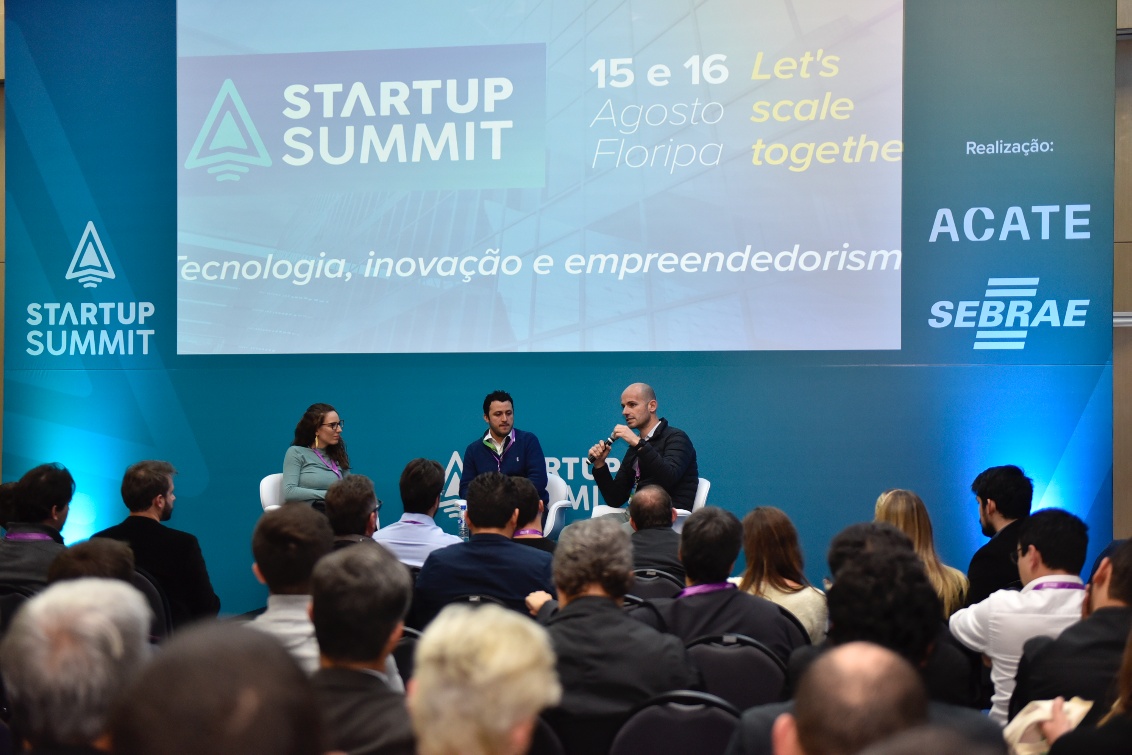
That subject had an unusually concrete application at EBANX. The company had started by serving commerce across a border. International work was already present in the original transaction. Expansion required turning that initial connection into a repeatable service, while accommodating the differences that make each country its own market.
His operational work included building the global commercial team and advancing payment integrations. In 2020 alone, EBANX launched 50 new integrations and payment methods in its B2B solutions. It is a less theatrical measure than a valuation, but it describes the additions merchants actually had to use. Each option represents another piece of the checkout that must function.
On May 7, 2021, EBANX announced Del Valle as CEO. Voigt, who had led the company since its founding, became executive chairman. Ruiz moved from finance leadership into the chief risk officer role. The founding partnership continued, with its responsibilities rearranged around the next stage of the business.
The numbers catch up with the code
The funding milestones arrived after years of building. EBANX joined the Endeavor network in December 2012. Its first outside investment came in December 2017: $30 million from FTV Capital, with participation from Endeavor Catalyst. In October 2019, a further FTV investment took its valuation above $1 billion.
A month after Del Valle’s appointment as CEO, the company announced a $430 million investment from Advent International. Those announcements give the company’s development a financial scale. They also belong to different chapters: an initial external investment, a valuation milestone, then a substantial new commitment of capital under the reshaped leadership.
Advent International’s announced investment in EBANX
By its tenth anniversary in 2022, EBANX reported nearly a billion payments processed over its lifetime and growth of more than 100 percent in 2021. A payment count is an accumulation of small events. Somewhere behind the anniversary announcement are purchases completed, services accessed and transactions that had to survive the journey from intention to confirmation.
Del Valle still describes pleasure in watching a merchant begin transacting and seeing activity appear on the dashboard. That is a recognizably technical form of satisfaction: the evidence that something built is working. The executive’s view has expanded, but the dashboard preserves a direct connection to the original task.
A different route through Africa
In September 2022, EBANX announced expansion into South Africa, Kenya and Nigeria. Del Valle discussed the move in terms of young, increasingly digital populations and the importance of mobile devices. Africa was also a continent where he had already spent years working, long before this particular company expansion.
He drew a distinction between the development of payments in Africa and Latin America. In Latin America, online purchases helped propel digital payments. In the African markets he was discussing, digital payments could help propel the wider digital economy. The direction of influence mattered to how he understood the opportunity.
That observation resists a convenient habit of international business: taking a sequence that worked somewhere and expecting it to repeat everywhere. A shared appetite for digital services can coexist with different starting points. Mobile money, wallets and bank transfers enter the picture according to local circumstances. The market has its own chronology.
The consequence for an engineer is fairly demanding. Reuse what can be reused, then understand what must change. For the person leading the company, the same discipline applies to expectations. Adding a country to a presentation is easy. Supporting how people actually transact there is the work.
Design patterns, with a backbeat
When EBANX introduced its new CEO in 2021, it included another credential: musician. Del Valle plays guitar, bass and drums, and sings. His album is called Padrões de Projeto, a phrase that translates as “Design Patterns.” Software terminology has rarely looked quite so comfortable on a record sleeve.
There is no need to make the instruments explain the business. The detail earns its place because it belongs to the person. An Endeavor profile lists music and sports among his interests. Alongside the titles and funding rounds sits someone with an album, a computer science background and a continuing enthusiasm for making things.
He is also a founding partner of Honey Island Capital, established in 2015 by EBANX partners. Its current team distinguishes the founding partners from the people managing daily operations, including managing partner Mariana Foresti. The connection extends Del Valle’s career into backing other businesses without requiring him to be portrayed as their day-to-day operator.
The next checkout
In April 2026, EBANX announced another expansion: Indonesia, Thailand and Turkey were available to merchants, with Malaysia and Vietnam planned for the following quarter. Its Asian business also included India and the Philippines. Del Valle described an opportunity involving both international companies reaching Asian consumers and Asian companies selling abroad.
“The opportunity runs in both directions.”
João Del Valle · April 2026
The company’s September 2026 conversation about the future kept local payments near the center. Del Valle discussed a plan looking toward 2030, continued expansion and support for merchants across emerging markets. New technologies enter his interviews, but the recurring commercial question remains grounded in the payment experience of a particular customer.
The story now stretches considerably further than the original Brazilian checkout. Del Valle has traveled from software architecture through operations into leadership, and back to a repository he once stopped using. The return is an agreeable ending for the anecdote, though the career continues. The old work still has a claim on his attention. Somewhere, a merchant is going live. The dashboard begins to move.