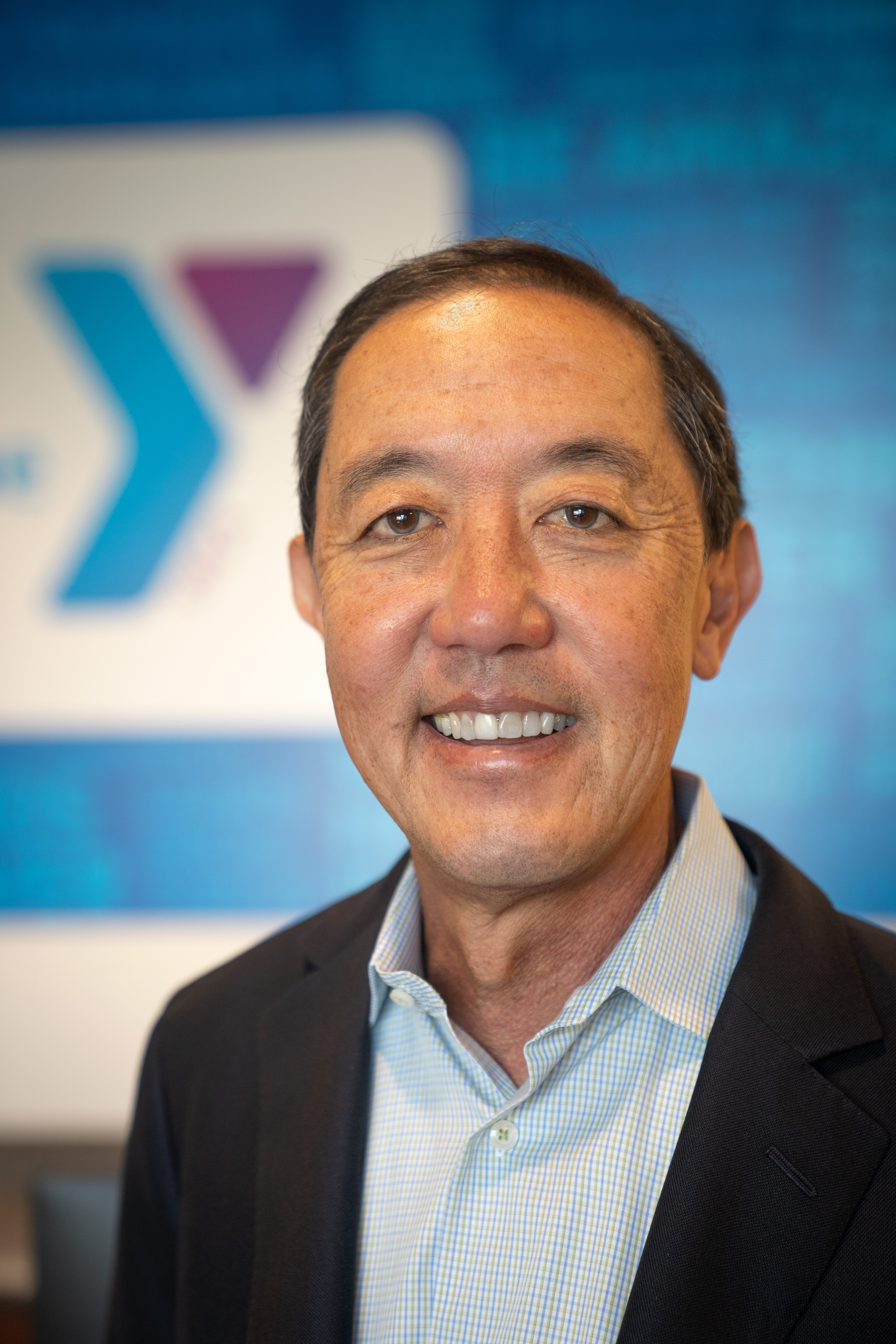
He gave away the bank's money for 19 years. Now he runs the nonprofit he used to chair, with 2,300 staff and a name older than most of the buildings on Sand Hill Road.
On June 15, 2022, Jim Hori became the boss of one of the largest YMCA associations in the United States. He did not arrive from another Y. He walked over from Silicon Valley Bank, where, for more than two decades, he had been a Managing Director by day and the President of the SVB Foundation by the same day. The pivot looked sudden in the press release. Anyone who had watched him serve a decade on the YMCA board, three of those years as chair, knew it had been on its way since at least 2011.
Most people in tech have never heard of Jim Hori. That is a feature, not a bug. He runs an organization with 10 health and wellness branches, a year-round resident camp, after-school programs on hundreds of school campuses, and roughly 2,300 staff. The annual operating revenue runs north of $80 million. He inherits the seat from Sandy Berlin Walker, who spent 43 years inside the YMCA system before retiring. Hori, by contrast, spent 43 years outside it - and most of those years writing checks to organizations like it.
The career math is unusual. Hori joined Silicon Valley Bank around the turn of the millennium, then became President of the bank's foundation roughly three years later. He stayed in that twin role for 19 years. Picture the boom: the dot-com hangover, the rise of the iPhone, the YC class of 2010, the SaaS decade, the COVID liquidity flood, and finally - in the spring of 2023, after Hori was already at the Y - the bank run that ended the firm as he knew it. He left for the YMCA in June 2022. The timing, in hindsight, looks like a man who already knew what time it was.
What did 19 years at a corporate foundation teach him? You can guess from the awards on the wall. He took home Silicon Valley Bank's President's Award twice and its Community Service Award twice. He learned how to listen to founders who had never run a board meeting and to board members who had never run a company. He learned to spend institutional money like a partner, not a donor.
And he learned the YMCA from the inside.
He joined the YMCA of Silicon Valley board around 2011 and stayed for more than a decade. He served three years as chairman through 2021. Then he stopped being chairman, and a few months later he started being the CEO. Few CEOs are this prepared for the job description. He has spent fifteen years on the board of Hope Services, the local nonprofit serving people with developmental disabilities, two of those years as board chair. He knows where the bodies are buried because, in a polite way, he helped bury some of them.
He grew up in Fresno. He went to Fresno State. He now lives in Los Gatos with his family, where his daily routine, by his own description, leans toward early-morning walks and rounds of golf. None of this is hidden, and none of it is dramatized. The biography reads like a man who has spent forty years not needing to be the most interesting person in the room.
Which is, of course, why the board picked him.
/ continued below /I'm excited to expand the Y's services in new ways and continue to bring positive change to people's lives.- Jim Hori, on his appointment, June 2022
If you redraw the map of Jim Hori's career, it is mostly straight lines. Fresno, then Fresno State, then Silicon Valley Bank, then the boardroom of the YMCA, then the CEO's office of the YMCA. Each station within a short drive of the next. Each role longer than the last.
The straight line obscures the harder thing he did. He occupied two parallel jobs at SVB for 19 years - the commercial one and the philanthropic one. The first paid the rent; the second built the relationships that would eventually put him on a dozen civic boards and, finally, in the corner office of the Y. He did the day job and the heart job at the same time, every day, without quitting one for the other. Most people pick.
By 2022 the board of YMCA Silicon Valley was looking for a successor to a 43-year Y lifer. They could have hired another lifer. They picked a banker who already knew the building. The official statement praised his "knowledge of the Y, complemented by his business experience and long-standing relationships in Silicon Valley." Translation: he had been in the room for ten years; he knew where the money was; he was not going to need eighteen months to find the bathroom.
He took office in the slipstream of the pandemic. The Y, like every membership organization in America, had spent two years watching wellness facilities empty, after-school programs scramble, and camp registrations whiplash. The job, on day one, was less about strategy than about recovery.
His public reading of that moment was modest. He thanked the board. He said he was excited to "expand the Y's services in new ways." He did not announce a five-point plan in his first week, which, depending on the school of management you subscribe to, is either the right move or the only move.
Nine months after he took the YMCA job, Silicon Valley Bank collapsed. The institution that had employed him for 22 years was sold to First Citizens in a federally-brokered weekend. Hori does not talk about it publicly. He doesn't have to. He had already turned the page.
The board picked a man who knew how to outlast a cycle. That, in Silicon Valley, is a very rare resume line.
By his own account, the day starts with an early walk. The kind that finishes before most San Jose meeting rooms turn the lights on. The unfashionable virtue of being awake first.
Two President's Awards. Two Community Service Awards. Both from Silicon Valley Bank. Both, in their way, prizes for the same instinct: keep the relationships, mind the money.
Fifteen years on the Hope Services board. Two as chair. A length of tenure that, in the nonprofit world, is roughly equivalent to becoming a member of the family.
He succeeded Sandy Berlin Walker, who had spent 43 years inside the YMCA system. Hori inherited a culture, not just a desk.
Nine months after he started at the Y, his former employer no longer existed in the same form. He had crossed the river before the bridge went down.
Los Gatos. Family. Golf. A short list of pleasures that have not changed because the job did.
The YMCA of Silicon Valley is one of the largest YMCA associations in the United States and one of the biggest nonprofits in the Bay Area. It runs swim lessons and youth basketball, sure. It also runs after-school enrichment at hundreds of schools, a year-round resident camp, fitness facilities in ten cities, and child care for working parents in a region that has, on a good day, the most expensive child care market in America.
None of it goes viral. All of it matters. In a region whose cultural exports are dominated by chatbots and IPOs, the Y is one of the few institutions touching every income bracket in the same week.
Hori's appointment is a quiet bet on continuity. The board chose a known quantity over a marquee outsider. They picked a fixture, not a fix. In an industry where boards of directors increasingly look for celebrity CEOs to "transform" their organizations, they hired a man whose primary attribute, after thirty years of public-facing leadership, is the ability to be in the room and not perform for it.
That is a Silicon Valley story, even if it doesn't sound like one. The valley pretends to value disruption. Its longest-standing civic institutions are run by people who value the opposite: showing up, again, for ten years before the title.