He once read firewall logs by hand, one line at a time. Now he is teaching machines to do it for everyone.
CEO, Auguria · Venture Partner, SYN Ventures · Owner, Tenn Street Coffee & Books
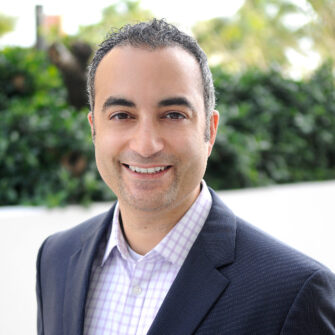
Jessvin Thomas - the operations researcher who turned the most tedious job in security into a company.
Jessvin Thomas runs a cybersecurity company called Auguria from a desk that is never quite where you would expect it. Some weeks it is a startup CEO's chair. Some weeks it is a venture partner's seat at SYN Ventures, sizing up the next wave of security founders. And some weekends it is behind the counter of Tenn Street Coffee & Books, a neighborhood bookstore and cafe he owns in Denver, where the hardest decision is which roast to pull.
That refusal to pick one lane is the whole point. Auguria's pitch is that security teams are drowning. Every endpoint, firewall, and cloud service spits out telemetry by the trillion, and the people paid to watch it cannot keep up. Auguria's answer is what the company calls a Security Knowledge Layer - the first SIEM, it says, designed from the ground up for AI. It sits between the SIEMs, the data lakes, the XDR platforms, and the language models, and it quietly curates the flood before a human ever has to look.
The idea is less abstract than it sounds when you know where Thomas started. He graduated from Cornell in 2001 with a degree in operations research - the math of making systems run better - and walked straight into the dot-com boom as IT support. His first real exposure to security was the least glamorous job in the building: reading firewall logs by hand, line after line, hunting for the one entry that mattered. Two decades later, the company he leads automates exactly that tedium.
You can draw a straight line from that fluorescent-lit log-reading to Auguria's embedding engine. Thomas does not think about security the way a hacker does. He thinks about it the way an operations researcher does - as an optimization problem, a question of signal and noise, of how to get the most useful answer out of the least amount of data. That framing turns out to be unusually well suited to the AI moment.
Become obsessed with the customer's problem.
Legacy SIEMs were built for rules and schemas written by humans. Auguria's bet is that the next layer should understand security data on its own - no rules, no schemas - and hand machines something they can reason over.
Trillions of logs in; a manageable, ranked, enriched set out. Semantic event grouping, a security ontology, and a vector database do the heavy lifting before an analyst spends a single minute.
Less noise means lower data bills and fewer exhausted analysts. For Thomas, reducing data is not just an engineering win - it is a human-sustainability one.
Nokia to Blackstone, Optiv to Barracuda, a vCISO startup to a public-company acquisition. The titles change. The obsession - making security operations less painful - does not.
There is a version of the cybersecurity-executive story that is all keynote stages and board decks. Thomas wrote a different chapter. He owns Tenn Street Coffee & Books, a community bookstore and cafe in Denver, and he treats it with the same seriousness he brings to threat detection.
The two worlds bleed together. He keeps the shop tech-friendly and secure, applying a career's worth of network-architecture instincts so customers can work over a latte without worrying about their data. A man who spends his days curating the world's security signal also curates a shelf of books and a community space. Both are, in the end, about the same thing: deciding what deserves your attention.
CEO of Auguria, turning a Cornell math discipline into an AI-native security platform that ships.
Venture Partner at SYN Ventures, sourcing and evaluating the next generation of cybersecurity founders - and advisor to Long Ridge Equity Partners.
Owner of a Denver bookstore and cafe, proof that the most technical people often crave the most human spaces.