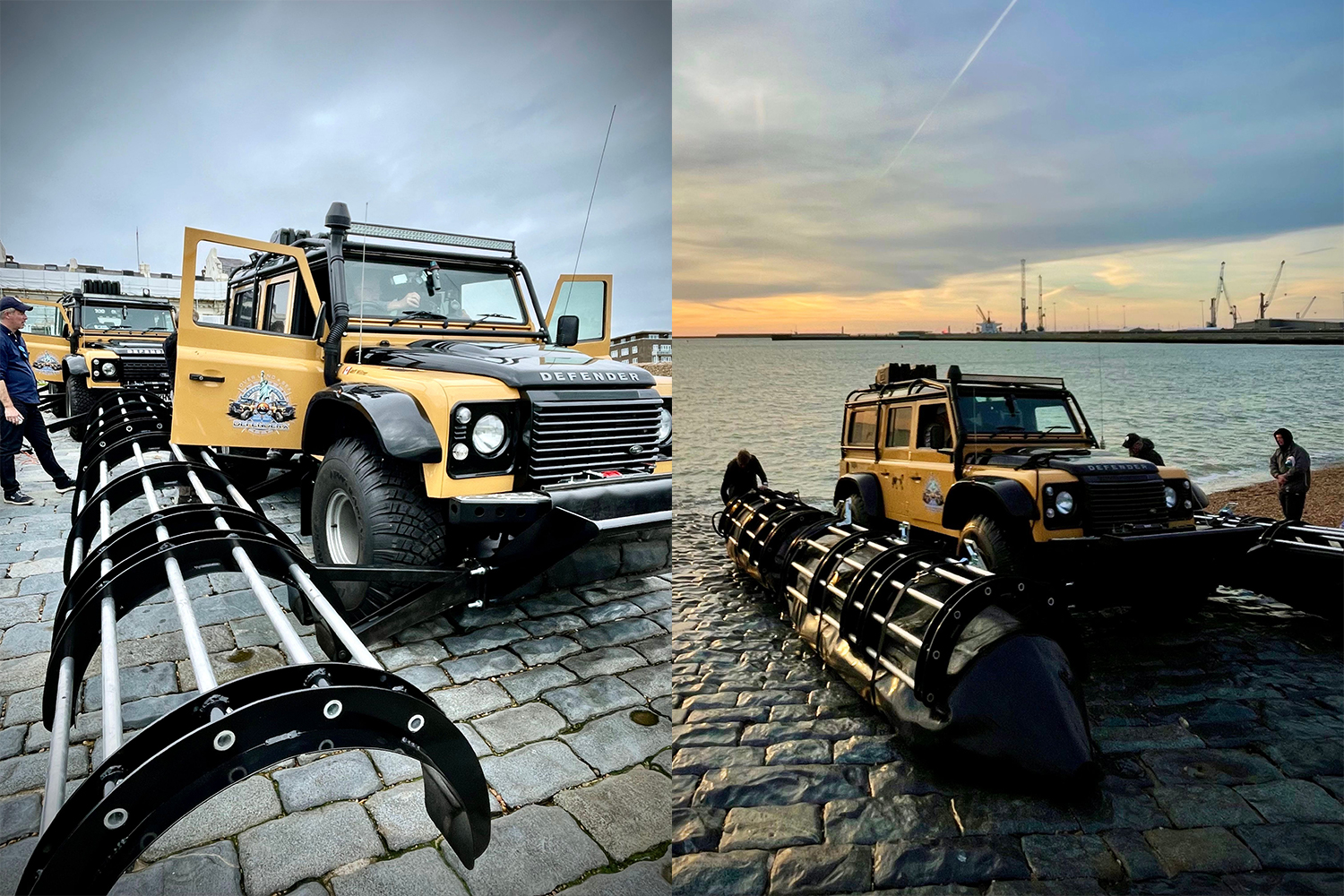
In October 2021, Jeff Willner discovered that a Land Rover could occupy an awkward middle ground between car and boat. DefenderX was attempting an English Channel crossing with a modified vehicle when its chain drive failed. The team needed rescuing and towing back. A ferry was a compelling reason to hurry. Willner’s account of the episode ended with an observation that would be difficult to put in a travel brochure: he had enjoyed himself.
This is an unusual pastime for someone whose businesses arrange private guides, considered itineraries, and expert help. Willner is the founder and CEO of Range, the group previously known as Navigatr. Its portfolio includes Kensington, Travel Edge, Ensemble, and TripArc. He works in the business of making journeys easier. His leisure pursuits have a more complicated relationship with convenience.
There is a temptation to turn the expedition into a neat lesson about entrepreneurship. A broken transmission does not automatically confer management wisdom. Yet the two parts of his life do share a practical concern: getting people from an attractive idea to a place they can actually reach. Sometimes that requires software. Sometimes it requires a tow.
A car with unreasonable ambitions
DefenderX’s ambition was to travel from London to New York in Land Rover Defenders, with water crossings built into the route. The English Channel was one obstacle. The Bering Strait was another. The team brought together Willner, explorer Mikael Strandberg, pilot and adventurer Steve Brooks, and filmmaker Sofie Rørdam. The vehicles acquired pontoons and the sort of equipment that makes an ordinary garage seem underprepared.
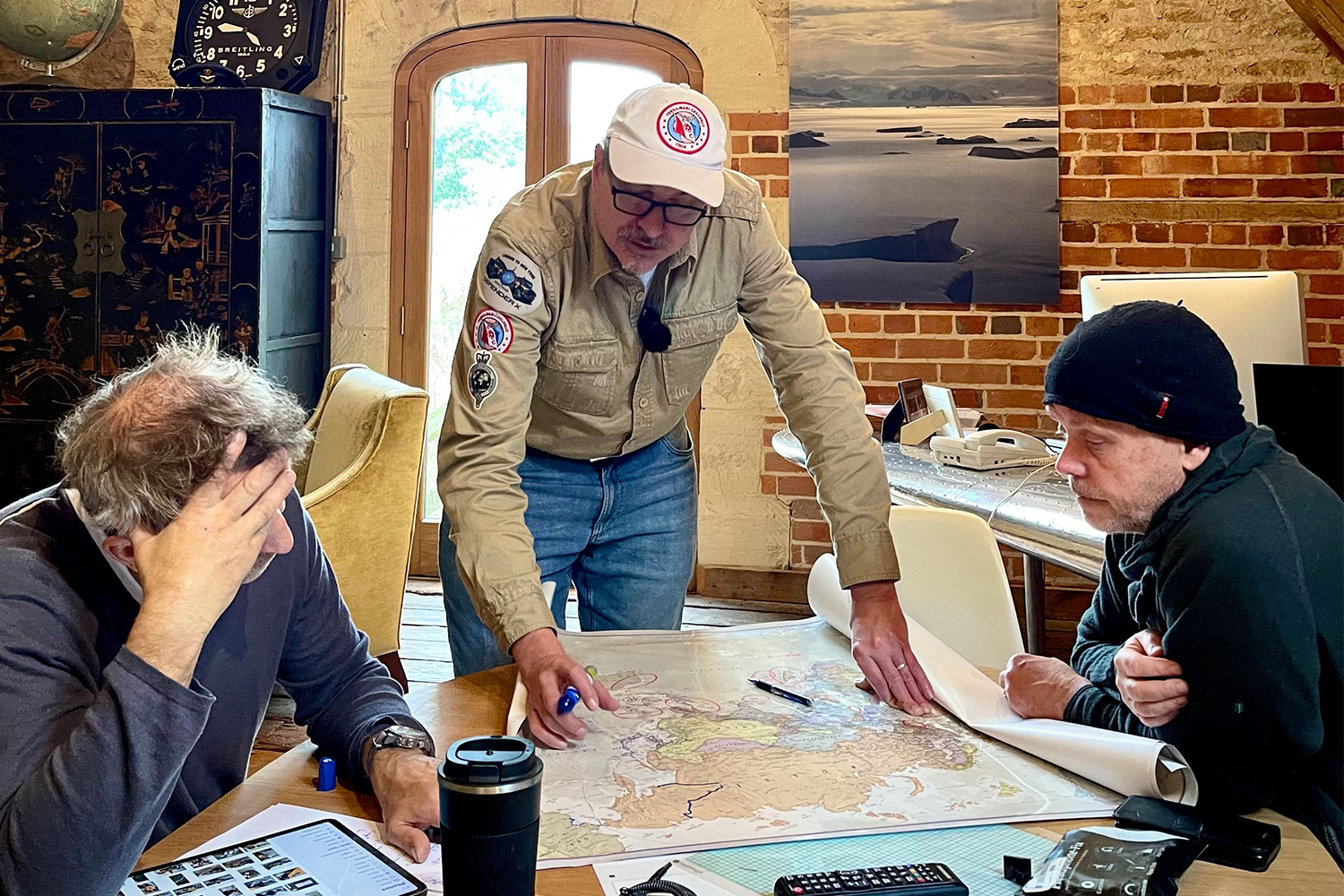
Willner explained the appeal with considerable humor. He wanted the shared experiences: the jokes, the uncomfortable meals, the company, and the memories that would outlast the mechanical complaints. The expedition had come to be called the Nonsense Expedition. Asked about the attraction, he eventually reduced the philosophy to two words.
“More nonsense.”
Jeff Willner, discussing DefenderX in 2021
The joke becomes more interesting when set beside his earlier career. Before travel, Willner co-founded ObjectArts, a Microsoft technical training business. He earned an MBA at Wharton and worked at McKinsey. Those are credentials associated with explaining why things should work. An expedition offers frequent opportunities to discover why they do not.
Before the itinerary
His own early account of preparing a journey is full of unglamorous details. In 2000, after a decade of work and two years devoted to an MBA, he began planning to drive around the world. He found a 1986 Defender in Britain. Its age and left-hand drive mattered because he intended to import it into Canada afterward. A recently installed engine helped make the purchase attractive.
The packing list was a small architecture of self-sufficiency: extra fuel and water tanks, batteries, safes, a sleeping platform, and storage that could be locked. There were documents to arrange, too. A carnet mattered as much as the roof tent. Adventure was already generating paperwork, a custom it would maintain.
JungleRunner, the website recording his travels, kept journals from the road. The index moves through borders, cities, deserts, and customs problems. It preserves the texture of travel before every journey came with a polished feed: dated dispatches, practical information, and a succession of places that refused to behave like a single, easily managed destination.
The 2001-2002 journey took twelve months, covering 57 countries and 78,000 kilometers. The number is tied to that expedition, rather than offered as a lifetime country count. His later travels would keep enlarging the map. A person can collect destinations; Willner also collected experience in the troublesome spaces between them.
A year on the road.
His interest in Africa began much earlier. Willner grew up with missionary parents, including a childhood home in Kalemie on Lake Tanganyika in what is now the Democratic Republic of the Congo. He has recalled evenings sharing food with a neighboring family around a cooking fire. The memory includes a pleasingly ordinary consequence: getting into trouble for missing dinner at home.
Travel in that recollection is intimate. People offer food. An elder talks. A child stays longer than expected. It is a different scale from a portfolio of agencies, but it gives the biography a human starting point. Before all the journeys on his professional résumé, there were neighbors and a meal.
The kitchen table gets crowded
A trip up Kilimanjaro helped turn travel into work. Willner organized a graduation journey for his Wharton class in 2001, then arranged MBA trips while at McKinsey. In 2006, he opened a destination-management office in Nairobi and began building the travel business full time. The enterprise that became Kensington started at his kitchen table.
His explanation for leaving consulting was domestic: he had young children and wanted more time with them. A kitchen-table business can sound modest until it starts requiring offices, guides, and booking systems. Still, the reason for beginning matters. The project was attached to the life he wanted to have.
Private guided tours brought a technical problem into view. Customers wanted individualized journeys, while the people delivering them were spread across countries. In his 2017 account, Kensington’s custom platform connected more than 300 guides and transport partners in 80 countries. Those figures belong to that period. They describe the coordination problem he was working on, rather than the size of the business today.
Willner also revised a central assumption. He had expected travel agents to become less important. Working with them changed his mind. He found skilled advisors who offered their clients something valuable, and Kensington moved toward paying commissions and engaging the agency channel. Acquiring agencies followed. The person who had anticipated their decline became invested in their future.
That reversal is more revealing than an uninterrupted sequence of confident decisions. It gives his career a moment of correction. The business grew around an understanding of travel that had become more social: guides at the destination, advisors close to the client, and technology joining their work together.
A margin worth arguing about
The acquisition of Ensemble in 2022 gave this thinking a larger stage. Ensemble’s shareholders approved the deal in May, and the consortium joined Navigatr while remaining a separate operation. Its members had their own businesses and relationships. Buying a consortium meant working with those existing interests, as well as introducing new resources.
Willner’s stated goal was better agency economics. He argued that technology, packaging, and a clearer explanation of an advisor’s services could help owners improve margins. He described a move from roughly 10 percent to 20 percent as an ambition. That was a proposed improvement, rather than an audited result.
Agency margins discussed after the Ensemble acquisition. The second bar represents a goal.
The mechanism was concrete. An advisor could combine flights, hotels, transfers, and a service fee into one price, with TripArc’s ADX platform supporting that work. The customer would receive a coordinated trip. The advisor would have a way to charge for the coordination. For Willner, the professional’s judgment deserved a place in the transaction.
There is an everyday concern underneath the acquisition language: who gets paid for knowing how to put a holiday together? His answer puts value on the person handling details that travelers may never notice when everything goes well. The absence of a problem can be a difficult thing to sell.
Princess takes to the water
The expedition, meanwhile, kept changing its route. In early 2022, DefenderX drove through Russia, then paused and left before the invasion of Ukraine. Geography had become inseparable from events beyond the team’s control. An ambitious route drawn across a map still depended on the world allowing it.
In September 2023, the team completed the London-to-Paris stage. The Defenders traveled on the Thames, crossed the Channel to Sangatte, and continued to the Seine. The crossing took four hours. At the French shore, the mayor’s welcome included champagne. The earlier tow had acquired a happier sequel.
March 2024 brought a reported 9,500-kilometer journey from St. John’s, Newfoundland, to Fairbanks, Alaska, in twelve days. There were long driving hours, cold weather, electrical gremlins, and engine faults. The vehicles arrived on time. The continent had been crossed, though the trucks still required attention.
The next water journey supplied plenty of it. On the Yukon River in 2024, Brooks’s vehicle, The Mothership, developed hydraulic trouble. Willner’s Defender, Princess, initially performed well before later losing power and requiring a tow. Spare parts arrived by air. A watermelon included in the supply drop fared badly; melted ice cream proved more welcome.
The team reached St. Mary’s after traveling more than 1,200 kilometers downriver. That arrival marked another stage toward the eventual Bering Strait crossing. The details resist a tidy triumph: equipment broke, other people helped, and the vehicles reached their destination in different states of cooperation. It is possible to finish a journey with dignity and a tow rope.
Four billion years, close to home
Back in Toronto, Willner has helped make another kind of journey available. In 2018, he and Stacey Madge committed $5 million to the Royal Ontario Museum’s Willner Madge Gallery, Dawn of Life. The gallery opened in December 2021, bringing fossils and the history of early life into a permanent public space.
Its scale is temporal rather than geographic: nearly four billion years. Canadian fossil sites help tell the story, including the Burgess Shale in British Columbia. Visitors can encounter the distant past without assembling a vehicle or applying for a visa. Curiosity, here, has a considerably simpler packing list.
His philanthropy extends into the travel group. Range Foundation’s first annual impact report recorded US$6,082,838 in grants to twelve organizations in fiscal 2024. Willner’s outlook in the 2025 impact report emphasizes exploration, conservation, and economic opportunity in communities that receive travelers. Those priorities connect the places a business sells with the places where people actually live.
There are smaller pleasures in his public account of himself, too. He has described himself as “a bit of an introvert.” He also calls himself a bookworm. When asked to choose one song, he picks Louis Armstrong’s What a Wonderful World. The title sits comfortably beside a lifetime of departures, although a temperamental Defender might prefer something with more percussion.
Willner’s story offers several ways to be interested in the world: organizing a trip, building the tools behind it, backing a museum, sitting around a table with friends and a map. The destination matters. So does the company. And when the vehicle refuses to move, there is usually quite a lot to talk about.